date_range
Wednesday 28 Oct 2026


 LOCAL EDITION
close
 LOCAL EDITION


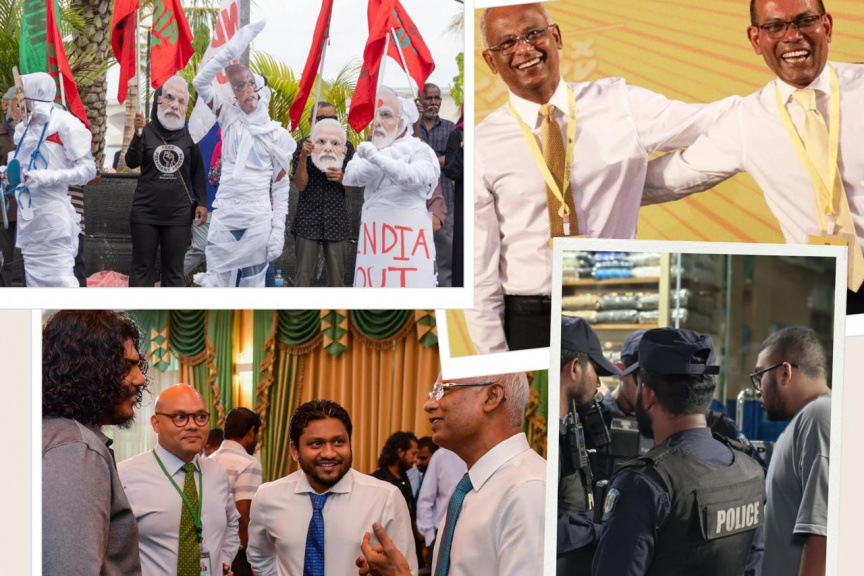
It was the height of the last presidential election campaign—a period of intense political uncertainty in which the eventual victor remained impossible to predict. During that time, while having coffee with a veteran journalist at a restaurant in Hulhumalé Phase 1, our conversation turned to the future. After reflecting on the shortcomings of then-President Ibrahim Mohamed Solih’s administration, the journalist expressed that his greatest concern was not the state of the government at the time, but the looming threat to press freedom.
His concern was precise: what would become of journalism, freedom of expression, and the right to criticize if the opposition PNC candidate, Dr. Mohamed Muizzu, were to win the presidency? He remarked, “[He] will be worse than [former President Abdulla] Yameen [Abdul Gayyoom]. He will not tolerate criticism.”
Now, nearly three years after that conversation, it is important to examine the reality before us. The current political climate, shaped by the conduct and rhetoric of senior government officials, suggests that the journalist’s prediction was, regrettably, true.
Defamation, intrusion into private lives, and the spread of unverified allegations are unquestionably unacceptable. In a small, entirely Islamic society, the normalization of discussions surrounding major sins erodes the very fabric of society. Whether committed by a journalist, a government official, or an ordinary citizen, wrongdoing remains wrongdoing. Yet words must be matched by actions. There is a serious inconsistency when conduct considered “acceptable” yesterday suddenly becomes “wrong” today merely because the individuals involved have exchanged positions. To weaponize character assassination while in opposition, only to invoke religious or moral principles as protection once in power, is fundamentally wrong.
While leaders of the current PNC administration now speak of safeguarding personal reputation and invoke religious teachings to support their position, it is necessary to remind the public of how these same figures behaved while in opposition.
The evidence is extensive. Consider, for example, the news outlet Dhiyares, which was managed by the current Heritage Minister Heena Waleed. In 2022, the outlet published a report implying that the then-Deputy Speaker of Parliament, Ahmed Saleem, engaged in same-gender sexual relations. The report stemmed from a viral video in which one individual’s face was visible while the other’s identity remained unclear. Dhiyares nevertheless reported that “people are claiming” the unidentified individual was Saleem. These allegations—concerning what is regarded in Islam as a major sin—were never substantiated. No charges were filed, nor was any formal investigation conducted. Yet those who today advocate for the “protection of reputation” were among the leading voices advancing such claims.
Similarly, during the MDP administration, the current Fisheries Minister Ahmed Shiyam, addressed a PPM rally where he insinuated an inappropriate relationship between then-President Solih and a male leader of a neighboring country. This allegation was baseless and vulgar, directed at the head of state purely for political advantage. Today, as he speaks from a ministerial position about “honor” and dignity, those speeches remain firmly in public memory.
Even the current Speaker of Parliament, Abdul Raheem Abdulla—who presides over the legislative body responsible for shaping the nation’s laws—has a record of employing similar rhetoric. When President Solih underwent surgery for a medical condition, Abdul Raheem made derogatory insinuations linking the illness to an alleged inappropriate relationship with a foreign diplomat. If such discourse was permissible then, but is now deemed criminal, the contradiction is impossible to ignore. It should also not be forgotten that those currently in power were among the organizers of the “Maali” parades in Malé, which mocked the Prime Minister of a neighboring global powerhouse.
In examining these issues, it is also necessary to consider the extent of press freedom during the two MDP administrations. This is not to suggest they made no attempts to influence media through funding or other means. However, former presidents Mohamed Nasheed and Ibrahim Mohamed Solih approached dissent differently. Despite enduring relentless criticism, allegations, and personal attacks, they did not routinely send police into newsrooms or imprison journalists. They understood that criticism is an essential component of a democratic society.
The restraint demonstrated by Nasheed and Solih remains noteworthy. Since the DRP era, Nasheed has faced repeated and unsubstantiated allegations of being “anti-Islamic” and drinking alcohol. Although these claims were never proven in court, they were permitted to circulate publicly. This atmosphere of fitna (strife) eventually escalated into the life-threatening bomb attack on Majeedhee Magu. Yet even in such an extreme environment, the response was not to silence journalists or shut down media outlets.
Another example is Ahmed Azaan, now Central Hithadhoo MP. During the last MDP administration, Azaan was a journalist known for his fierce criticism of the government. During live press conferences held at the President’s Office, he directly questioned Solih regarding allegations of adultery, raised by Nasheed. He was also accused of unauthorized access to MNDF premises in Uthuru Thilafalhu. Despite these confrontational exchanges with the Head of State on live television, Azaan was neither arrested, sued for defamation, nor removed from press briefings.
Throughout the last MDP administration, numerous rumors concerning the Maldives’ diplomatic relations with other nations circulated widely. Frequently citing “undisclosed sources,” reports were published regarding conversations between Maldivian officials and ministers from neighboring countries. While some of these reports undoubtedly crossed ethical boundaries, the state did not exercise its authority to suppress them.
Today, however, the narrative has changed. Laws are being introduced in rapid succession to restrict journalism and curb freedom of expression under the banner of “protecting reputation.” Yet many of the same individuals advocating for these measures continue to make unverified accusations from parliamentary floors and political podiums. Those who once praised former president Yameen now openly label him a “thief” from those very same stages. When reputation becomes important only when one’s own reputation is under scrutiny, it represents the height of hypocrisy.
If the government’s intention to “reform” the media were genuine, its actions would reflect its rhetoric. Having consolidated political power, the PNC now has the opportunity to lead by example. However, silencing critical voices under the guise of reform is not an act of sincerity; it is an exercise in consolidating power.
Power brings with it the authority to punish, fine, and imprison. Yet power is temporary, while truth endures. No piece of legislation—including the recently passed Media Commission Bill—can erase the realities of the past. Instead, these new restrictions serve only to confirm that the warning shared over coffee in Hulhumalé three years ago was, unfortunately, accurate.