date_range
Wednesday 28 Oct 2026


 LOCAL EDITION
close
 LOCAL EDITION


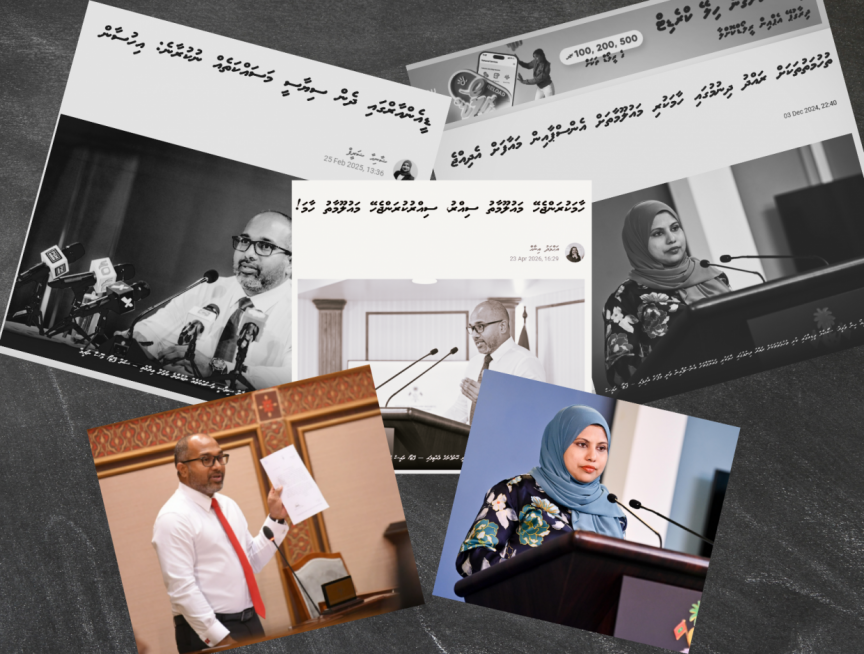
It may appear to them as a job well done. Approximately two years ago, the private information of an individual seeking financial assistance for urgent medical treatment was first made public. This disclosure included the individual’s name, home island, and even national identity card details. Along with a list of aid previously provided, Heena Waleed, the then-CEO of National Social Protection Agency (NSPA)—the very institution mandated to ensure social security—publicly shamed the applicant. Following intense public backlash, the she issued an apology, admitting that it was a mistake.
She faced numerous allegations and public criticism for various administrative decisions throughout her tenure, leading to widespread dissatisfaction among the citizenry.
However, when President Dr. Mohamed Muizzu introduced what was termed as the "positive changes requested by the people" to his Cabinet, Heena Waleed was effectively "promoted" and appointed to a Cabinet-level position.

Similarly, about two and a half years ago, another high-ranking official within this administration was embroiled in controversy. It was alleged that political activities were being conducted within an office responsible for safeguarding the most sensitive personal data of citizens. Allegations were rife that national identity card data was being manipulated as part of a major "project" to enroll thousands of members into a political party. No substantial defense was offered against these claims at the time. The official in question, Ali Ihusan, remains the Home Minister.
Two and a half years later, history repeated itself. This time, the private communications of a mentally vulnerable young woman, made during her most fragile and final moments, were disclosed to the entire country.
There appears to be a profound confusion between what constitutes public information and what must remain confidential. Despite this, Minister Ihusaan remains a key figure in the new Cabinet. Amidst significant public outcry, he continues to be part of the so-called "positive changes."
Citizens entrust their private information to state institutions with a high degree of confidence. What could be a more egregious error than exposing such data to the world in a bid to achieve political objectives or to clear one’s own name? Is maintaining the positions of two individuals who have committed such serious lapses truly the "positive change" the people desired?

Are citizens' private data becoming mere ‘toy’ of the state?
Individuals share information with state agencies solely for the purpose of receiving services or protection. A patient shares their medical history with a doctor in the hope of receiving treatment. This data is entered into a system to maintain a professional record of their medical history.
However, it would be unthinkable for a doctor to finish their shift and disclose a patient’s condition to family and friends. It would be equally unacceptable if, upon a patient’s complaint, the Health Minister were to retrieve those records and post them on social media. Such actions instantly shatter public trust in the state's data protection systems. Personal information is weaponized for individual gain an act that is strictly prohibited and considered a criminal offense in many developed nations.
Under data protection laws in countries like the United Kingdom, certain information held by the state is classified as highly sensitive, where a breach could lead to severe consequences for the individuals involved. This includes data on persons under witness protection, employees in sensitive state roles, or prominent public figures. The fallout from leaking such information can be catastrophic.
However, this does not mean that information should be withheld when its disclosure is legally or practically necessary. A legal expert working in social affairs noted: "When agencies share data or consolidate information from various sources, there is a risk of inadvertently identifying vulnerable individuals. But this doesn't mean sharing should stop, as withholding information can also have negative consequences such as when failing to share data on a threat to public safety hinders the identification of a suspect."
Remaining in office despite lapses?

Public indignation has reached a breaking point. In previous instances of misconduct, these officials remained silent in the face of public criticism, failing to explain their actions. In the case involving the Department of National Registration (DNR), answers were only provided when officials were summoned to Parliament. Despite the immense public anger following Minister Ihusan's recent actions, no explanation has been offered, nor has an apology been issued.
Remaining in office to defend personal conduct while facing such significant public disapproval is contrary to the established norms of a functional democracy. In developed societies, officials typically resign when they lose the public's confidence due to specific failures. There are numerous global precedents for such accountability.
Attempting to defend a repeated mistake only causes further damage. It undermines the integrity of investigative bodies and erodes trust in the government and its institutions. Therefore, the first step in rectifying such repeated failures should be for the concerned officials to step aside, as this currently reflects the “will and pulse” of the people.