date_range
Sunday 04 Oct 2026


 LOCAL EDITION
close
 LOCAL EDITION


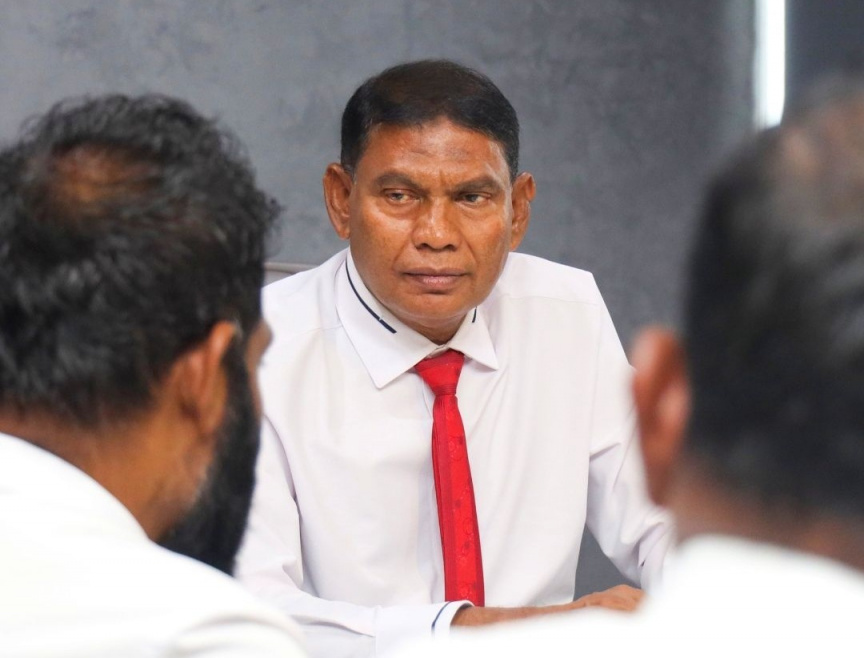
Mohamed Afeef Hussain, the Managing Director of Fenaka Corporation meets with Th.Vilufushi MP, May 15, 2026. (X Photo/Fenaka Corporation Ltd)
Fenaka Corporation spends around MVR 16 million a year on rent for its offices in the Male' area, and the only way to reduce that cost is by establishing a permanent head office, Managing Director Mohamed Afeef Hussain said Wednesday evening.
Fenaka, established in 2012, has operated from rented buildings since its inception.
Speaking on PSM’s Raajje Miadhu programme, Afeef said the company pays about MVR 1.2 million per month in rent for its Male'‑based offices.
“That is roughly MVR 15–16 million a year,” he said, adding that a dedicated head office would eliminate this recurring cost.
Afeef said the Housing Development Corporation (HDC) has allocated land in Hulhumale' for the new head office.
“So we are looking to start the work of setting up that office. When the office is established, we will have our own building. Fenaka staff will be able to work there for free”, Afeef said.
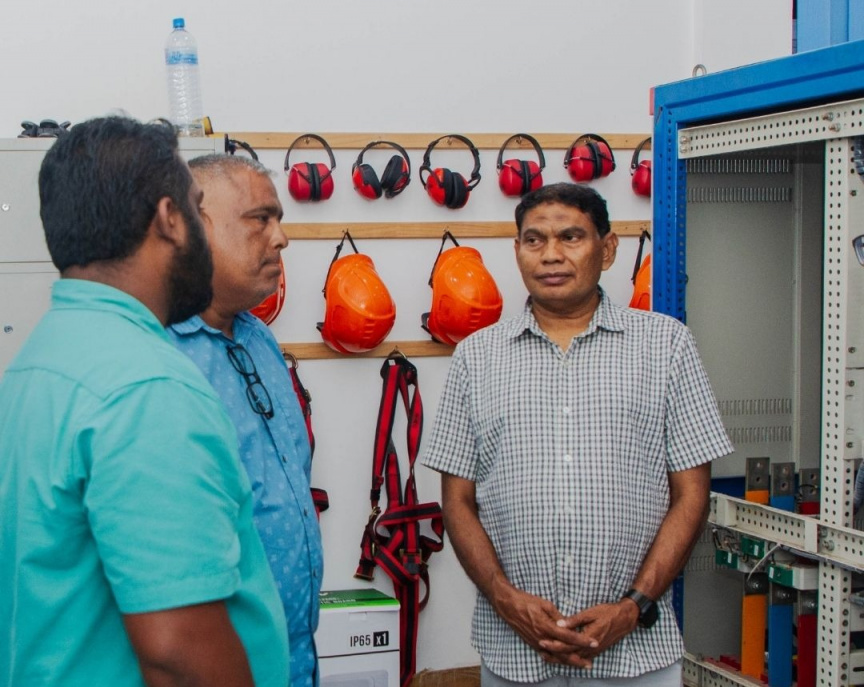
He added that the ground floor of the new building will be used to maintain minimum stock levels required for uninterrupted operations. He also revealed plans to acquire land in K. Thilafushi to build a warehouse.
Fenaka is a loss‑making state‑owned company and has faced repeated allegations of corruption in recent years. The company has also been criticised for politically motivated mass hiring during election periods.
On Tuesday, Fenaka, which employs around 8,000 staff, opened a voluntary resignation scheme offering four months’ salary as a payout.
In April, the Finance Ministry instructed the Privatization and Corporatization Board (PCB) to reduce staffing levels at state‑owned enterprises by 33 percent.
Since then, several SOEs have begun implementing staff‑reduction measures, according to the ministry.