date_range
Sunday 25 Oct 2026


 LOCAL EDITION
close
 LOCAL EDITION


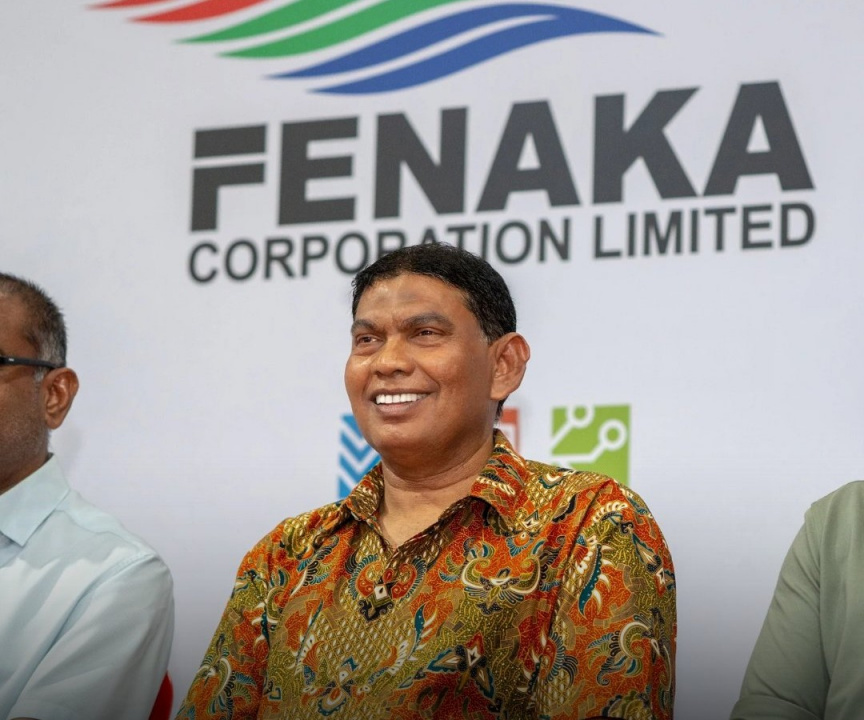
Fenaka Corporation's managing director Mohamed Afeef Hussain. (Photo/Fenaka)
Parliament on Tuesday instructed Fenaka Corporation to determine the number of employees required to maximise its operations and to formulate a new staffing structure, following concerns that the company is operating at a significant loss.
The directive follows the 2021–2023 special audit of Fenaka branches and projects in Addu City, which found that the company had hired large numbers of employees for four in-house projects. The audit noted repeated violations of the 2022 Employees Regulations and the Human Resources SOP and highlighted that the number of staff hired for the projects continued to increase month by month.
According to the committee report, a total of 85 employees, including an assistant manager, eight supervisors and seven administrative staff, were hired for the four Addu City projects. By 2023, 158 employees had been laid off, while 273 additional employees were hired. The report states that these additional hires were made specifically for the projects.
The audit further noted that the monthly recruitment of employees was carried out without obtaining the approval of the then Managing Director Ahmed Saeed Mohamed. As a result, it cannot be confirmed that the additional staff were hired with his authorisation.
In light of these findings, the Public Accounts Committee has instructed Fenaka to identify the number of employees required across all its branches, and to determine the staffing needed to ensure the company’s operations run at full capacity.

The committee’s report was passed unanimously with 53 votes.
Fenaka, which employs around 8,000 staff, recently opened a voluntary resignation window from June 2, during which 108 employees applied to leave. The company has said the move is an important step to strengthen operations and improve services, noting that reducing staff is essential to making Fenaka sustainable.
The company also stated that some projects have stalled due to shortages of goods and materials, leaving large numbers of employees without work in various islands. Fenaka hopes the restructuring will increase productivity and improve service quality.
Employees who resign voluntarily will receive a four-month salary allowance. The company says this is the first step under its reform policy.
Fenaka is among the government-owned companies most frequently accused of corruption, with longstanding concerns that successive administrations have expanded its staff during election periods.