date_range
Wednesday 02 Sep 2026


 LOCAL EDITION
close
 LOCAL EDITION


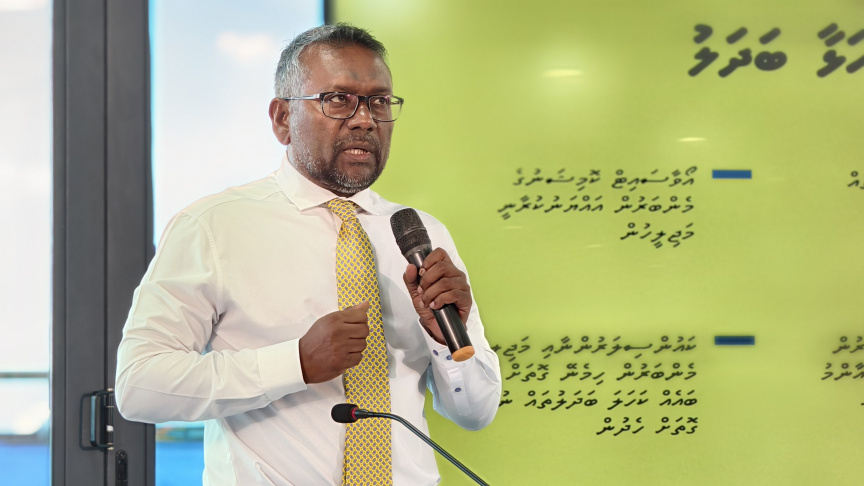
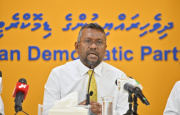
Fayyaz Ismail speaks at the Bodu Badhalu press briefing on April 19, 2026: Fayyaz has criticized the current administration for pushing back press freedom to pre-2008 levels. (Sun Photo/Ahmed Iyaadh)
Former Economic Minister and former Chairperson of the main opposition Maldivian Democratic Party (MDP) Fayyaz Ismail states Maldives is currently witnessing its hard earned freedom of expression and media pushed back to pre-2008 era under the current President Dr. Mohamed Muizzu’s administration.
He made these remarks via a post on X on the occasion of World Press Freedom Day.
In his post, Fayyaz said press freedom in the Maldives has deteriorated to conditions comparable to those of early 2008 in President Muizzu’s administration. He pointed out the media control bill enacted last year and the government-controlled Maldives Media and Broadcasting Commission incepted under the law, as tools for the president to use for suppressing dissent and intimidating independent journalists.
Fayyaz, citing journalists are constantly facing threats and harassment for speaking out against corruption and government incompetence, emphasized the importance of protecting media personnel from state persecution.
“We must repeal the control bill, encourage self-regulated, independent journalism, and create space for free expression,” he said.
Under the Muizzu administration, our hard earned freedom of expression and media has been pushed back to the pre-2008 era.
— Fayyaz Ismail (@faya_i) May 3, 2026
The media control bill, and the control commission act as tools for the president to use for suppressing dissent and intimidating independent journalists.…
Fayyaz stressed the need to ensure Article 27 of the constitution is upheld, and not merely words on a paper, adding no journalist should face state-sponsored threats, and no news outlet should operate in the shadow of a shutdown.
He cited free press as the only path to true accountability.
“To the journalists on the front lines: we stand with you,” he assured.
Maldives has fallen to 108th place in the latest World Press Freedom Index published by Reporters Without Borders (RSF). This represents a decline of four positions from its ranking of 104th last year. According to the RSF report, the country’s overall score decreased from 52.46 to 49.23. Notable declines were recorded across several indicators, with the political ranking dropping from 123 to 129, the economic ranking from 118 to 157, the legal ranking from 103 to 126, and the security ranking from 56 to 77.
A key factor contributing to this deterioration is the governnment-backed Media and Broadcasting Regulation Bill, enacted in September of last year, which has been heavily scrutinized for granting the government significant control over the media, and has posed significant challenges for media organizations. International bodies have expressed concern that the powers conferred upon the regulatory commission under this legislation—particularly the authority to impose fines and block websites—constitute a serious impediment to press freedom. Moreover, recent measures against the news outlet "Adhadhu," following the release of a documentary concerning the President, included police raids on its newsroom, the seizure of equipment, and the imposition of travel bans on senior editorial members.