date_range
Wednesday 28 Oct 2026


 LOCAL EDITION
close
 LOCAL EDITION


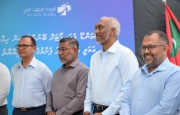
Former presidents Mohamed Nasheed and Ibrahim Mohamed Solih. (Sun Photo)
The reality must be confronted: the rivalry between former president Mohamed Nasheed and former president Ibrahim Mohamed Solih is not a conventional political contest. It goes beyond a simple struggle for a presidential nomination and is not limited to internal party disputes or divisions among supporters. Instead, it has permeated deeper networks and alliances. As a result, even on occasions meant for celebration, the two remain “at each other’s throats.”
In the local council elections and public referendum held last Saturday, the electorate delivered a decisive “No” to the administration of President Dr. Mohamed Muizzu. The Maldivian Democratic Party (MDP) achieved a major victory by retaining the mayorships of all cities. Additionally, 68 percent of voters rejected the government’s proposed amendment to hold presidential and parliamentary elections simultaneously. This has unraveled President Muizzu’s political vulnerabilities.
Yet, just as the public granted the MDP renewed confidence, internal tensions have resurfaced. Specifically, the rivalry between Nasheed and Solih has reignited, creating further turbulence within the party.

Stuck in the past, failing to get along
The MDP’s defeats in the 2023 presidential election and the 2024 parliamentary elections can be traced to two main factors: missteps by the Solih administration and the rift between Nasheed and Solih. Toward the end of that term, the party fractured, leading Nasheed and his supporters to form a new political entity, ‘The Democrats’. While those who defected later rejoined the MDP alongside Nasheed, and both leaders publicly claimed to have resolved their differences, it has become clear that this unity was only temporary.
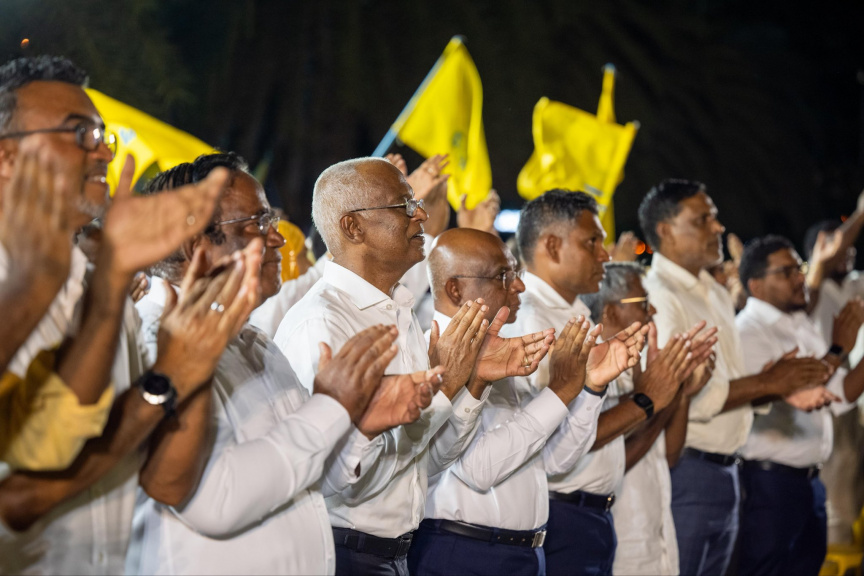
Following the party’s recent electoral success, the rivalry between Nasheed and Solih has reignited. Initially, the dispute centered on claims regarding who was primarily responsible for the victory. Tensions escalated when Nasheed was reportedly denied the opportunity to address supporters at the victory celebration at short notice. This has since resulted in abrupt removals from party positions and public criticism. These developments have caused disillusionment among general members and raised concerns about declining trust in party leadership.
“In every administration, there are those who benefit unfairly from the state. These individuals stay close to whichever president is in power. They consistently present leaders with assurances of victory. This is the main reason they are unwilling to step aside,” said a senior MDP official and former parliamentarian.
Four months ago, Nasheed suggested that neither he nor Solih should contest the presidential election. Yet based on past patterns, such statements rarely translate into action—a trend that appears to be repeating itself.
If this rivalry leads to another primary election, the risk of a renewed party split is high. One faction opposes Nasheed, believing he attempted to “dismantle” the party, while another opposes Solih due to allegations of corruption and abuse of power during his administration. In such a scenario, regardless of the primary outcome, there is a significant chance that one side may become disgruntled and distance itself from the party once more.
A chance for a new person: The ideal way forward
The MDP has already afforded both Nasheed and Solih two opportunities to contest the presidency. Yet neither succeeded in defending their incumbency. Many now believe the most constructive path forward is to back a new candidate from within the party.
“We were among those who opposed President Maumoon Abdul Gayoom because he held power for too long. Yet now, within the party—particularly from these two presidents—we see a refusal to give others a chance. This is a mistake. The solution is clear: if both step aside, these issues would be resolved,” said a current MDP leadership official.
The question then arises: who else within the MDP could contest the presidency? There are several viable options:
• Abdulla Shahid: Current president of the MDP and a seasoned politician
• Faisal Naseem: Former vice president
• Adam Azim: Male’ Mayor who was recently re-elected
• Fayyaz Ismail: Former party chairperson
• Dr. Ahmed Shamheed: South Hulhumale’ MP

Both Nasheed and Solih remain influential within the party. Nasheed’s visits to the islands often reignite the party’s original grassroots energy, making him a key mobilizing force. Solih, on the other hand, has earned a loyal following through his preference for consultation and compromise.
Speaking on condition of anonymity, a sitting MDP lawmaker noted that while neither leader appears willing to step aside yet, such action is essential. The departure of even one could be a substantial loss. However, if both step back and endorse a “common candidate,” that individual could likely secure victory in the 2028 presidential election.
The decisions made by MDP leadership in the coming months will be pivotal in shaping the outcome of 2028. If the party allows the feud between the two former Presidents to dictate its course, it risks another significant defeat. The solution is straightforward: both leaders must step aside to allow new leadership to emerge.