date_range
Sunday 18 Oct 2026


 LOCAL EDITION
close
 LOCAL EDITION


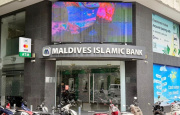
Maldives Islamic Bank (MIB) has opened a special branch for its retail customers. (Photo/MIB)
In 2025, Maldives Islamic Bank’s (MIB) total assets surpassed USD 1 billion, marking a significant milestone. For an institution established only fifteen years ago as the pioneer of Islamic banking in the Maldives, this achievement extends beyond numerical growth. MIB did not merely establish a financial institution; it introduced an entirely new banking paradigm and demonstrated that Shariah-compliant banking can compete effectively within the mainstream financial sector.
What initially emerged as a niche offering—the country’s first and only dedicated Islamic bank in a market long dominated by conventional institutions—has evolved into a central pillar of the financial system. Today, MIB serves over 200,000 customers, finances tourism infrastructure, and has achieved profit growth exceeding threefold within a three-year period. This expansion across all measurable dimensions indicates that Islamic banking in the Maldives is no longer simply an alternative; it has become a preferred choice for nearly one in five depositors nationwide.

As illustrated by the trajectory captured in the table below, all major performance indicators advanced concurrently—a rare outcome for any bank expanding at this pace, and particularly noteworthy for one that simultaneously improved its asset quality.


The distinguishing feature is not any single metric, but the consistency of performance across all key measures. Profitability tripled, total assets nearly tripled, deposits more than doubled, and the proportion of non-performing financing was reduced by half. Institutions experiencing growth of this magnitude typically encounter some deterioration in quality; however, MIB has maintained strength across all dimensions.
This simultaneous improvement is underpinned by several factors. Operating income more than doubled to MVR 897 million, driven not only by the expansion of the financing portfolio but also by a deliberate diversification of revenue streams. Notably, net fee and commission income alone increased by over 300%. At the same time, cost discipline was sustained, with the cost-to-income ratio improving despite significant investments in technology, branch expansion, and human capital. The result is a more efficient institution—one that generates higher returns per rufiyaa of assets, serves more customers per employee, and retains a greater proportion of its earnings.
Perhaps most indicative is the trajectory of return on equity, which increased from 16.8% to 28.4% over the period. This reflects a substantial improvement in profitability relative to shareholder capital, indicating that growth has been productive rather than merely expansive. By comparison, a return on equity exceeding 25% places MIB among the higher-performing banks in the industry.
“Our primary thinking was never about catching up to the market leader but wanting to pull away from the cluster of other banks to create a competitive gap”
The Maldivian banking sector comprises eight licensed institutions. The Bank of Maldives, with a 44-year history, has long maintained a dominant position, holding more than half of total system assets. The remaining seven banks—including foreign branches of SBI, HSBC, Bank of Ceylon, HBL, and MCB, alongside the locally incorporated CBM—collectively account for the remainder, forming a closely clustered competitive group. As recently as 2020, MIB was part of this cohort.
Five years later, MIB has clearly distinguished itself. In terms of total assets, the Bank has surpassed SBI and all other competitors to become the second-largest banking institution in the country. In customer deposits, it reached this position even earlier, overtaking SBI around 2023 and maintaining a substantial lead since. The composite below illustrates this trajectory.

MIB’s estimated share of total banking system assets increased from approximately 7% to 16%, while its share of customer deposits nearly tripled from roughly 7% to 19%. In contrast, no other institution outside the Bank of Maldives recorded meaningful growth during the same period, with foreign branches and smaller banks remaining largely stagnant.
Customer deposits increased from MVR 5.14 billion to MVR 13 billion over a three-year period, representing a 153% growth. In practical terms, individuals and institutions across the Maldives entrusted more than twice the amount of funds to MIB compared to three years earlier. Over the same period, the customer base also doubled, expanding from approximately 100,000 accounts to more than 200,000.
Retail deposits continue to represent the largest segment, accounting for nearly half of the total deposit base. This growth has been driven by a structured expansion of both physical and digital access channels. Over the past three years, the ATM and ECRM network increased from 15 units across 6 atolls to 51 units spanning 12 atolls, while seven new sales centers were established in addition to the existing six branches.
On the digital front, MIB remains the only bank in the Maldives to offer fully instant online account opening for individuals through Efaas, the Maldives’ national digital identity platform. This end-to-end digital process enables customers to open an account, receive their account number, and commence transactions within minutes. Through integration with Efaas via the Apply Now 2.0 platform, this capability has effectively eliminated the most significant barrier to retail deposit acquisition—the requirement for a physical branch visit. Customers nationwide can open, fund, and operate accounts within minutes, irrespective of their location. A similarly seamless experience is extended to foreign customers, with account opening completed within one working day.
The composition of the deposit base has undergone a significant shift. Corporate and institutional deposits—including funds from financial institutions, state-owned enterprises, and private sector corporates—now account for more than half of total deposits, compared to a substantially smaller share three years earlier. This expansion reflects growing confidence among treasurers, chief financial officers, and institutional investors in MIB’s stability and service capabilities.
This transition has been enabled by advancements in corporate banking infrastructure. MIB introduced fully digital corporate account opening, integrated with the Ministry of Economic Development and Trade’s business portal, allowing seamless onboarding without the need for in-person branch visits. This capability is further reinforced by the launch of FaisaNet 2.0, an enhanced internet banking platform tailored for corporate treasury operations, and FaisaMobile X, which extends real-time transactional functionality to business users via mobile devices.

The deepening of the deposit base has strengthened liquidity and reduced concentration risk, thereby establishing a robust foundation for subsequent financing growth.
A key driver of this progress has been the Bank’s strategic expansion into the tourism sector, where financing reached MVR 668 million as at 2025, representing an exceptional 385% increase from 2022. This growth underscores MIB’s expanding presence and credibility within the hospitality industry.
In parallel, the Bank has reinforced its role as a key national partner through its support for strategically significant infrastructure projects, with total exposures exceeding MVR 786 million. This represents a 197% increase since 2022 and highlights MIB’s continued commitment to enabling critical national development and supporting large-scale, high-impact public sector initiatives.
In 2022, MIB’s financing portfolio was predominantly concentrated in consumer lending, with Ujaalaa personal financing and home financing accounting for the majority of exposures. Corporate financing represented only a limited portion of the overall portfolio.
Three years later, this composition has undergone a fundamental transformation.


Corporate financing now accounts for 40% of the portfolio, with capital deployed across tourism infrastructure, resort development, guesthouse expansion, asset refinancing, trade finance, and construction. This expansion is not merely a function of scale; rather, it reflects MIB’s transition from a predominantly retail-focused institution into a full-service bank supporting the productive sectors of the Maldivian economy.
On the retail side, the financing product suite has undergone significant development. The introduction of the Ujaalaa Now portal has digitized the entire consumer financing application process, enabling customers to apply for, track, and manage their financing online without the need to visit a branch. From a product perspective, Ujaalaa Cash Financing has experienced strong growth as a flexible liquidity solution, while home financing volumes have nearly doubled, reflecting sustained demand for housing across the atolls.
These innovations, combined with the expansion of the Bank’s physical network, have enhanced accessibility to financing, making it faster and more equitable regardless of geographic location.
MIB has established itself as a dependable trade finance partner, playing a critical role in supporting national economic growth through targeted and innovative financing solutions. The Bank now facilitates a substantial share of the country’s total trade volume, underscoring its increasing systemic importance within the Maldivian economy.
Trade activity has expanded considerably, with transaction volumes increasing by 60% compared to 2022, while total transaction value rose to MVR 7.6 billion, representing a 123% increase over the same period.
This growth has been closely linked to MIB’s strong emphasis on supporting corporate clients and small and medium-sized enterprises (SMEs), enabling businesses to scale operations, strengthen trade capacity, and participate more actively in both domestic and international markets. Through tailored financing structures and innovative solutions, the Bank has also supported key strategic and infrastructure projects, further reinforcing its contribution to national development.
Collectively, these developments position MIB not only as a leading provider of trade finance but also as a key enabler of business expansion and economic resilience in the Maldives.
Profit growth was not driven solely by balance sheet expansion. Rather, it reflected MIB’s ability to diversify and enhance its revenue streams. Total operating income increased from MVR 343 million to MVR 897 million, while the composition of that income underwent a significant transformation.

Fee and commission income increased by 308%, rising from MVR 37 million to MVR 151 million. This growth was driven by revenues from card transactions, digital banking services, trade finance commissions, and processing fees. Three years ago, approximately nine out of every ten rufiyaa earned by MIB originated from financing margins. Today, non-fund-based income represents a significantly larger share of total revenue, resulting in a more diversified and resilient earnings profile.
This diversification is strategically important, as it reduces the Bank’s dependence on the profit rate cycle. In periods where financing yields may compress, the expanded fee-based income stream provides a meaningful buffer. This represents a structural enhancement in the quality of earnings, rather than merely an increase in their magnitude.
A key determinant distinguishing sustainable growth from imprudent expansion is asset quality. Rapidly growing banks typically experience an increase in non-performing ratios as they extend into new segments. However, MIB has demonstrated a contrasting trend.

The non-performing advances ratio declined from 4.59% in 2022 to 2.97% in 2025, representing a 35.3% reduction, despite the financing portfolio nearly tripling in size. In practical terms, this indicates that for every MVR 100 extended in financing, less than MVR 3 is currently classified as non-performing, compared to nearly MVR 6 three years earlier.
Capital adequacy remained strong throughout the period. The Tier 1 capital ratio stood at 11.3%, while the total capital adequacy ratio reached 16.2%, both comfortably exceeding the regulatory minimums established by the Maldives Monetary Authority. Shareholders’ equity increased from MVR 647 million to MVR 1.52 billion, more than doubling and providing a substantial buffer against potential risks while supporting sustained growth.
The combination of rapid expansion, improving asset quality, and strong capitalization represents one of the most challenging balances to achieve in banking. It underscores the strengthening of MIB’s credit underwriting framework even as the Bank expanded its operational scope.
Balance sheet performance ultimately depends on the extent to which customers can access banking services. In a country comprising approximately 1,200 islands across 20 atolls, physical reach is not merely a matter of convenience; it is a critical determinant of financial inclusion.
Beyond its physical expansion, MIB introduced Faisa Wear—contactless payment rings and tags—marking the first deployment of wearable payment technology in the Maldives. Supported by an expanding wireless POS network and an Internet Payment Gateway capable of acquiring major card schemes such as VISA and MasterCard, the Bank provides comprehensive payment services to merchants across the country.
The cumulative outcome is a banking institution that is accessible around the clock, nationwide, through multiple customer-preferred channels. The more than 200,000 accounts represent not merely a numerical milestone, but individuals and businesses now empowered to transact, save, and access financing without the geographic constraints that once limited financial participation.
MIB’s share price increased from MVR 35.10 in 2022 to MVR 102.88 in 2025, representing a 193% appreciation. Return on equity improved from 16.8% to 28.4%, indicating a substantially higher level of profit generated per rufiyaa of shareholder capital. The dividend yield stood at 5.3%, with a payout ratio of 35%, reflecting a deliberate balance between distributing returns to shareholders and retaining earnings to support future growth.
Return on assets also increased from 2.07% to 2.64% despite rapid balance sheet expansion, demonstrating that asset growth has been both efficient and productive rather than merely accumulative. Taken together, the combination of capital appreciation, dividend yield, and improving returns on capital reflects sustained and meaningful value creation for investors over the period.
This financial performance has been strongly reinforced by MIB’s accelerated digital transformation. The Bank is the first in the Maldives to introduce online and instant account opening for both individuals and corporates, instant debit card issuance, and form factor-based payment solutions such as FaisaWear rings and tags. Core service offerings—including customer onboarding, retail financing, payment solutions, internet banking for both retail and corporate clients, and the online management of financing facilities—have been progressively digitized.
In recent years, MIB has recorded substantial growth across all major digital and payment channels, reflecting strong customer adoption. Internet and mobile banking logins increased from 6.76 million to 11.8 million (a 74% rise), while transactions grew from 27.36 million to 68.04 million (an increase of 149%) between 2024 and 2025. Supporting this momentum, ATM transactions rose by 55%, POS transactions by 48%, and card transactions by 91%. Concurrently, the number of POS merchants increased by 83%, new card issuance rose by 40%, and POS terminals expanded by 6%, indicating broad-based growth across the Bank’s payments ecosystem.
This performance has been driven by continuous enhancements to MIB’s digital platforms, including FaisaNet and FaisaMobile X, alongside the expansion of POS infrastructure and modern self-service solutions. Collectively, these developments have strengthened the Bank’s integrated ecosystem, enabling greater convenience, accessibility, and consistency in customer experience across both digital and physical channels. Currently, more than 90% of MIB’s customers access services through digital platforms—predominantly mobile banking—significantly reducing reliance on branch visits.
In parallel, the full suite of Ujaalaa financing services has been fully digitized, enabling customers to apply for, monitor, and manage financing entirely online through platforms such as UjaalaaNow. Supported by a comprehensive ecosystem of self-service solutions—including ApplyNow, ATMs/ECRMs, POS services, and payment gateways—these advancements have accelerated MIB’s digital transformation, delivering a faster, more efficient, and seamless banking experience.
MIB continues to invest in enhancing its digital infrastructure to improve scalability, resilience, and operational efficiency. Ongoing initiatives are focused on strengthening cybersecurity, advancing service reliability, and expanding the Bank’s digital ecosystem to meet evolving customer needs. This sustained focus positions MIB to support future growth and further reinforce its leadership in digital banking innovation in the Maldives.
MIB’s digital and financial expansion has been further reinforced by a strategically aligned and effective marketing function. Marketing has played a pivotal role in enabling the Bank’s transition from a niche Islamic financial institution to a mainstream market leader. Beyond product promotion, it has actively shaped public perception of Islamic banking in the Maldives, positioning it as modern, accessible, and digitally advanced. Through the consistent communication of key milestones—such as instant account opening, FaisaMobile X, FaisaNet, and wearable payment solutions—marketing has translated complex innovations into clear and compelling customer value propositions. This has strengthened brand visibility while building trust among customers in an increasingly competitive banking landscape, reinforcing MIB’s position as a leading digital Islamic bank in the Maldives.
At a strategic level, marketing has directly supported customer acquisition, deposit mobilization, and digital adoption—key drivers of the Bank’s rapid growth. This has been achieved through integrated campaigns across digital and traditional media, supported by public relations initiatives, product awareness programmes, and targeted promotional activities designed to educate customers on MIB’s comprehensive product offering, including financing solutions, digital banking platforms, and payment services.
In addition, community engagement programmes, financial literacy initiatives, and customer-focused events—alongside broader corporate social responsibility efforts centred on environmental sustainability, education, and social well-being—have played an important role in strengthening brand connection and improving awareness of Islamic banking solutions across diverse segments. These initiatives have deepened engagement with the communities MIB serves, enhancing trust, strengthening brand credibility, and fostering long-term customer loyalty across the Maldives. Combined with product-led storytelling and promotional campaigns, these efforts have accelerated customer onboarding across both retail and corporate segments while reinforcing the adoption of digital platforms and card-based payment solutions.
By aligning its messaging with national connectivity challenges and financial inclusion objectives, marketing has ensured that MIB’s growth is not only communicated but experienced across the country. In doing so, it has functioned as a key growth engine—driving scale, deepening engagement, and strengthening the Bank’s competitive position as the Maldives’ leading Islamic financial institution as it continues to expand its footprint.
MIB’s strong performance has been recognized through a series of prestigious industry awards, reflecting its leadership across multiple banking segments. These include the Visa Commercial Solutions Excellence Award for Best Business Debit Issuer, as well as the titles of Islamic Bank of the Decade, Islamic Finance Entity of the Year, and Islamic Bank of the Year at the 10th IFFSA Awards 2025. Further reinforcing its market position, the Bank also received the Best Islamic Retail Bank in Maldives 2025 and the Best Digital Banking Initiative Award in Maldives 2025 at the 11th IRBA Awards, underscoring its continued excellence in retail and digital banking innovation.
However, such milestones also elevate expectations. With total assets of MVR 16.65 billion and a customer base exceeding 218,000, MIB now operates at a scale where future challenges differ fundamentally from those encountered three years ago. Sustaining asset quality as the portfolio matures, further strengthening the corporate and SME segments, navigating evolving economic conditions, and maintaining leadership in digital innovation will define the Bank’s next phase of growth.
Fifteen years ago, MIB set out to demonstrate that Islamic banking could succeed in the Maldives. That objective has now been achieved. The billion-dollar milestone is not a conclusion, but a transition point—one that raises the more compelling question of how MIB will build on this foundation in the years ahead.