date_range
Wednesday 28 Oct 2026


 LOCAL EDITION
close
 LOCAL EDITION


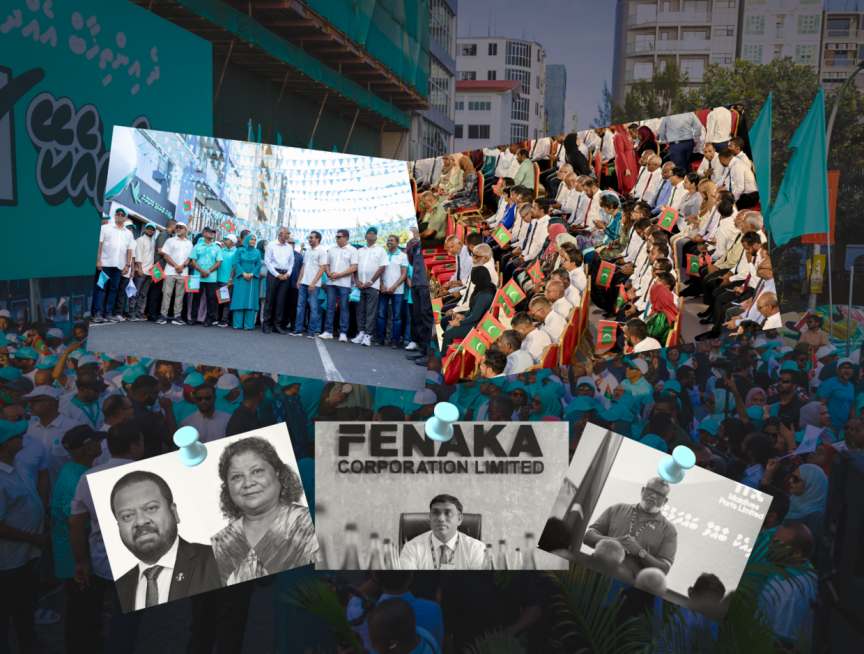
The dust from the Local Council Elections has yet to settle. Less than twenty-four hours after President Dr. Mohamed Muizzu departed from the Maldives, a sudden political storm has erupted. Numerous political figures, ranging from those in state-owned enterprises (SOEs) to high-ranking government positions, have found themselves dismissed from their posts.
Following the leak of an audio clip involving Asma Rasheed, the Member of Parliament for the Maafannu Central constituency, her children—who held government positions—were removed from office. Additionally, the tenures of several retired officials appointed to state-owned companies have also been terminated.
It was only the other day that the government faced a significant setback in both the Local Council Elections and the referendum. Losing by such a margin, despite the expenditure of hundreds of millions of Rufiyaa and the distribution of hundreds of jobs, is no minor defeat. The fact that the leadership of government companies and political positions began to tremble before there was even time to process this loss suggests this is no coincidence. It points directly to this major failure—a narrative of systemic shortcomings and the "internal saboteurs" who facilitated this defeat.

However, while these "saboteurs" are being rooted out, what of the hundreds of other political jobs handed out in the lead-up to this election? It remains a serious question whether keeping those who were parachuted into various companies under political patronage constitutes genuine reform.
Suffering such a substantial defeat mid-term is a significant blow to the administration. It sends a clear message that many within the President's inner circle have failed. It indicates that grave errors were made in political calculations. Despite the assurances of high-ranking officials to secure a victory for the PNC, they failed to deliver even the pledged number of votes.
"Serious mistakes have been made. Despite a massive campaign budget allocated to various entities in these companies and their teams, the results turned out to be the exact opposite, especially in places like Malé and Addu," remarked a government official who played a key role in the PNC campaign.
Furthermore, the recently leaked audio of MP Asma Rasheed underscores this reality. Although the authenticity of the audio has not been officially confirmed, action has already been taken in response. This suggests a high probability that the recording is genuine. It reveals deep-seated resentment towards the PNC and the current administration, stemming from a perceived failure to provide a "rightful" position promised to a youth loyal to Asma. Such public discontent from an MP representing a Malé constituency undoubtedly influenced the local electorate. This may well be one of the reasons behind the significant defeat of the PNC mayoral candidate, Moosa Ali Jaleel, in Malé. Consequently, political figures are now losing their jobs due to the factors that led to this failure.

Leaders of companies like Fenaka, where political appointments were distributed excessively, have suddenly been dismissed. Is this because those political jobs failed to yield the desired results?
Thus, the dismissal of the President’s political appointees at this juncture is hardly surprising. Identifying the causes of this major failure might not be a difficult puzzle to solve. However, the greatest pressure currently facing the President is distinguishing between true loyalists and those who are secretly undermining the administration.
One thing is becoming certain: following the Local Council Elections, various government agencies and companies have begun to feel a sense of urgency. Some institutions are already announcing cost-cutting measures. However, can it truly be said that the current dismissal of company heads is motivated by a genuine intent to reduce expenses?
Just a month ago, the very leaders dismissed yesterday were opening the floodgates to recruit hundreds of new employees into their companies. This represents a massive expenditure. With a major election on the horizon, one must wonder how many people were given jobs during that period.
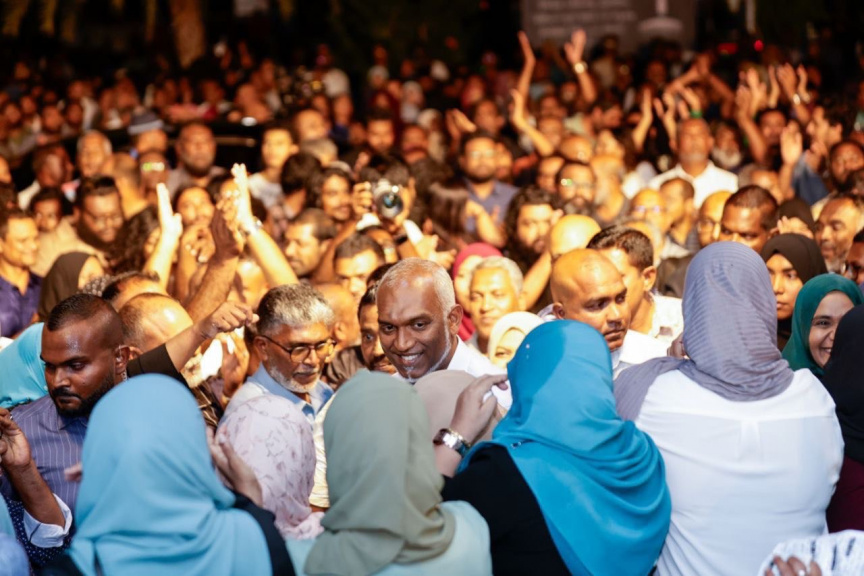
Therefore, at a time when senior officials are being removed, there is little room to claim this is being done solely for the sake of austerity. If the goal is truly to reduce spending, then the hundreds of political positions filled across various ministries should be vacated. Those in government companies receiving high salaries—who do little more than post on social media—should also be dismissed. The reality is that this top-heavy administration, bloated with political appointees, has only brought losses to President Muizzu, resulting in widespread public dissatisfaction. Consequently, it is imperative to downsize these political roles.
The recent Local Council Elections and the referendum served as a wake-up call, shattering the illusion of overwhelming public support. Time is running out. President Muizzu has only two and a half years remaining to implement meaningful reforms. The road ahead promises to be a challenging and arduous journey.