date_range
Saturday 22 Aug 2026


 LOCAL EDITION
close
 LOCAL EDITION


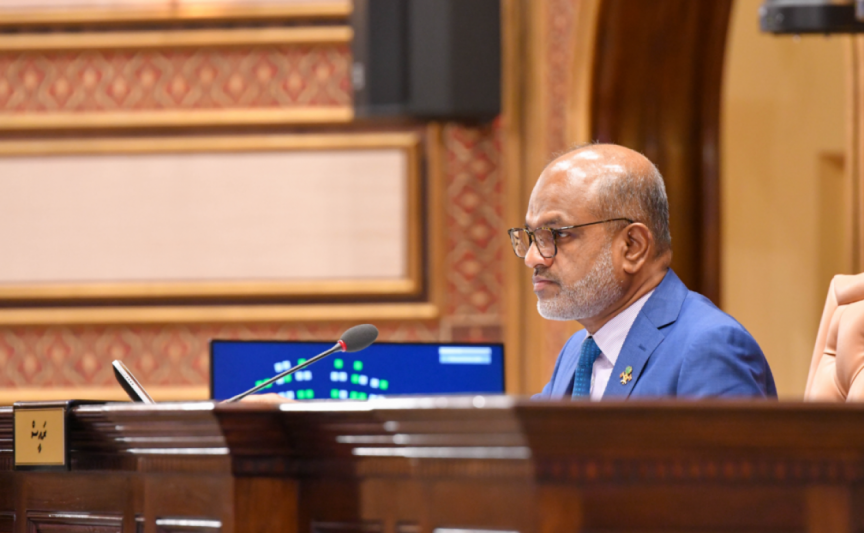
Deputy Speaker Ahmed Nazim presides over a sitting of the Parliament. (Photo/People's Majlis)
Deputy Speaker Ahmed Nazim has accused the opposition of hypocrisy over their criticism of the plan to hold presidential and parliamentary elections together, saying the matter was already settled by the Special Parliament 16 years ago.
Parliament has approved a public referendum on merging the two elections, to be held on 4 April alongside the local council elections. The ruling PNC supports the move, while the MDP and several other parties have voiced strong objections. Some opposition figures and lawyers held a press conference this week alleging the government is pursuing the change with “bad intentions”.
Nazim, who served in the Special Parliament that drafted the Constitution, said the question of holding the two elections simultaneously was thoroughly debated between 23 March and 20 April 2008. Three separate proposals were submitted, he said, and the matter was decided at the time.
The proposals included an amendment by then-Male' MP and MDP founding president Ibrahim Ismail to hold both elections within six to eight months of the Constitution coming into force. A second amendment by then-Maalhosmadulu North MP Ali Waheed proposed holding them within six months. A third proposal by then‑MP Shahin Hameed also called for simultaneous elections within a six‑to‑eight‑month window.
“This debate was held from March 23 to April 20. Three motions were moved, three people proposed three ways. We are going with the motion that passed,” Nazim said.
He explained that the eventual gap between the two elections arose because the new Constitution required the formation of an independent Elections Commission, the enactment of electoral laws, and the redefinition of administrative constituencies. The time taken to complete those processes resulted in the elections being held separately.
“It seems like a crack in the spine of the Constitution to have the elections separately,” he said.
Nazim added that regardless of how capable a leader may be, it is worth considering whether it is healthy for one party to secure a supermajority in Parliament. For that reason, he said, it is best to let the public decide through a vote.

He also criticised the opposition press conference calling for a “no” vote in the referendum, describing it as “very hypocritical”.
Nazim noted that former Chief Justice Dr Ahmed Abdulla Didi attended the press conference to speak on constitutional matters. However, he questioned the presence of others who had previously voted to remove Didi from office. He pointed out that former Defence Minister Mariya Ahmed Didi was part of the government that dismissed him, while former Deputy Speaker Eva Abdulla and former MP Ali Hussain also voted for his removal.
“The constitutional speaker is Ahmed Abdulla Didi. And around him are people who voted to remove him,” Nazim said.
He added that three constitutional amendments were passed during Didi’s tenure as Chief Justice, from 28 June 2018 to 28 November 2019, including the amendment allowing foreign land ownership and the amendment barring individuals above 65 from contesting the presidency. At the time, he said, Didi did not oppose constitutional changes.
While some critics are demanding the government clarify its intentions behind merging the elections, the government maintains that the move is cost‑effective and carries multiple administrative benefits.