date_range
Monday 05 Oct 2026


 LOCAL EDITION
close
 LOCAL EDITION


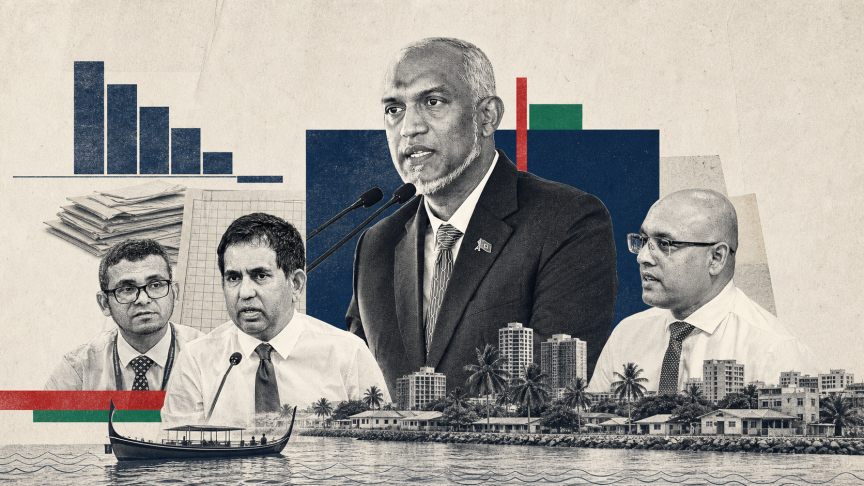
Imagine two Maldivian families. The first family earns a substantial income. In addition to owning expensive assets, they have high monthly earnings and good access to credit. However, they spend without restraint. They hire unnecessary staff and purchase costly items that generate no return. They launch projects without securing funding, and whenever bills become due, they borrow more money. The result is that, despite having a large income, they are unable to service their debts. The second family earns a smaller income. Yet, they exercise control over their spending and avoid unnecessary debt. They save for emergencies and invest only in things that provide genuine value. Despite their lower income, this family is far more financially secure. Maldives has always been the first family.
The Maldives' capacity to generate foreign exchange is not insignificant. Tourism in the Maldives remains one of the strongest industries in the region. Official estimates indicate that tourism is expected to generate USD 5.6 billion this year. Government revenue has also increased following measures taken by this administration, including increases in tourism taxes, the Green Tax, and airport fees. Nevertheless, the Maldives continues to face a severe dollar shortage and significant debt pressures. The gap between the official exchange rate and the black market rate has widened, pushing the black-market dollar rate close to MVR 23. The issue is not simply that the Maldives does not earn enough dollars. The core underlying problem is decades of government overspending, easy borrowing, and the repeated postponement of painful but necessary reforms.
The government’s latest response to this issue was to order the tourism sector to surrender additional dollars to the state. Under the current foreign exchange regulations, resorts are required to exchange USD 500 per tourist or 20 percent of their monthly foreign currency revenue through Maldivian banks. The Governor of the MMA has now stated that the government plans to amend the law to require resorts and guesthouses to exchange 40 percent of their foreign currency revenue. In the short term, this may increase the flow of dollars into banks. It may provide temporary relief to importers seeking dollars and ease immediate pressures on the banking system. However, this is not a permanent solution; it treats the symptoms of the illness rather than addressing the root cause.
The dollar shortage is directly linked to the government's massive demand for foreign currency. Large amounts of dollars are required to service debt, pay for imports and fuel, finance government projects, cover state expenses, and support state-owned enterprises. The World Bank estimates that the Maldives will need USD 1.7 billion this year just to service external debt. Forcing private businesses to surrender a large share of their dollar earnings to the state will not, on its own, resolve this massive problem. The government has already taken several steps to increase revenue: airport departure taxes and fees have been raised, tourism taxes tightened, and the Green Tax increased. Mandatory dollar exchange policies have been enforced, and policies have been introduced to promote the expansion of tourism, airport activities, and bunkering services. While these measures may increase revenue, raising taxes and forcing currency exchanges alone cannot save a country from a financial crisis if its spending framework remains undisciplined.
This became evident from last year’s budget alone. Projected revenue and grants stood at MVR 39.8 billion, while estimated expenditure reached MVR 49.2 billion—a deficit of roughly MVR 9.4 billion. The government later disclosed that recurrent expenditure alone had risen to MVR 34.8 billion. Of this amount, MVR 14.2 billion went toward employee salaries, 4.6 billion Rufiyaa toward interest payments, and MVR 9.9 billion toward subsidies and aid. These figures demonstrate that, instead of asking "where to get more dollars," the far more critical question is "what is the money being spent on, and what results are citizens getting from it?" Past administrations, as well as the current one, bear responsibility for a culture of multiplying political posts, inflating salary expenses, incurring substantial costs on unprofitable overseas embassies, failing to control state-owned enterprises, and launching projects with unverified financial returns. Not every political position or state company job is wasteful, but rather than leaving citizens in uncertainty, a comprehensive audit is needed to assess employee numbers and the quality of their work.

The same principle applies to subsidies and Aasandha. These are not merely "unnecessary expenses." Healthcare, basic food, electricity, and fuel subsidies serve to protect ordinary families amid inflation and dollar shortages. Scrapping them blindly would mean transferring the burden of the state’s financial failures onto the poorest families. However, universal subsidies, skyrocketing medicine prices, and uncontrolled procurement must be reformed. Targeted assistance should go to those who need it most; Aasandha should protect patients, not inefficient suppliers. Although the government has proposed targeting subsidies toward those in need and reforming state companies, implementation remains incomplete. While there is talk of job cuts on one side, hiring continues on the other under titles such as "Principal" and "Undersecretary." Standards of integrity in major projects must also be strengthened. The purchase of Turkish drones may be presented as a national security decision, but given the country's financial condition, full transparency is required. The Rasmalé project may offer a solution to the housing crisis, and the government states that land reclamation will not be funded directly from the state budget. Nevertheless, before celebrating such massive projects, the public deserves to know the financing structure, guarantees, infrastructure costs, expected returns, and future debt risks.
This represents a major political failure. Politicians are quick to announce new ways to raise revenue because such measures are visible and easy to present as progress. Trimming political jobs, reducing redundant staff, reforming loss-making state enterprises, halting non-viable projects, and investigating corruption are far more difficult tasks that carry the risk of losing political support. Yet, only these difficult decisions can deliver permanent stability. Instead of focusing solely on how to extract more dollars from resorts, we must ask why the financial system fails to retain sufficient dollars despite growing tourism revenue. Until waste is curbed, procurement systems are strengthened, the finances of mega-projects are made transparent, and borrowing for unsustainable projects comes to an end, this crisis will continue to repeat itself.
It is time to move beyond political self-interest and be honest about reform. That effort must begin by putting an end to theft, corruption, and wasteful spending. For the current administration, recent election results highlight its low levels of popularity. This is precisely the time to undertake the necessary reforms for the country. While these measures may further reduce its popularity, they are ultimately guaranteed to benefit the nation in the long run.
A high-earning family does not achieve financial security by demanding more money from its breadwinners; it achieves security by learning to manage what it already has. The Maldives must do exactly the same.