date_range
Tuesday 13 Oct 2026


 LOCAL EDITION
close
 LOCAL EDITION


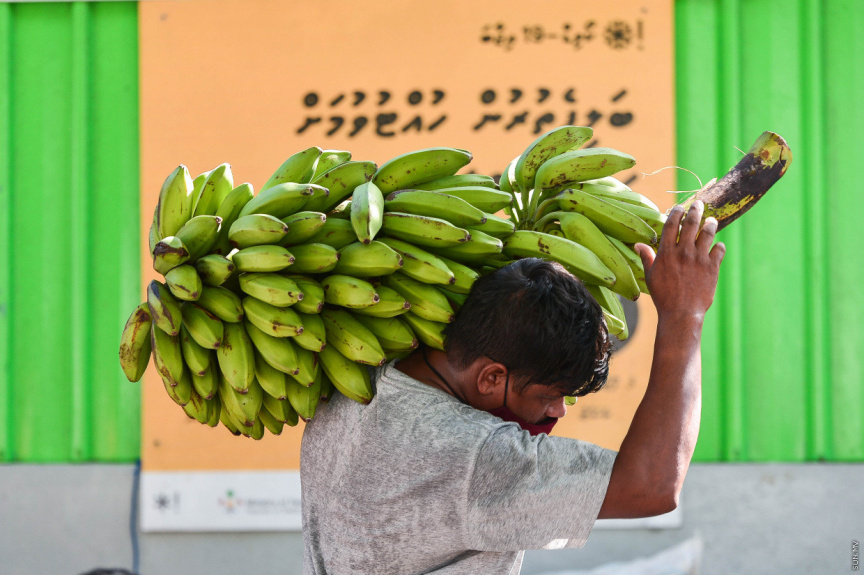
A worker carrying a green banana bunch in Male' market area. (Sun Photo/Fayaz Moosa)
The Asian Development Bank (ADB) has lowered the Maldives’ inflation forecast to 2.2 percent this year, but warns that delays in reforming loss-making state-owned enterprises and universal subsidy schemes could intensify the fiscal strain the country is under.
The ADB released its latest Asia Development Outlook report on Wednesday. The Maldives’ GDP growth projection remains unchanged from the last report released in July. As such, the GDP growth is projected at 1 percent this year and 3 percent next year, driven mainly by the continued impacts of the Middle East conflict, especially on the country’s tourism sector.
The projections are significantly down from the 5.7 percent GDP growth last year.
In its ADO report in July, ADB projected inflation to rise by 5 percent this year and by 4 percent next year. The bank lowered the forecasts in its latest report, with inflation now projected at 2.2 percent this year and 2 percent next year, reflecting the smaller-than-expected impact of global oil prices due to extensive subsidies, particularly for fuel and electricity.
However, the higher subsidy spending this year is expected to widen the fiscal deficit. The fiscal deficit is forecast to be higher than July projections, at 6 percent this year and 4.5 percent next year.
The ABD concluded that while construction resilience and a modest recovery in tourism provide near-term support, vulnerability to external shocks, the debt overhang, and weakening fish exports cloud the Maldives’ economic outlook.
“Continued instability in the Middle East threatens to disrupt tourist flows during the late 2026–early 2027 peak season, and delays in reforming loss-making state-owned enterprises and the universal subsidy schemes could intensify fiscal strain,” warned the bank.
Utilities alone are heavily subsidized in the Maldives, and the increase in spending on subsidies is likely linked the rise in global fuel prices with the Strait of Hormuz effectively closed due to the US-Israeli war on Iran.

However, Aasandha and subsidies are areas where the actual spending has persistently surpassed budgeted figures with each passing year.
Back in 2025, the Parliament had approved a budget allocation of MVR 1.86 billion on subsidies, but the actual spending by the end of the year rose to MVR 3.45 billion.
International financial institutions have been urging the Maldives for years to shift to targeted subsidies and implement other reforms in order to alleviate risks of it defaulting on its staggering external debt obligations.
President Dr. Mohamed Muizzu administration had included major reforms in its 2025 budget, including phasing out broad subsidies in favor of targeted subsidies. But halfway into the year, he decided against implementing the reforms, stating that he does not wish to deprive the people of the state-backed benefits they enjoy.
The decision drew criticism from economists.
President Muizzu’s administration had also announced plans to dissolve and merge some SOEs in a bid to cut down costs, but has been accused of establishing more state companies and mass hirings during election campaigns.