date_range
Tuesday 13 Oct 2026


 LOCAL EDITION
close
 LOCAL EDITION


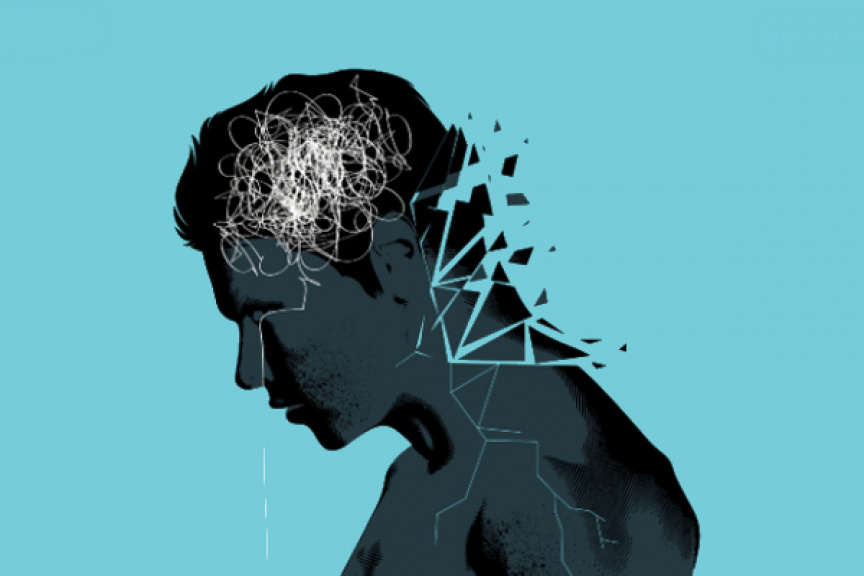
We’ve covered some pretty heavy topics in relation to mental health so far—from the stigma surrounding it and the media’s portrayal of mental illness to society’s perceptions. In fact, the very first article I ever posted in this column, published during Suicide Prevention Month, was about the importance of—you guessed it—mental health.
Over the years, mental health has gained far more recognition. Diagnoses have become more normalized, and people are becoming increasingly comfortable seeking help from professionals who specialize in mental healthcare. Despite the persistent stigma surrounding mental illness, society has become more aware in recent years, with many previously underrepresented conditions now receiving the recognition and acknowledgement they deserve. Even so, mental health is still something that needs to be discussed more openly, especially considering that there are still people around the world who either refuse to believe mental illnesses exist or choose to remain ignorant. Alas, it’s all a work in progress (like most things in this world), and we can only hope things continue moving in the right direction.

Not to divert from the main topic at hand, despite the many strides made in raising awareness around mental health and mental illness (thanks to the countless individuals who worked tirelessly to make that happen), men’s mental health remains something that is rarely talked about. Now, while I understand the frustration directed toward men because of the many questionable—if not alarming—actions committed by many of them since the beginning of time, I don’t believe that generalizing an entire gender and placing them into one specific box is the right path to take (mind you, I am a feminist—just not a misandrist—which is an entirely different conversation). I think that sometimes we become so consumed by the hurt, resentment, or anger caused by certain people in our lives or experiences of others we know that we begin to internalize those experiences and unfairly generalize them to an entire gender, overlooking the simple truth that every individual is different. Which, I do understand, by the way, because I have been at that very point many times in my life. Still, although the saying goes, “it’s always a man,” it really isn’t all men. And men are people, too. People who have feelings just like the rest of us; therefore, their mental health matters just as much.
Now whether or not they weaponize it and use it against the rest of us is completely up to and on them—like it would be on any woman who chooses to do the same—but this isn’t the topic we are discussing today.
I would hate for my loved ones who are of the male gender, to be denied empathy, consideration, and any sort of help—whether professional or personal—just because of their sex, which is something they really can’t help. I would hate for my little brother to seek help and be denied of it because he is a man and doesn’t deserve care like the rest of us. Or for him to be told that his feelings need to be suppressed, simply because men shouldn’t present themselves as “vulnerable” or “weak.” See, now that is also injustice.
And that is why I’m here, talking about this today.
Entertainment media’s portrayal: True or false?

I don’t consider myself to be a huge cinephile, but I do enjoy watching some movies and TV shows from time to time. For me, personally, I enjoy watching those I can resonate with or covers important and real topics that deserve more recognition. There’s a reason why One Day at a Time is one of my favourite TV shows. I think by this point, we’re all aware that the entertainment media always plays a significant role in shaping or at least enabling society’s understanding of certain matters and subjects. To be honest, I could say the same about the portrayal of men’s mental health—or even their behaviours.
For decades, films, TV shows, and video games have frequently portrayed men as emotionally stoic, fearless, and self-reliant. Male characters are often celebrated for suppressing fear, grief, and vulnerability, reinforcing the belief that expressing emotions is a sign of weakness rather than strength. These repeated portrayals contribute to the normalization and encouragement of harmful stereotypes that discourage many men from acknowledging psychological distress or seeking professional support when they need it.

One of the most common tropes in entertainment is the "strong, silent hero." Action protagonists such as James Bond, John Wick, and Batman often endure immense trauma, loss, and violence while rarely discussing their emotions or seeking help. Instead, emotional pain is typically redirected into revenge, violence, or relentless determination. While these characters are compelling and entertaining, they may unintentionally reinforce the idea that "real men" should solve emotional problems alone rather than through healthy coping mechanisms such as therapy, social support, or open communication.
Comedy has also contributed to the stigma surrounding men's mental health by portraying emotional vulnerability as something to ridicule. Male characters who cry, express anxiety, or admit fear are frequently the target of jokes or are depicted as weak, overly sensitive, or less masculine. Sitcoms and comedy films have often relied on humor that mocks men for showing affection or emotional openness, reinforcing the notion that emotional expression is incompatible with traditional masculinity. Such portrayals can discourage audiences from viewing emotional honesty as normal or acceptable for men.

Another problematic pattern is the romanticization of emotional suffering. Films such as Joker depict protagonists experiencing severe psychological distress, social isolation, and trauma. While Joker sparked important conversations about mental illness and societal neglect, some critics argued that the film risked glamorizing violence as a response to untreated mental health issues. Similarly, male characters experiencing depression or trauma are often portrayed as "broken geniuses" or antiheroes whose emotional pain makes them more mysterious or compelling (dare I say dangerous), rather than emphasizing recovery, treatment, and resilience.

Fortunately, entertainment media has begun to evolve in recent years by offering more nuanced portrayals of men's mental health. TV shows such as Ted Lasso openly explore anxiety, panic attacks, grief, and therapy through a male protagonist who remains compassionate and emotionally expressive without sacrificing his masculinity. Likewise, BoJack Horseman examines depression, addiction, trauma, and self-destructive behaviors with remarkable honesty, illustrating how unresolved mental health struggles can affect relationships and personal growth. MCU’s Daredevil (I finished watching this show like, yesterday), also portrays emotional distress, the pressure of having to remain strong, and embracing grief brilliantly. A noteworthy movie/book that’s impacted me heavily on this subject is The Perks of Being a Wallflower.
These portrayals challenge traditional stereotypes by showing that vulnerability, emotional expression, and seeking professional help are signs of courage rather than weakness.
A conversation with an associate psychologist

It does help to have a sister who specializes in Psychology. Proudly do I claim that I had the lovely privilege of engaging in quite an interesting and intellectual conversation with her on this topic (among many other topics I have the privilege of discussing with her). While she isn’t professionally practicing Psychology yet (despite being licensed as an associate), she is still able to discuss some very complex topics regarding mental health using the knowledge she’s built over three years of shedding blood, sweat, and tears in obtaining that bachelor’s degree—effort really does pay off, doesn’t it?
Anyway, back to the topic—
I asked my sister a few questions in relation to men’s mental health and noted her responses, lest I forget. Most of her answers were majorly similar to my own opinions on the topic.
Please note that while some may argue that bias could exist due to our close association, I did not conduct this discussion with her strictly for research purposes. Rather, I engaged in it as someone close to her who is genuinely interested in her perspective (shaped by her own knowledge, research, and critical thinking) on a topic that has caught my attention. I will not be using her views as factual evidence (unless they are supported by existing research), nor will I encourage others to generalize her personal opinions as representative of psychology practitioners as a whole. This is simply one opinion—out of many that surely exist—of one associate psychologist.
When asked for her thoughts on the topic, my sister immediately pointed out the expectations many men grow up with. From an early age, she explained, boys are often taught that being a man means being strong, independent, emotionally controlled, and capable of handling life’s challenges without complaint. They are expected to be providers, protectors, and the “head of the family,” leaving little room for vulnerability. Her observations closely mirror what researchers have found—that traditional masculine norms can discourage emotional expression and make seeking help feel like admitting failure rather than practicing self-care (Chatmon, 2020; Association of American Medical Colleges, 2024).

She also highlighted how these expectations don’t simply disappear with age; they become deeply ingrained. Many men learn to deal with emotional pain through silence, adopting an “it is what it is” mentality instead of talking about what they’re going through. This aligns with research suggesting that stigma, fear of judgement, and pressure to appear self-reliant are among the biggest barriers preventing men from accessing mental health support (Chatmon, 2020; Eliminate Stigma, n.d.).
Another point she raised was how differently men are often taught to respond to emotions. While every individual is unique, boys are frequently encouraged to solve problems through action and logic rather than emotional expression. Over time, this can make it difficult for some men to recognize, process, or communicate what they are feeling. Researchers have similarly argued that these social expectations influence not only whether men seek help, but also how psychological distress presents itself (Behavioral Sciences, 2025).
This may help explain why men’s mental health struggles are not always immediately recognized. Rather than openly expressing sadness or hopelessness, some men become irritable, withdraw from loved ones, immerse themselves in work, take unnecessary risks, or turn to alcohol and other unhealthy coping mechanisms. As several studies have noted, these externalizing behaviours can mask underlying depression or anxiety, making it easier for both the individual and those around them to overlook what is really happening (Association of American Medical Colleges, 2024; Behavioral Sciences, 2025).

As a Psychology graduate, sister has also observed firsthand how harmful emotional suppression can become. When people are repeatedly told to “tough it out,” they may eventually stop asking for help altogether. Emotional pain does not disappear simply because it is ignored—it often resurfaces in ways that affect relationships, work, physical health, and overall wellbeing. Her experiences echo what the research consistently demonstrates: untreated mental health problems rarely remain isolated and can have lasting consequences for individuals and those closest to them.
Despite all of this, her message is ultimately one of hope (which, I’m a huge fan of). Changing the conversation around men’s mental health does not require men to become someone they are not. It simply requires recognizing that strength and vulnerability are not opposites. Seeking support, expressing emotions, or admitting that you are struggling does not diminish masculinity—it reflects self-awareness and courage.
She summed it up in a way that no research paper could:
“No one is meant to deal with everything alone, we are humans—we are social creatures—and getting help early can prevent problems from becoming worse over time. As I said before, we are human. You are human.”
Perhaps that is the message we need to hear more often.
Last but not least, though by no means the end…

I recall a conversation I had during dinner with some of my classmates a few months ago about how men are often conditioned to suppress their emotions and conceal their struggles. A man could experience something as serious as sexual assault and still choose to keep it to himself to avoid being belittled or dismissed by society. Many men are not as comfortable opening up to their male friends about their emotions, nor are they at ease showing vulnerability, for fear of being perceived differently or seen as “less than.”
This differs from women in the sense that, despite the long history of systemic challenges and adversity, there has often been a stronger culture of emotional openness and mutual support among women. The sad point I’m trying to make is that, in many cases, men are not encouraged to nor do they feel comfortable to talk to their male friends in the same open and emotionally expressive way that women often do with their female friends.
But I digress.

Ultimately, improving men's mental health requires more than expanding access to mental health services—it requires changing the cultural beliefs that prevent many men from using them in the first place. Mental health should never be viewed as a measure of strength or weakness but as an essential component of overall health. The more openly society discusses men's mental health, challenges outdated stereotypes, and encourages help-seeking without judgement, the more lives can be improved—and, perhaps, saved.
I think we need to stop dehumanizing entire groups of people for the inhumane actions committed by individuals within them and instead begin to see that accountability belongs to the person, not the population. We need to start recognizing people as individuals first—complex, flawed, and capable of doing both harm and good—rather than reducing them to the worst actions of a few. Before we are men or women, providers or protectors, fathers or sons, and mothers or daughters, we are people. And being human means that we all deserve the same compassion, the same understanding, and the same permission to ask for help. That is what we need to talk about, and what we need to accept.
Only then can we begin to replace collective judgment with genuine understanding, and division with something closer to compassion.
Following are the articles/papers I found during my secondary research for this article: