date_range
Friday 23 Oct 2026


 LOCAL EDITION
close
 LOCAL EDITION


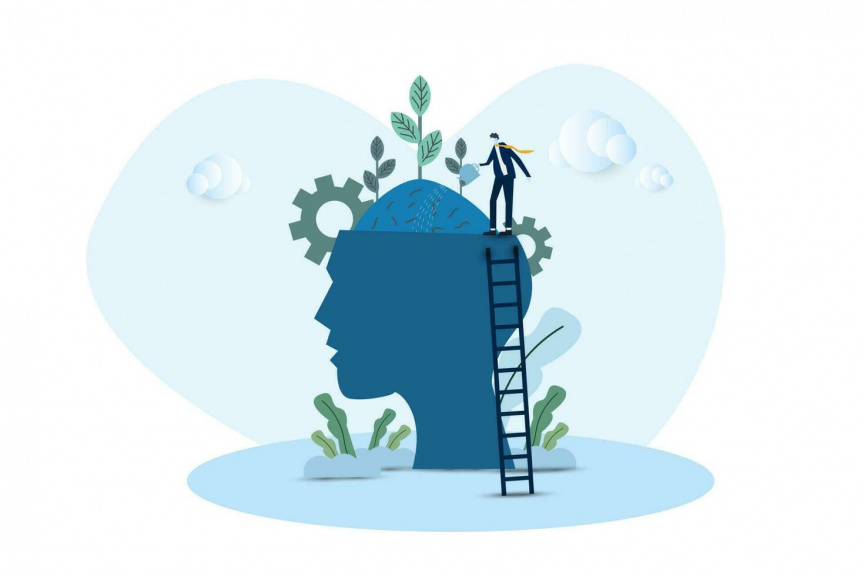
Changing your mind wasn’t always a bad thing or something to be embarrassed about. Throughout history, many philosophers, educators, and scientists have argued that revising your beliefs in light of new evidence is a natural part of learning and personal growth. Recognizing that you don’t have all the answers—and being willing to rethink your views—has often been associated with wisdom rather than weakness. That doesn’t mean people were never criticized for changing their opinions, especially in politics where accusations of “flip-flopping” have existed for centuries. I mean, there was also a time when literate women were accused of being witches but that’s beside the point.
However, there was generally more room to acknowledge that people learn, mature, and sometimes come to see the world differently as their experiences and knowledge expand.
I hope it isn’t just me who thinks so, but today, that attitude seems to be somewhat shifting. In an online world where almost every opinion is documented, shared, and preserved indefinitely, changing your mind can feel less like an opportunity for growth and more like a public liability. Old tweets, Facebook posts, or interviews can quickly resurface, and instead of recognizing that someone has evolved, people often interpret the change as inconsistency or hypocrisy.

Don’t get me wrong, there are so many celebrities and influencers who say or do questionable—not to mention—alarming things, make several apology videos, and proceed to do even worse later on. So, I understand being doubtful of such false accountability and seeing this as inconsistency or hypocrisy.
But I digress.
In a culture that increasingly rewards certainty and quick judgements, admitting “I was wrong” has become surprisingly difficult, even though it may be one of the clearest signs that someone is still learning. Instead of applauding people for evolving, social media users are often quick to remind them of what they said years ago, as if having a different opinion (or being a different person when they were younger) automatically makes them dishonest or unreliable.
I get it—everything said on the internet by anyone needs to be taken with a grain of salt—but I am someone who believes that giving people chances to change and take accountability doesn’t do any harm on anyone, and that it is the right thing to do. I hope I’m not the only one who thinks so. I mean, there have been scandals around certain celebrities saying questionable and alarming things when they were much younger (like literally in their teenage years) and are brought up much later in their life when they’ve become famous. Rather than avoiding such gossip or shutting them down, most of them actually come out to the public to take accountability and apologize—who knows if they’re genuine or not? As people, isn’t it kind to give them a chance? To believe and accept their apology?
Criticism is lowkey kinda scary

The fear of public criticism has created an environment where many people would rather stick to an outdated opinion than admit they have changed. No one wants to be accused of being hypocritical, have an old tweet or Facebook post brought back into the spotlight, or risk losing followers, friends, or professional opportunities simply because they no longer believe what they once did. As a result, people often become defensive and double down on their original views, even when they privately recognize that new evidence or experiences have changed their thinking. Ironically, what should be seen as intellectual honesty—admitting you were wrong—has become something many people actively avoid because of the social consequences attached to it.
Some people (myself included) are afraid of posting our own personal beliefs or opinions on the internet in fear of being called out somehow or judged. We’ve witnessed too many people being verbally attacked and shut down for us to feel comfortable expressing our views or even ask a thought-provoking question online to open up a polite discussion. I still question myself and re-read all of my articles about at least five times before posting them on my column or my personal blog because it seems too risky. I begin doubting whether or not my beliefs will be accepted, and if they end up being wrong, me changing my mind will be accepted after all of it. I’m someone who actively tries to believe in the possibility of being wrong, so whenever I pose a question or even an opinion/belief, I am opening up the floor for intellectual discussion—which I love.
But the stigma around this nowadays has made it almost impossible.
The algorithms—again

Part of the problem lies in the way social media platforms are designed (I’ve talked about this a million times before and won’t ever stop bringing it up). Their algorithms tend to reward content that sparks strong emotional reactions, encourages debate, and keeps users engaged for as long as possible. Calm discussions, thoughtful reflection, and nuanced opinions rarely spread as quickly as outrage or certainty. When everyone is expected to have an immediate answer to every issue, there is very little space to say, “I’m still learning,” or “I’ve changed my perspective after reading more about this.” Over time, this creates a culture where people begin to value appearing confident more than actually being informed, and where admitting uncertainty feels like giving up rather than growing.

There is nothing wrong with saying, “I actually don’t know much about this and will have to research on it more” or “Can you tell me more about this?” It’s actually very acceptable. We can’t possibly know everything, but we are allowed the opportunity and accessibility to educate ourselves more. And after doing so, we are free to agree or disagree and form our own opinions. It’s all a process and at the end of the day, we choose what we believe in.
I mean, after doing all the research in the world about whether or not the Earth is flat and you still continue to believe that it is, so be it. That view doesn’t harm anyone and doesn’t affect me in any way so feel free to believe in it. I don’t agree with it, but you do you (I guess). But then again, if you accept that you were wrong, take accountability and put in the effort to understand it better—I accept it wholeheartedly and gladly applaud you!
Being wrong jumpstarts growth

If we grew up in environments where everything we did was perceived good or we were told everything we said and did were right, we’d all probably be terrible people. That is why I say growth begins with being wrong. If I committed a crime for the thrill of it and was told I was right to do so, I’d probably continue to do it and be enabled into doing much worse, too (okay, pretty extreme example but you get my point).
Scientific discoveries replace older theories, historians revise previous interpretations as new evidence emerges, and individuals naturally develop different perspectives as they gain new experiences throughout their lives. None of this happens without first acknowledging that earlier assumptions may have been incomplete or even incorrect. If we expect progress in science, politics, education, or society as a whole, then we also need to accept that changing one’s mind is not a sign of failure but an essential part of learning. After all, refusing to reconsider our beliefs simply because we fear public judgement does not make us more principled—it only makes us less open to growth (and just awful people, to be honest).
What whispers here for our dear society?

Perhaps the most important question is not whether people change their minds—because everyone does at some point—but whether society allows them to do so without fear of ridicule. Democracies depend on citizens who are willing to evaluate evidence, engage with different viewpoints, and revise their opinions when necessary (at least on paper). Healthy public discourse cannot exist if every admission of “I was wrong” is treated as a permanent stain on someone’s character. Maybe the real strength isn’t always being right the first time. Maybe it’s having the humility to recognize that learning never truly stops, and the courage to let our opinions evolve alongside our knowledge.
My friends and I sometimes play this game where we ask very deep, thought-provoking questions just to comfortably address and discuss our own opinions and beliefs. It’s always enlightening to hear what your loved ones have to say about certain matters and see their perspectives comparatively. It’s also a warm environment to be in, where there’s comfort in expressing and accepting each other’s viewpoints. If we are wrong, we discuss, we understand our differences—or even agree. Even if we don’t, we still respect each other. It allows us to get a better understanding of each other and find more things to love. Sometimes, we come back to the same questions a few months or even years later and find that some of our answers to those questions have changed.
Well, isn’t that something?
I hope that everyone reading this can agree with me, and even if you don’t, that’s okay—you don’t have to believe everything you read on the internet or are told. But I do want to highlight that changing your mind or accepting that you were wrong doesn’t mean that you’re less than or that you’re stupid. It just means that anyone is capable of being wrong sometimes, and that believing in the possibility of it is what makes you a humble and mature person.

I don’t think people understand what a privilege it actually is that we can be told when we are wrong, for it paves a pathway for us to grow and be better people. The possibility of being wrong is a blessing, too, since it’s all just a very human experience, and allows us to become more intellectually and emotionally advanced. Likewise, it is such an honour to witness people admitting to being wrong and taking accountability. People often underestimate the power and meaning behind someone acknowledging that they are flawed.
And these are very human things to embrace: growth and mercy.
You can read more on this topic via the following links: