date_range
Sunday 11 Oct 2026


 LOCAL EDITION
close
 LOCAL EDITION


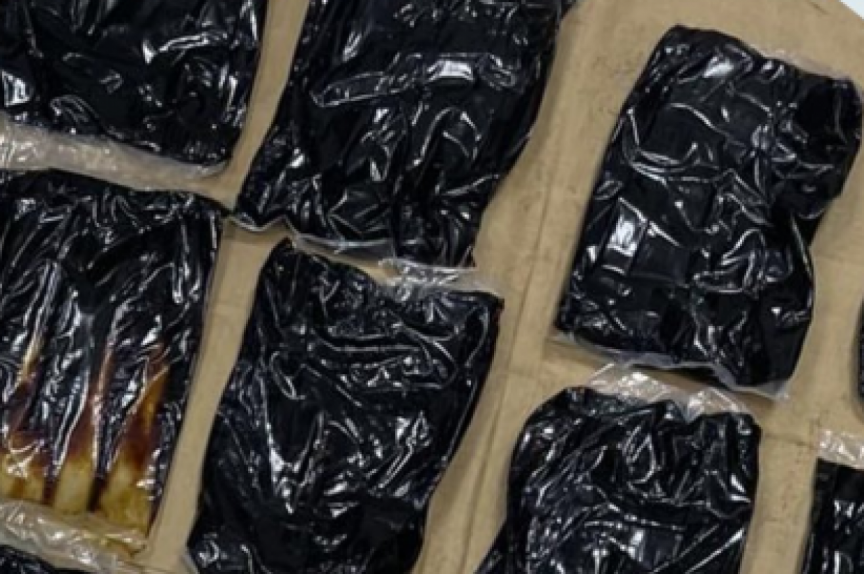
Picture shared by the Maldives Customs Service regarding the seizure of MVR 29 million worth of hashish oil at Male' Commercial Port, February 12, 2026.
The Criminal Court on Monday ordered that the Pakistani man arrested in connection with the smuggling of a large quantity of drugs into the Maldives last February remain in custody until the conclusion of his trial.
In February, Maldives Customs seized 36.4 kilograms of hashish oil from the Male' Commercial Harbour, a haul with a street value exceeding MVR 29 million.
The suspect, Zafar Ahmed, was arrested in the first week of June under a court warrant. After being produced before the Criminal Court, he was remanded pending trial.
According to the remand order, Zafar Ahmed is a Pakistani national residing in the Maldives and is believed by investigators to be the “person in charge” of the smuggling operation. Police have not yet released further details of the arrest.
Two Maldivian suspects had already been arrested earlier in the investigation:
Visham Mohamed, 35, of Male', and
Hassan Mafaz, 26, of M. Mulah.
Both were arrested in February and remain in custody.

Smuggling 36 kilograms of drugs is treated as a high‑severity trafficking offence under Maldivian law. Such a quantity is automatically considered importation for commercial distribution.
Drug smuggling by a foreign national is fully punishable under the Maldivian Narcotics Act. Foreigners who import drugs are subject to the same penalties as Maldivian citizens.
A conviction for drug trafficking carries:
life imprisonment (defined in the Maldives as 25 years), and
a fine between MVR 100,000 and MVR 10 million.
Given the seriousness of the offence, suspects in such cases are typically kept in custody pending trial, as they are considered a threat to public safety under the Criminal Procedure Act.