date_range
Wednesday 14 Oct 2026


 LOCAL EDITION
close
 LOCAL EDITION


As part of the Shanghai Cooperation Organization (SCO) media delegation, the visits to both a steel and iron manufacturing facility and the Zeekr smart factory offered more than just an industrial tour — they became a living example of how industrial development can evolve without harming the environment.
Aligned closely with the key discussions of the forum — particularly green energy, sustainability, and responsible development — these visits demonstrated that modern industry is no longer defined solely by production, but by how responsibly that production is carried out.

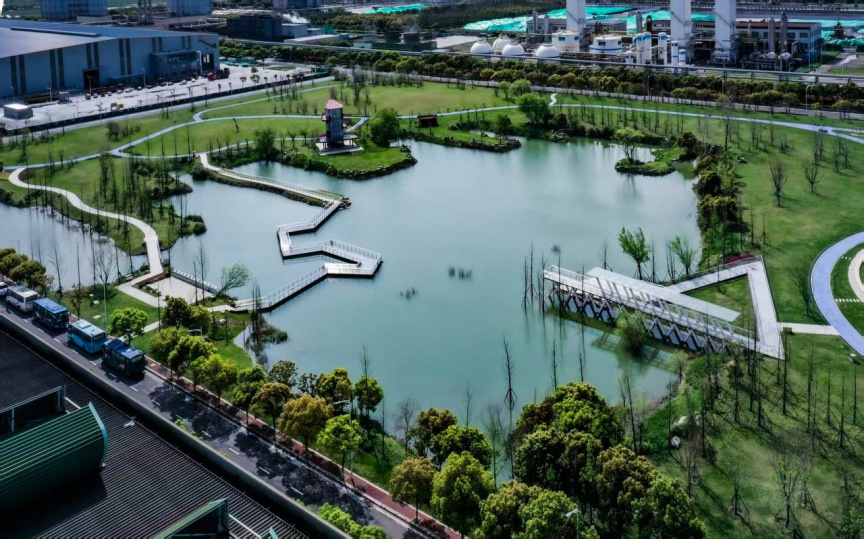
The journey began at a large-scale steel and iron plant — traditionally an industry often associated with pollution and environmental strain. However, what stood out immediately was the unexpected harmony between industry and nature.

Despite being a heavy industrial zone, the surroundings were clean, organized, and enriched with greenery. This visual contrast challenged long-held perceptions, showing that industrial spaces can be designed to be safe, environmentally conscious, and sustainable. It reflected a growing commitment to reducing environmental impact while maintaining industrial strength.

From there, the visit transitioned into the future of clean mobility at the Zeekr smart factory, under Geely.
Here, sustainability was not just an idea — it was integrated into every aspect of production.
The factory operates as a fully digitalized and intelligent system, where artificial intelligence and real-time monitoring ensure maximum efficiency with minimal waste. Producing more than 300 vehicles daily, the factory demonstrates that high output does not have to come at the cost of environmental degradation.

What makes this model particularly significant is its strong focus on clean energy integration. Through photovoltaic systems, waste heat recovery, water recycling, and emission control technologies, the factory reduces its environmental footprint while maintaining productivity.
Another striking element was the human factor behind innovation.

At Zeekr, a young and dynamic workforce is driving these advancements. Their role highlights that sustainable development is not only about technology, but also about empowering people to think differently, act responsibly, and innovate for the future.

Across both sites, a powerful message becomes clear: industrial development is not inherently harmful — it becomes harmful only when it ignores responsibility.
This journey reflects a new model of growth — one where industry coexists with nature, innovation reduces environmental impact, clean energy supports production, and people remain at the center of progress.

Ultimately, this experience shows that the future is not just about what we build, but how we build it, and what kind of world we choose to protect in the process.