date_range
Wednesday 14 Oct 2026


 LOCAL EDITION
close
 LOCAL EDITION


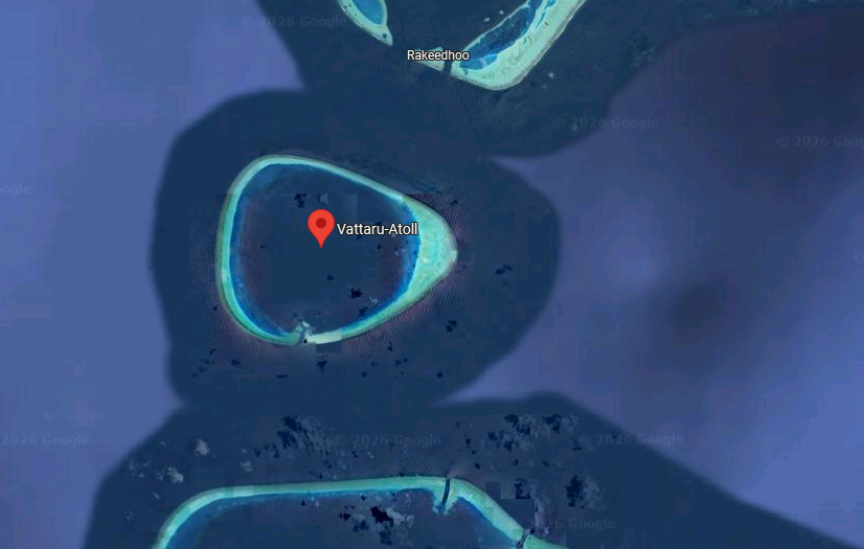
A satellite view of Vattaru Atoll, showing the island positioned at the far southern tip of the reef’s shallow ring.
The government has designated V. Vattaru and its surrounding area as a protected site, according to a gazette notice issued on Tuesday by the Ministry of Environment. The notice revises the original protected‑area designation issued on 21 October 1999.
Vattaru is a geographical atoll located between Vaavu and Meemu Atolls. The island itself covers 1.4 hectares, while the protected area spans more than 9,700 hectares, according to the Ministry’s Protected Areas database.
The Ministry said the site contains habitats that support a wide range of biodiversity. The wetland on the northern side of the island is described as a healthy environment where all growth stages of Bruguiera cylindrica (kan’doo) mangroves are found. The island also contains significant stands of Pemphis acidula (kuredhi gas) and a total of five recorded tree types.
Bird species recorded in the area include Grey Herons, Black‑crowned Night Herons, Lesser Sand Plovers, Common Sandpipers, Common Ravens, Great Crested Terns, White‑breasted Waterhens and Ruddy Turnstones. The surrounding marine area is noted for its high grouper populations.

According to the Ministry, the purpose of the designation is to conserve the area and protect marine species considered at risk locally and internationally. The Ministry also notes that Vattaru’s mangroves and wetlands help maintain the island’s freshwater lens, reduce flooding risk, and act as carbon sinks that contribute to climate‑change mitigation.
Activities prohibited on the island include removing nests or eggs, introducing non-native species, undertaking development or infrastructure works, and using lights in ways that disturb wildlife or attract fish at night.
In the surrounding marine area, land reclamation, dredging, and the extraction of coral, sand or pebbles are prohibited. Anchoring is also banned.
Additional restrictions on land include lighting fires, visiting the island between 5:30pm and 6:30am, entering during bird nesting seasons, cutting trees, and carrying out agricultural activities.
The Ministry said activities that may be permitted under special regulations include public and tourist visits, nature-based recreation, scientific research and restoration work.