date_range
Thursday 22 Oct 2026


 LOCAL EDITION
close
 LOCAL EDITION


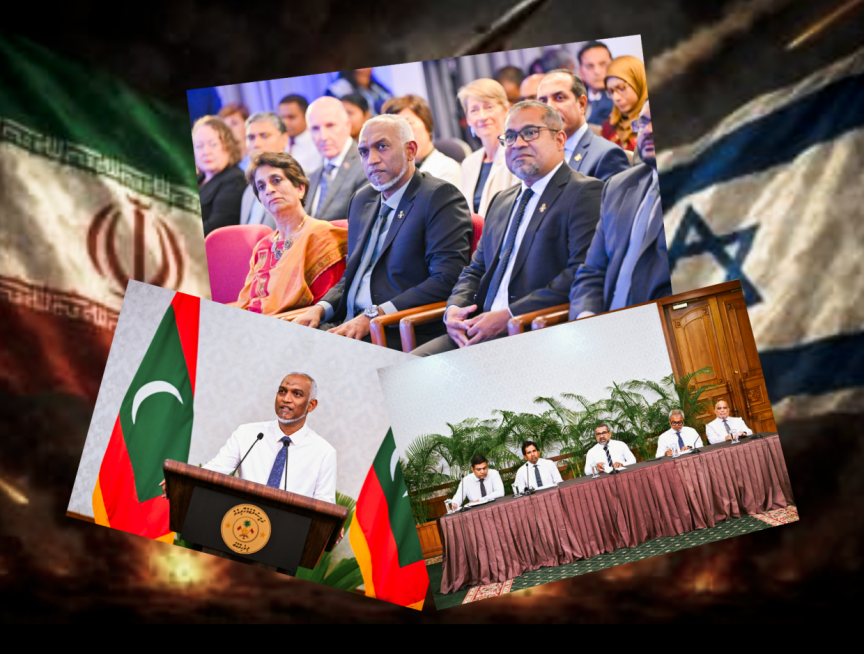
The escalating conflict initiated by the strikes involving Israel, the United States, and Iran has effectively drawn the entire world into its sphere of influence. Nations across the globe are facing mounting pressure from multiple fronts. As the conclusion of this war remains unforeseen, small nations are grappling with an even greater "headache" brought about by the intensifying economic and foreign policy pressures. The primary challenge lies in maintaining a policy of non-alignment—remaining neutral and refusing to side with a specific power or ideology. This struggle to uphold such balance is evident both in domestic discourse and in the statements delivered on the international stage. In the realm of foreign affairs, this currently stands as the most significant challenge for the Maldives.
The perennial foreign policy of the Maldives
Since gaining independence from British protection, one of the most fundamental principles the Maldives has upheld is the commitment to maintain friendly relations and cooperate with any nation that seeks such a bond. This policy is rooted in saying "no" to war and instability, prioritizing diplomatic avenues for conflict resolution, and adhering to a strict policy of "non-alignment."
There are numerous reasons why such a policy is vital for the Maldives. As a small island nation, it is in our best interest to increase the number of partner countries to promote national interests. It ensures that major powers remain close to provide assistance during times of need. Furthermore, the economy is heavily dependent on tourism revenue generated by visitors from all corners of the world.
However, the shocks resulting from the ongoing war in the Middle East have not only impacted the economy but have also sent ripples through the Maldives' foreign relations.
Why has this difficulty arisen?
The initial strike by Israel against Iran drew condemnation from numerous countries. Notably, while many nations expressed condolences following the assassination of Iran’s Supreme Leader Ayatollah Ali Khamenei, there was a conspicuous silence from the Maldives. Furthermore, when a strike during the conflict resulted in the deaths of over 170 children at an Iranian school, an official statement of condemnation was not immediately forthcoming. It was only on the 10th of this month that the Ministry of Foreign Affairs issued its first direct statement regarding the war, condemning the attacks from Iran as well as those from Israel and the United States, while calling for a cessation of hostilities.

Additionally, a statement delivered by the Maldives in Geneva, which focused solely on condemning Iran, raised concerns among the general public and diplomatic experts. They viewed the statement as being uncharacteristically biased.
"In the field of diplomacy, the hidden message in a statement is often most powerfully conveyed by what is left out," noted a foreign policy expert.
Experts also suggest that the language used by President Dr. Mohamed Muizzu during live press conferences regarding these attacks further highlights the government’s struggle to maintain a "diplomatic balance."
"Another challenge I observe is the relationship the Maldives maintains with Gulf nations, particularly Saudi Arabia, the UAE, and other Arab states. It is difficult to say these nations currently hold the most amicable policy towards Iran. However, for the Maldives, these ties are crucial for developmental aid and financial support for religious activities. Therefore, any decision we make that might displease these nations is likely something they will closely monitor," the expert added.
One of the core theories in foreign relations is "Realism." From the perspective of small nations, realism suggests that in an international system lacking a central authority, the security of the smallest states depends on strategic concessions and adaptation rather than confrontation. However, in such circumstances, a policy of neutrality is not merely about indifference. Instead, it is a calculated and strategic maneuver chosen through careful deliberation.
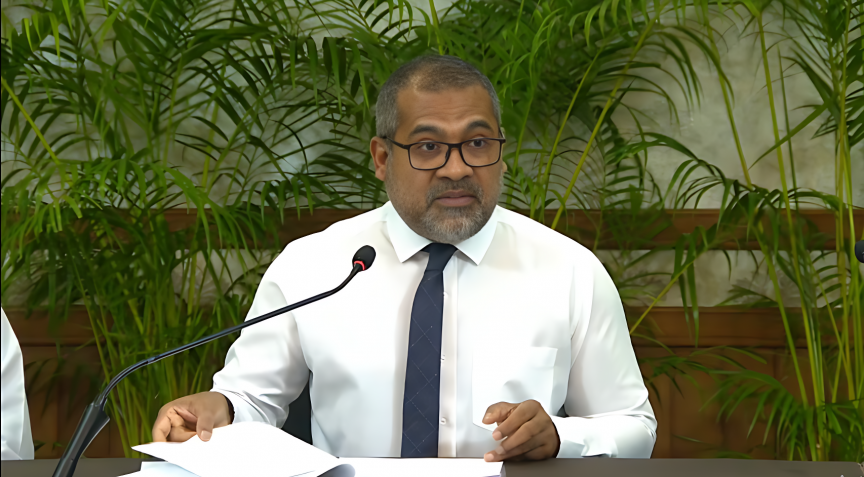
This is not the first diplomatic test faced by the current administration. An earlier test regarding the fragility of foreign relations and the importance of leaders exercising restraint in public rhetoric has already concluded. The results were far from ideal; relations with our closest neighbor were strained. The administration's ability to expedite the benefits of international relations within a two-year timeframe has also been assessed, showing little significant progress. Foreign aid received has fallen well below expectations.
This current trial serves as a test of the Maldivian state's resolve to uphold its long-standing foreign policy of non-alignment and resistance to the influence of any single power. Based on the results seen so far, this test—which demands profound wisdom—is proving to be a formidable challenge.