date_range
Thursday 19 Nov 2026


 LOCAL EDITION
close
 LOCAL EDITION


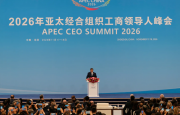
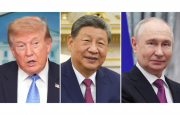
Following the ASEAN Summit in Manila, the eyes of the entire world have turned to Shenzhen, a city on China’s southern coast, as it hosts the Asia-Pacific Economic Cooperation (APEC) Summit. The event features the most anticipated diplomatic gathering involving US President Donald Trump, Chinese President Xi Jinping, and Russian President Vladimir Putin. With President Trump traveling to the city from Manila, he will also become the first-ever US president to visit Shenzhen.
However, why did China choose Shenzhen—once known as a humble fishing village—to host such a monumental and historic summit?
From a Tiny Fishing Village to the "City of Dreams"
Historically known as "Bao'an," Shenzhen was once an ordinary area comprising fishing villages and rural settlements. However, in 1979, when China's then-leader Deng Xiaoping designated the area as the country’s first Special Economic Zone (SEZ)—allowing free enterprise under the Communist Party—the city began a historic transformation.
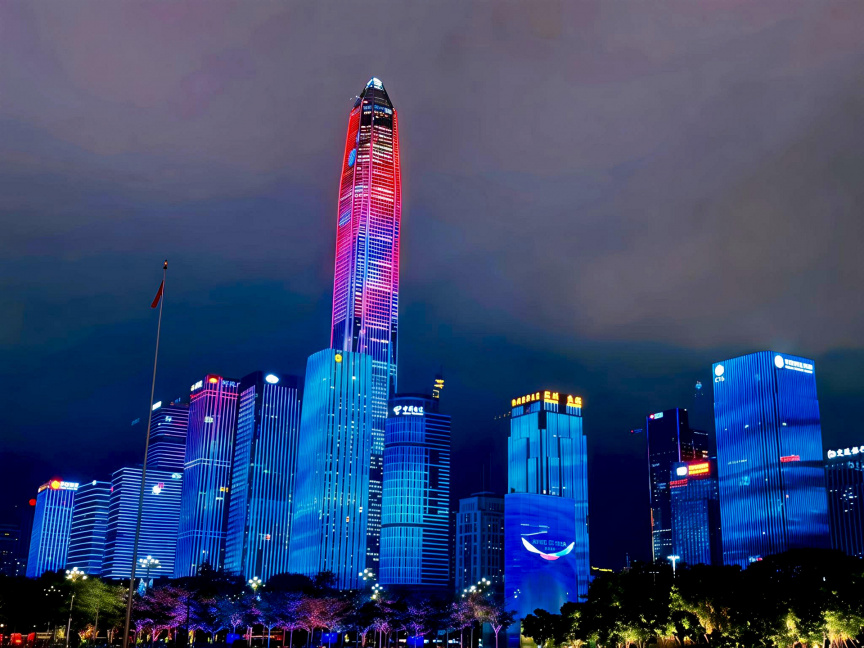
Today, Shenzhen is a metropolis of over 18 million people, boasting more high-rises than New York City. It is also home to the world's fifth-tallest building, the Ping An Finance Centre. Featuring streets navigated by autonomous driverless taxis, robots, and drones delivering hot meals and iced coffee, the city stands as China's third-richest city, recording a massive GDP of 3.87 trillion yuan.
A Tech Powerhouse Rivaling America’s "Silicon Valley"
The primary reason China chose this city to host the APEC summit is to showcase its technological advancement and capabilities to the world. Viewed as China’s answer to Silicon Valley, Shenzhen serves as the headquarters for the nation’s largest tech giants.
These include global telecom giant Huawei, electric vehicle powerhouse BYD (which surpassed Tesla to become the world's top EV seller), DJI (the world's largest drone manufacturer), and tech conglomerate Tencent. In fact, advanced electric vehicle models developed by BYD have been selected as the official transport for the summit.
Xu Liping, an Asia-Pacific affairs expert at the Chinese Academy of Social Sciences, noted that Shenzhen has transformed from a "world factory" into an "innovation engine." Furthermore, analysts observe that President Xi Jinping aims to use the city to demonstrate China's technological and economic prosperity to the world amidst an era increasingly shaped by global uncertainties and conflict.
A Booming Tourist Destination
Beyond its technological prowess, Shenzhen has rapidly become the second-favorite Chinese destination for international tourists. In 2025 alone, over two million foreign visitors traveled to the city, representing a 70 percent increase compared to the previous year. What attracts these tourists is Shenzhen's unique blend of ultra-modern infrastructure and exceptional cleanliness, paired with a remarkably calm, livable atmosphere on the street level despite its bustling economic speed.
Therefore, China hosting the APEC Summit in Shenzhen is far more than just convening a conference; it is a calculated diplomatic showcase designed to project China’s vision for the future, its technological dominance, and its economic achievements to the world.