date_range
Sunday 08 Nov 2026


 LOCAL EDITION
close
 LOCAL EDITION


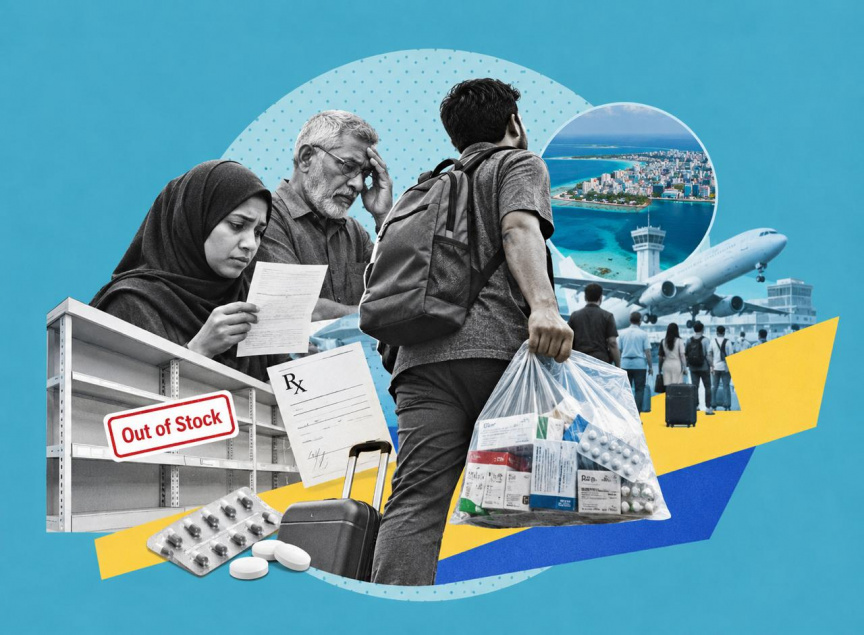
An elderly Maldivian man returning from a neighbouring country was stopped by customs officers at Velana International Airport (VIA) as he attempted to leave the airport.
Asked to open his suitcase, he explained that it contained what he described as the desperate pleas of people across the country. Inside, officers found a large quantity of medicines.
“You simply can’t get medicine in the Maldives. These are medicines I bought for people who sent me their prescriptions through Viber. None of this is for business. Look, here are all the prescriptions,” he told the officers, showing them the medical prescriptions on his phone.
The incident reflects a growing practice among Maldivians who rely on friends, relatives and other travellers to bring prescription medicines from abroad because the drugs they need are unavailable locally.
Requests to bring back two or three months’ worth of medication have become increasingly common among people travelling to neighbouring countries. For many, depending on overseas travellers has become an alternative to purchasing medicines through local pharmacies.

The Maldives depends entirely on imported medicines to meet its pharmaceutical needs. However, shortages of essential drugs have left patients struggling to obtain even routinely prescribed medication.
The issue has also reached Parliament, where concerns over medicine availability have prompted formal inquiries and discussions.
Among the medicines reported to be difficult to obtain are prenatal folic acid supplements, certain respiratory inhalers, specialised cardiac medicines, and commonly prescribed drugs for blood pressure and diabetes.
The shortages have added to the difficulties faced by patients seeking healthcare in the Maldives. With access to medical appointments already a concern for many, the inability to obtain prescribed medicines has become another reason people travel overseas for treatment.
Demand for flights to destinations where Maldivians commonly seek medical care remains a concern, with patients and their families facing difficulties securing tickets even outside peak travel periods.
The structure of the pharmaceutical market is among the factors identified by state officials as contributing to the shortages.
Dr. Shah Mahir, Managing Director of State Pharma, has said that private companies control approximately 70 percent of the Maldivian pharmaceutical market.
Shimad Ibrahim, Managing Director of the State Trading Organization (STO), told the People's Majlis Social Affairs Committee that STO accounts for only around 30 percent of the country's medicine imports.
He explained that under the current Maldives Food and Drug Authority (MFDA) regulations, a company that registers a particular medicine brand retains exclusive rights to import that brand.
In addition, international suppliers often grant distribution rights to a single company. This arrangement has prevented STO from importing more than 500 essential medicines, according to the concerns raised by officials.

Dr. Shah has also pointed to the Maldives' relatively small population as a challenge in securing supplies from international pharmaceutical manufacturers. The limited market size reduces commercial interest among some suppliers and makes bulk procurement more difficult.
Government-imposed price controls and delayed payments have also been identified as factors affecting the availability of medicines.
President Dr. Mohamed Muizzu has said that some medicines were previously sold with profit margins reaching 1,000 to 2,000 percent. Following the introduction of price caps to address excessive pricing, some businesses stopped importing certain medicines, contributing to supply disruptions.
Payment delays under the state health insurance scheme, Aasandha, have further complicated the situation.

Millions of rufiyaa in outstanding payments owed to pharmacies and hospitals have affected businesses' ability to settle their payments with overseas suppliers and manufacturers. This has placed additional pressure on the medicine supply chain.
Alongside shortages, questions have also emerged over the quality and safety of medicines available in the local market.
Testing conducted jointly by the MFDA and the World Health Organization (WHO) found that several liquid syrups contained diethylene glycol and ethylene glycol, hazardous substances that can cause serious health complications.
The detected contamination levels ranged from 0.62 to 0.82 percent, significantly exceeding the permitted limit of 0.10 percent.
The MFDA has also identified 21 unauthorised medicines being imported and sold in the Maldives without the necessary regulatory approval.

These findings have raised further concerns about the need for stronger pharmaceutical regulation and effective monitoring of medicines entering the country.
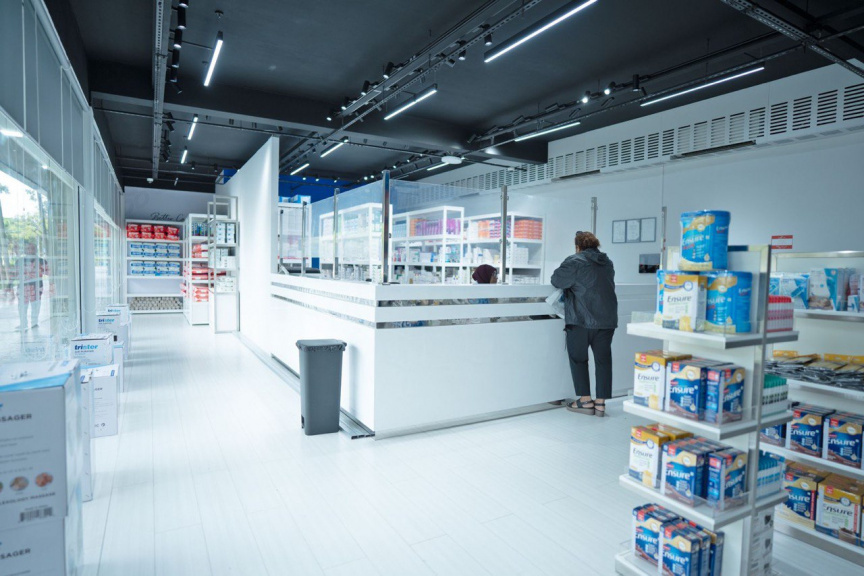
In response to the challenges facing the pharmaceutical sector, the government established State Pharma as a dedicated state-owned company to improve the availability of essential medicines.
Dr. Shah has said that the company's primary objective is not profit maximisation but ensuring a consistent supply of medicines through bulk procurement.
State Pharma has also identified the lack of reliable information on medicine stocks across pharmacies in Malé and the atolls as a major obstacle to addressing shortages.
To improve stock monitoring, the company has introduced a digital tracking system across its outlets. It has also completed the first phase of its Enterprise Resource Planning (ERP) and electronic logistics network, which is intended to provide real-time information on medicine stocks.

The effectiveness of these measures will be important in determining whether the new state company can address the supply problems that have affected patients and pharmacies.
For now, however, the practice of asking travellers to bring medicines from abroad continues to highlight the difficulties many Maldivians face in accessing essential healthcare.
When patients must depend on the luggage of returning travellers to obtain medicines prescribed by their doctors, it raises serious questions about the reliability of the country's pharmaceutical supply system.
For the people waiting for their medication, the issue is not simply about imports, market shares or procurement arrangements. It is about getting the medicines they need, when they need them