date_range
Monday 02 Nov 2026


 LOCAL EDITION
close
 LOCAL EDITION


Police seize evidence following a raid on 'Adhadhu' office on April 27, 2026. (Photo/MJA)
The Criminal Court on Sunday ordered local news outlet Adhadhu to surrender the passwords of the laptops seized by the police during a raid on its Male’ office back in April.
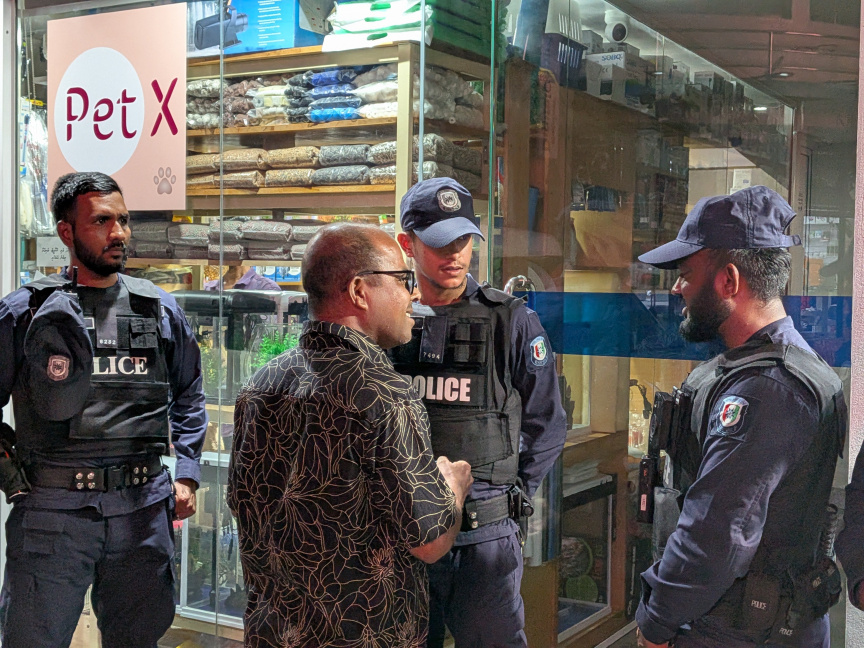
The police stormed Adhadhu’s office in Male’ City on April 27, seizing 20 electronic devices, including laptops and hard drives.
The raid was part of an investigation into a documentary the outlet released on March 28.
Adhadhu had previously refused to share the passports for the devices seized by the police, citing the need to protect their source.
The outlet reports that the Criminal Court on Sunday ordered them to surrender the passwords of four Apple MacBook seized in the raid.
According to Adhadhu, the Criminal Court's order specified that data extraction from these devices must be conducted in the presence of a representative appointed by the Maldives Media and Broadcasting Commission (MMBC).
It also noted that since the items were seized during a search of a journalistic establishment, they are subject to legal privilege.
Adhadhu reports that the court stipulated that necessary measures be taken to maintain the confidentiality of any information obtained and to ensure its protection, and that any evidence gathered under the order must be used exclusively for the case mentioned in the warrant.
Adhadhu’s CEO Hussain Fiyaz Moosa and editor Hassan Mohamed remain on trial over the March documentary.
Meanwhile, the President’s Office has had Adhadhu banned from all its press briefings since May 11.
The ban had come hours after Mohamed Shahzan, a journalist from Adhadhu, was kicked out of a press briefing after he asked President Dr. Mohamed Muizzu questions that were deemed by the President’s Office to be in violation of a contentious gag order issued by the Criminal Court in the case against the news outlet.

It had marked the first time for a journalist to get kicked out of a President’s Office press conference over a question.
Shahzan was later imprisoned to 15 days in prison for contempt of court over the incident, while another journalist from the outlet, Leevan Ali Naseer, was imprisoned for 10 days for the same charge over a news article deemed to have violated the same gag order.
The gag order in question explicitly prohibits any party from circulating the documentary, from directly or indirectly discussing the contents of the documentary, or making any comments linking any of the defendants or the victim to it.