date_range
Wednesday 14 Oct 2026


 LOCAL EDITION
close
 LOCAL EDITION


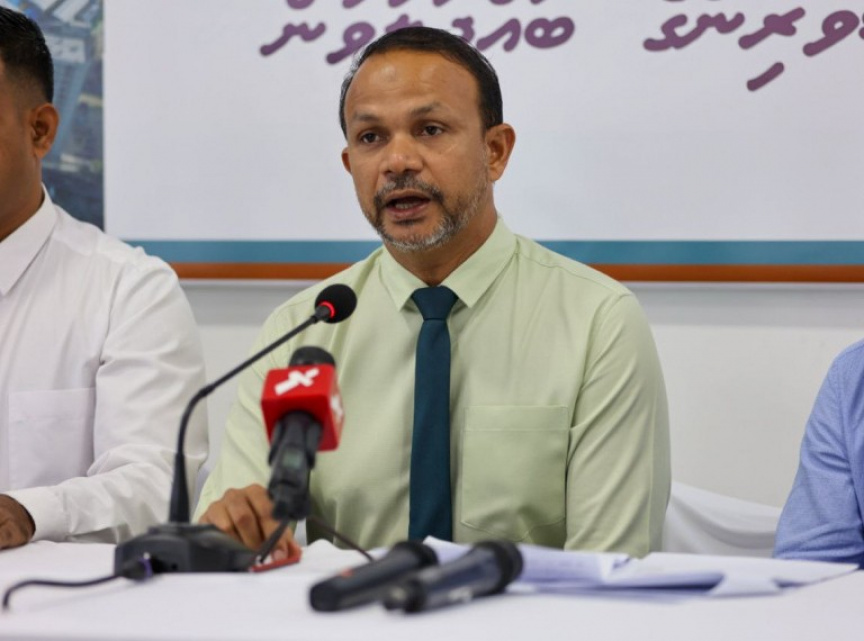
Ali Hussain speaks to reporters on July 27, 2025. (Sun Photo/Mohamed Maaniu)
Ali Hussain, a lawyer and former parliamentarian, alleges that the constitutional case he filed with the Supreme Court seeking to block the USD 20 billion waterfront and marina project planned for Rasmale’ was rejected due to government influence over the top court.
On September 21, Abu Dhabi-based real estate giant Eagle Hills signed a commercial terms agreement or letter of intent for a mega project to develop a new integrated island destination in Rasmale’, including international hotels and resorts, premium and branded residences, a world-class marina, waterfront promenades, restaurants, shops, leisure and wellness centers.
On September 28, Ali Hussain filed a petition with the Supreme Court arguing that the deal was unconstitutional.
However, the court’s registrar rejected the petition on Tuesday, citing that it was not the type of case that can be directly submitted to the top court.
According to Article 11 of the Judicature Act, the Supreme Court has original jurisdiction in controversies that may lead to a constitutional void, cases where two branches of the state or two institutions of the state disagree on interpreting the constitution, and in constitutional matters that affect public interest.

Ali Hussain told Sun on Wednesday that the decision was “wrong”. He believes it should have been left for the court’s bench to decide, not the registrar.
He said that allowing the court’s registrar to decide such matters is equal to empowering them to issue rulings.
“This shows the extent of government influence over the Supreme Court,” he said.
Ali Hussain has the right to appeal the registrar’s decision with the council of judges at the court within 14 days.
Ali Hussain’s petition was based on alleged plans to grant Eagle Hills 500 hectares of reclaimed land for 99 years without acquisition cost or lease payment, as well as the right to create to create lease interests for third parties.
He argued that Article 250 of the Constitution requires the transfer, lease or disposal of state property to be carried out in accordance with the law, but that there is no legal framework authorizing the allocation of state land to a foreign party for a single 99-year lease, making the agreement directly unconstitutional.

He also argued that while Article 251 of the Constitution limits foreign ownership or leasehold interests to 99 years, the provision allowing Eagle Hills to create rolling third-party interests effectively opens the door to perpetual foreign proprietary rights, making the agreement unconstitutional and void from the outset.
The waterfront and marina project is described by the Maldives government as one of the most ambitious development initiatives in the country’s history.
According to the Maldives government, preliminary economic impact estimates indicate the project could attract more than USD 30 billion in gross foreign investment over its lifetime, including about USD 18 billion in net foreign investment in the Maldives.
It is also expected to create more than 54,000 direct and indirect jobs. At full maturity, the destination is expected to attract more than one million visitors annually and generate more than USD 2 billion in annual tourism revenue.
However, the project has sparked fears that Rasmale’ could become a foothold for Zionist settlement – fears that the government says are unfounded.