date_range
Tuesday 22 Sep 2026


 LOCAL EDITION
close
 LOCAL EDITION


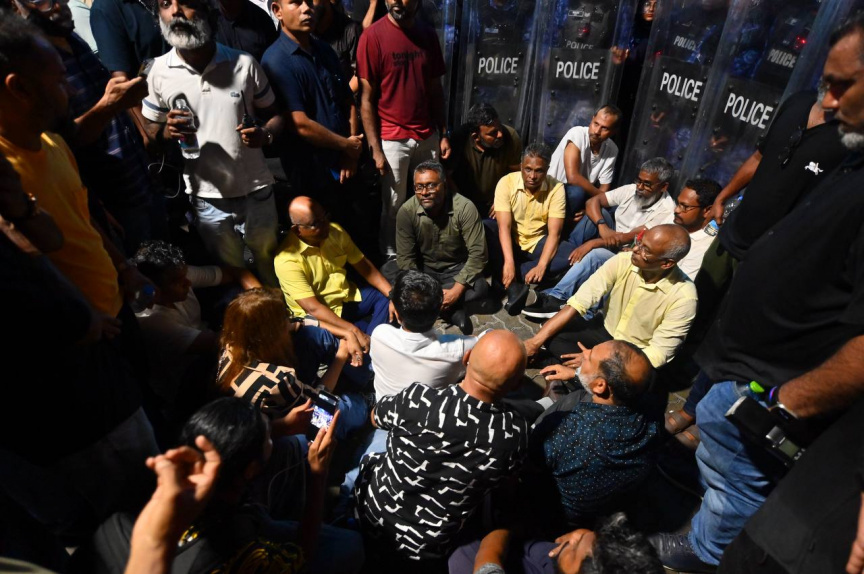
Opposition leaders sit on the ground in Majeedhee Magu, Male' city amidst the MDP-led Lootuvaifi protests on October 3, 2025. (Sun Photo/Ahmed Firyal)
The main opposition Maldivian Democratic Party (MDP) has announced plans to hold a protest under the banner ‘Dhathivejje’ over the soaring prices of basic commodities.
In a post on X on Monday, the party’s chairperson, former Maldivian president Mohamed Nasheed announced the protest will kick off at 04:30 pm on August 12 from in front of the Social Center in Male’ City.
He shared a list of products that has seen a steep rise in prices in recent months, including baby formula, Basmati rice, coffee powder, cooking oil and milk.
Muzaahiraa: 12 August 2026 gai. Social Center Karin. Haveeru 4.30 pic.twitter.com/lnXrt8dInN
— Mohamed Nasheed (@MohamedNasheed) August 3, 2026
Addressing a party rally last Wednesday, Nasheed said the country has run out of US dollars and faces high inflation, making it hard to afford even basic necessities.
He accused President Dr. Mohamed Muizzu’s administration of failing to bring in dollars to the country, either through grants or loans, pushing up the dollar rate.
He also accused the administration of failing to establish a substantial plan to repay the country’s massive debt, exhausting the state’s dollar reserves to repay over USD 1 billion so far this year.
“What will the Maldives have left? The Maldives has run out of dollars,” he said.
Nasheed said the higher dollar exchange rate was also fueling inflation, while the income of people remains the same.
He also expressed concern over the congestion at the Male’ Commercial Port, forcing container ships to divert to Sri Lanka or Colombo. He said that businesses were racking up demurrage and freight charges as they wait, which is also fueling inflation.
The former Maldivian leader said the country was on a “dark trajectory”, and said the incumbent administration lacked any policy or vision to divert the country from its current route.
The World Bank projects that inflation in the Maldives will to jump to 6 percent this year, as the small island nation, almost entire dependent on imports, feels the effects of the conflict in the Middle East.