date_range
Saturday 10 Oct 2026


 LOCAL EDITION
close
 LOCAL EDITION


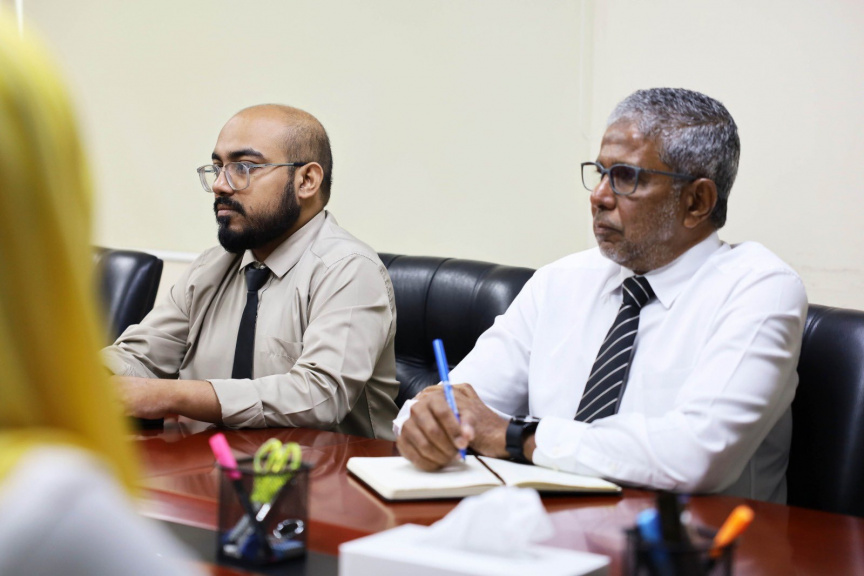
President of the PCB Mohamed Nizar meets with IAA Maldives, July 6, 2026. (Photo/PCB)
The Privatization and Corporatization Board (PCB) has ordered government-owned companies to reduce their employee numbers by 33 percent, with the cuts to be completed within three months.
The directive follows instructions issued by the Finance Ministry on April 18, asking the PCB to take additional measures to improve operational efficiency, strengthen human-resource management, and support long-term financial sustainability in state-owned enterprises. As part of those measures, companies were told to reduce staff numbers by one-third to curb operating costs and reinforce cost discipline.
After receiving the instructions, the PCB informed all state-owned companies, and the government has since begun implementing the reductions. On Sunday, the PCB circulated a formal notice requiring companies to complete the downsizing within three months. The circular also requires companies to fill out an Excel sheet tracking their progress and email it to both the Finance Ministry and the PCB every Sunday.
The circular reminds companies that they are legally obligated to comply with PCB directives.

While the PCB has issued the order, several government companies have already begun encouraging voluntary resignations. Fenaka and HDC are among those offering packages to employees willing to leave.
Following the escalation of global tensions on February 28, many countries introduced austerity measures, including shorter working hours for government staff, remote-work arrangements, and temporary school closures, to reduce expenditure.
However, in the Maldives, government companies continued large-scale hiring ahead of the April 4 elections. Between May 1 and 28, MTCC alone announced 1,185 job vacancies.
The surge in hiring drew heavy criticism. The opposition MDP went on to secure most key seats in the council and women’s development committee elections. The parliamentary and presidential elections also concluded against the government’s expectations.

Following the electoral setbacks, President Dr. Mohamed Muizzu has made sweeping changes to his cabinet. Ten ministers resigned on Sunday, and the President has reduced the number of ministries from 20 to 15, appointing new ministers to fill the reshuffled posts.
With a population of about 400,000, the state employs more than 30,000 civil servants, in addition to nearly 20,000 employees in agencies, independent institutions, and political posts. Economists have long warned that too many Maldivians depend on the state payroll instead of private-sector employment.
A significant portion of the national budget is consumed by recurrent expenditure, and many government-owned companies continue to operate at a loss, deepening concerns over fiscal sustainability.