date_range
Monday 19 Oct 2026


 LOCAL EDITION
close
 LOCAL EDITION


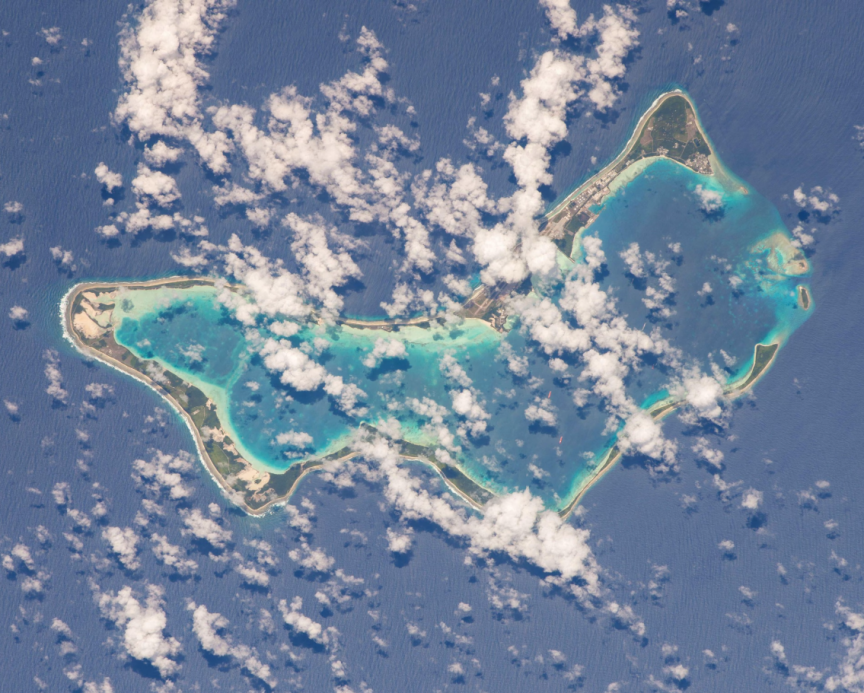
Chagos Archipelago. (Photo/NASA Archive/Alamy)
The following is an op-ed written by Brigadier General (Retired) Ahmed Nilam.
---
The recent developments in the United Kingdom's Parliament have created an important moment for reflection on the future of the Chagos Archipelago. Decisions of lasting constitutional and geopolitical significance are naturally subject to parliamentary scrutiny, and such scrutiny reinforces the principles of democratic governance and the rule of law. In this context, the present period represents an opportunity to reinforce confidence in a settlement that commands broad legal and international credibility.
The Chagos question has often been presented as a bilateral issue between the United Kingdom and Mauritius. Yet the historical and legal context is broader. The Maldives has consistently maintained that it possesses historical interests relating to the Chagos Archipelago, adding another dimension to an issue that has significant implications for the wider Indian Ocean region.
The Indian Ocean is no longer simply a maritime crossroads. It has become one of the world's most strategically significant regions, carrying critical trade routes, energy supplies, digital communications infrastructure, and supporting the livelihoods of millions. Stability in this region depends not only on capable defence forces but also on legal certainty, diplomatic confidence, and constructive regional relationships.
History demonstrates that enduring security is built upon legitimacy as much as capability. Where legal certainty, diplomatic dialogue, and mutual confidence reinforce one another, regional cooperation becomes more resilient. Such conditions encourage stronger partnerships in maritime security, humanitarian assistance, disaster response, environmental protection, fisheries management, scientific research, and the sustainable development of the Blue Economy.
A comprehensive understanding of the Chagos question therefore carries significance beyond sovereignty alone. It contributes to a regional environment where trust is strengthened, uncertainty is reduced, and cooperation becomes easier to sustain. These are important strategic advantages for both larger and smaller states that share responsibility for the security of the Indian Ocean.
The interests of the Chagossian people also remain an essential part of this broader picture. Their history and future continue to form an important humanitarian dimension alongside the legal and strategic considerations surrounding the archipelago.
The United Kingdom has long been recognised for its commitment to parliamentary democracy, constitutional governance, and respect for the rule of law. Recent parliamentary developments reflect these traditions by ensuring that matters of lasting national and international importance receive careful consideration. Such processes reinforce confidence in outcomes that are durable, transparent, and internationally respected.
For the Maldives, the Chagos question has consistently been viewed through the principles of peaceful diplomacy, historical understanding, and international law. This perspective aligns with the broader interests of regional stability rather than geopolitical rivalry. Stability is strengthened when dialogue prevails over confrontation and when confidence replaces uncertainty.
A stable Indian Ocean benefits every nation connected to it. Secure sea lines of communication support global commerce. Effective maritime cooperation strengthens responses to piracy, illegal fishing, trafficking, and natural disasters. Environmental stewardship safeguards shared marine resources for future generations. Expanding regional trade and investment create opportunities for sustainable economic growth throughout South Asia and the wider Indian Ocean community.
In this broader context, the significance of the Chagos question extends well beyond territorial considerations. It reflects the wider relationship between law, diplomacy, security, and regional cooperation. Where these principles advance together, the result is greater strategic resilience and stronger partnerships among neighbouring states.
The present moment therefore represents more than a political transition. It reflects an opportunity for the Indian Ocean region to continue developing as a zone characterised by stability, cooperation, mutual respect, and shared prosperity. Confidence founded upon legal legitimacy and inclusive diplomacy strengthens not only bilateral relationships but also the wider regional security architecture.
Ultimately, lasting security is measured not solely by military capability but by the strength of institutions, the confidence of regional partners, and the ability of nations to resolve complex issues peacefully. A future founded upon legal certainty, diplomatic engagement, and regional cooperation offers the strongest foundation for a secure, prosperous, and resilient Indian Ocean.