date_range
Thursday 08 Oct 2026


 LOCAL EDITION
close
 LOCAL EDITION


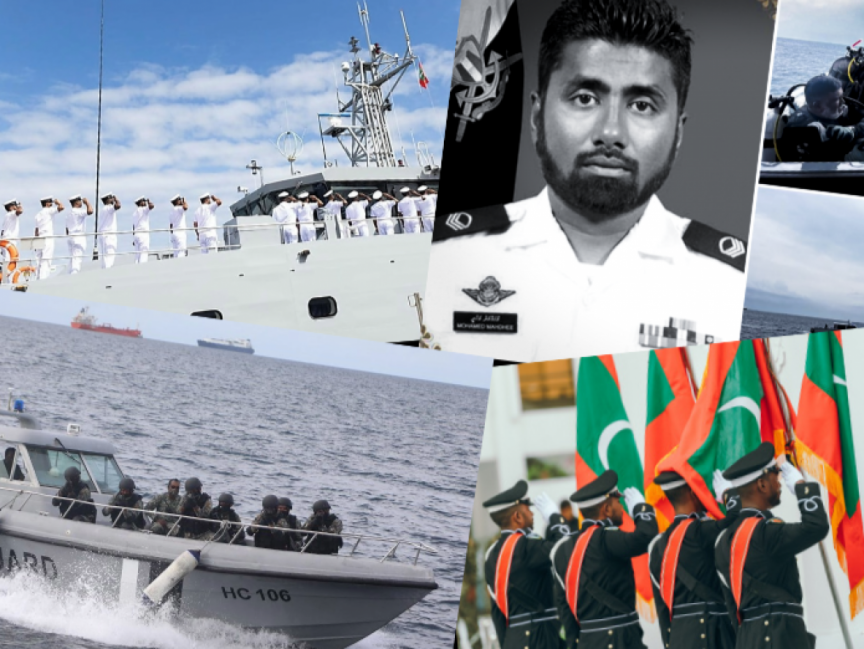
A single question resonates across the nation: why was such a perilous dive authorized or allowed to proceed without the necessary specialized equipment and technical training?
This public outcry is not without merit. It stems from a profound sense of grief and concern following the tragic loss of a Maldivian soldier during a high-risk dive. This tragedy occurred shortly after Brigadier General Mohamed Saleem of the Maldives National Defense Force (MNDF) acknowledged on state media that the military lacks the specific resources and training required for such deep-sea operations.
In an interview last Friday, seemingly unaware of the impending disaster, Brigadier General Saleem confirmed that MNDF divers are currently qualified to dive only up to a depth of 50 meters. He also acknowledged that divers are often subject to significant risks during search and rescue operations prompted by maritime incidents.
Less than 24 hours after those remarks, on Saturday afternoon, the nation was plunged into shock. Sergeant First Class Mohamed Mahudhy, a highly experienced and dedicated diver, lost his life during a search operation for four Italian tourists who went missing while diving at Alimatha Cave in Vaavu Atoll.
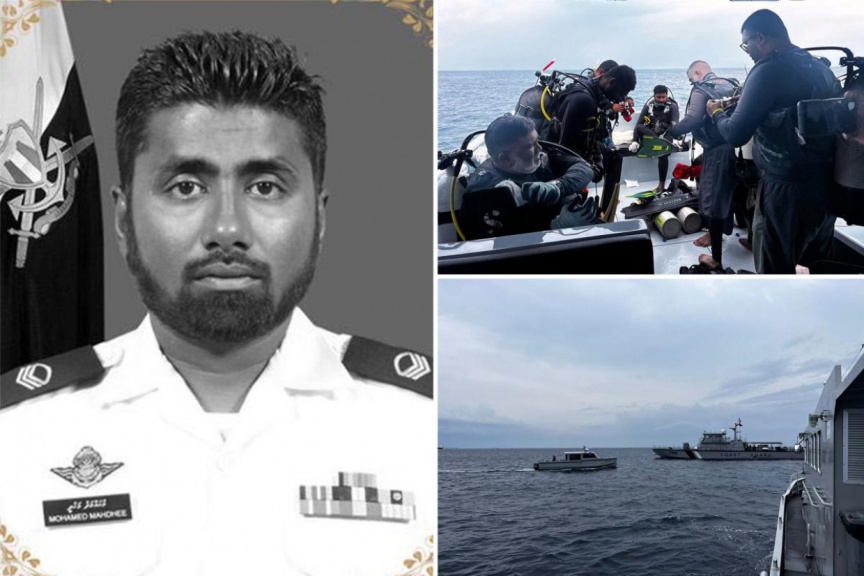
This loss is not only a tragedy for the Maldives but also a shock to the international community. The death occurred during an intensive effort to locate four individuals from a group of five tourists who were feared to have perished. Sergeant Mahudhy was a seasoned veteran who had served in numerous challenging underwater operations.
This incident underscores a sobering reality: although 99 percent of the Maldives comprises of the sea, the nation still lacks comprehensive capability to effectively monitor its waters or conduct ultra-deep-sea recovery operations. The absence of specialized deep-sea equipment and advanced technical training remains a critical vulnerability.

The Needs Beyond Vessels and Drones
It must be acknowledged that the administration of President Dr. Mohamed Muizzu has made significant strides in strengthening military capabilities. A landmark achievement was the acquisition of Unmanned Aerial Vehicles (UAVs) or drones from Turkey, leading to the establishment of a dedicated Air Corp. This has undeniably enhanced aerial surveillance and search-and-rescue efficiency.
Furthermore, in addition to drones and a vessel gifted by Turkey, the military recently received a new patrol boat from Australia. For a developing nation such as the Maldives, which faces unique economic challenges, maintaining a large military budget is difficult. Consequently, such high-value international assistance provides a vital boost to the Coast Guard.

The Maldives is not a small nation. While its landmass is limited, its sovereign maritime territory is vast. As President Muizzu stated during the inauguration of the drones on March 15, 2024: “We must stop viewing ourselves as a small nation. We are a large maritime state with an Exclusive Economic Zone (EEZ) exceeding 900,000 square kilometers.”
However, two years since then, the question remains whether military capability has truly evolved to match the reality of this vast territory. Given the scale of our waters and the depths of our oceans, the primary focus should be on mastering this environment and preparing for any possible incident.
The current reality is stark: despite our vast maritime jurisdiction, Coast Guard resources have not yet been fully modernized to the highest technical standards. The lack of specialized equipment and the inability to safely dive beyond 50 meters—even in emergencies—has now been felt through the ultimate sacrifice of a brave soldier.
Vessels alone are insufficient. There must be an urgent and specific focus on providing advanced technical training to Coast Guard personnel and equipping them with state-of-the-art tools.
“With the government’s initiative, a program was launched this year to train divers to reach depths of 100 meters. The second phase will commence this month, with the aim of completing the training by the end of the year,” Brigadier General Saleem noted in his Friday interview.
Courage and Bravery Must Be Backed by Resources
The security and safety of a nation rest upon the shoulders of its military. The public places its trust in these men and women, funding their equipment and welfare through taxes, with the expectation that they will be protected.

Soldiers are trained to sacrifice their lives if necessary, serving their country and people until their last breath. Maldivian soldiers have consistently proven this courage—whether battling fires or diving into treacherous waters to save lives.
However, leadership must understand that bravery and initiative, when not supported by specialized training and adequate resources, can lead to preventable tragedies.
The current situation serves as a grave warning: we must identify the most critical areas for military development based on our unique environment and prioritize the necessary resources and training.
A human life is priceless. The current crisis demands deep reflection and immediate action to prioritize the Coast Guard, upgrade its technological infrastructure, and provide soldiers with the advanced technical training required for the challenges of our vast blue territory.