date_range
Thursday 03 Sep 2026


 LOCAL EDITION
close
 LOCAL EDITION


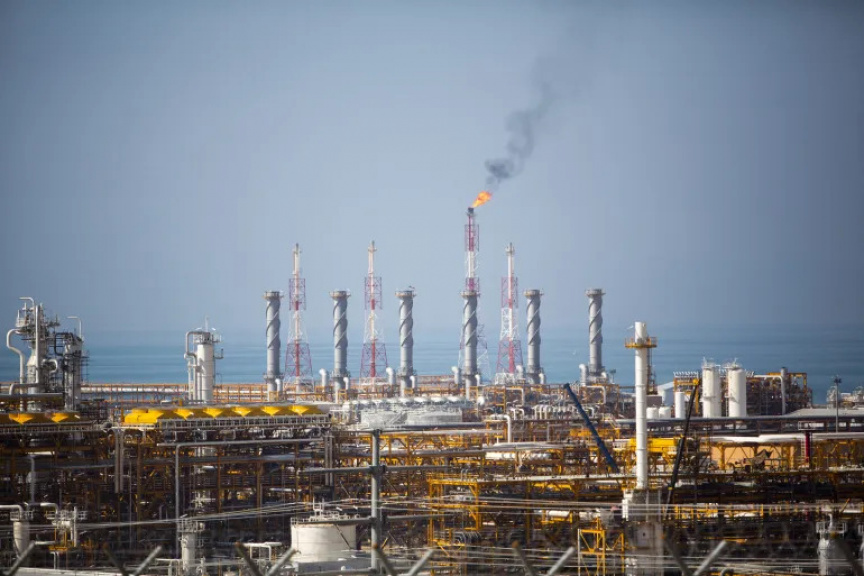
A picture shows a view of the phase 12 of the South Pars gas field facilities. (Photo/AFP)
The Maldives has strongly condemned strikes by both Israel and Iran targeting energy facilities in the region, as the US-Israeli war on Iran threatens to further ignite the entire region into an even more ominous phase.
On Wednesday, Israel attacked the natural gas facilities associated with Iran’s offshore South Pars field – the largest gas field in the world, located off the coast of southern Iran’s Bushehr province.
Iran has ratcheted up the pressure on several Gulf nations by attacking their energy facilities in retaliation for the Israeli strike on its South Pars gas field.
The dangerous new developments in the war saw Iran hit Qatar’s Ras Laffan liquefied natural gas (LNG) facility on Thursday amid a broader campaign that also included attacks on energy infrastructure in the United Arab Emirates and Saudi Arabia, raising serious concerns about global energy supplies.
In a statement on Friday, the Maldivian Foreign Ministry strongly condemned the attacks by Israel targeting energy facilities linked to the South Pars gas field in Iran.
The Maldives warned that such attacks on energy infrastructure constitute a blatant violation of international law, risk further destabilizing the region and pose threats to global energy security.
The Maldives also condemns Iran’s attacks targeting commercial and energy facilities in Saudi Arabia, UAE, Qatar and Kuwait.
“Such attacks on critical infrastructure further undermine regional security and stability, and underscore the importance of safeguarding key facilities, including oil installations, desalination plants and airports,” warned the Foreign Ministry in its statement.
The Maldives reiterated its call to the international community to intensify diplomatic efforts including towards securing an immediate ceasefire aimed at restoring peace, stability and security to the region.
Israel and the US have carried out strikes on a range of targets across Iran, including oil facilities, since the war began on February 28.
Retaliatory Iranian missile and drone attacks on countries in the wider Middle East, including on Arab Gulf states, have also continued despite growing concerns over the conflict’s widening impact on global energy markets.
Iran’s essential closure of the Strait of Hormuz – a critical Gulf waterway through which about one-fifth of the world’s oil and liquefied natural gas transits – has sent energy prices soaring.
While Iran says it is firing at US military assets in the region, Gulf leaders have repeatedly denounced the attacks as a violation of international law and said they have targeted civilian infrastructure.