date_range
Saturday 10 Oct 2026


 LOCAL EDITION
close
 LOCAL EDITION


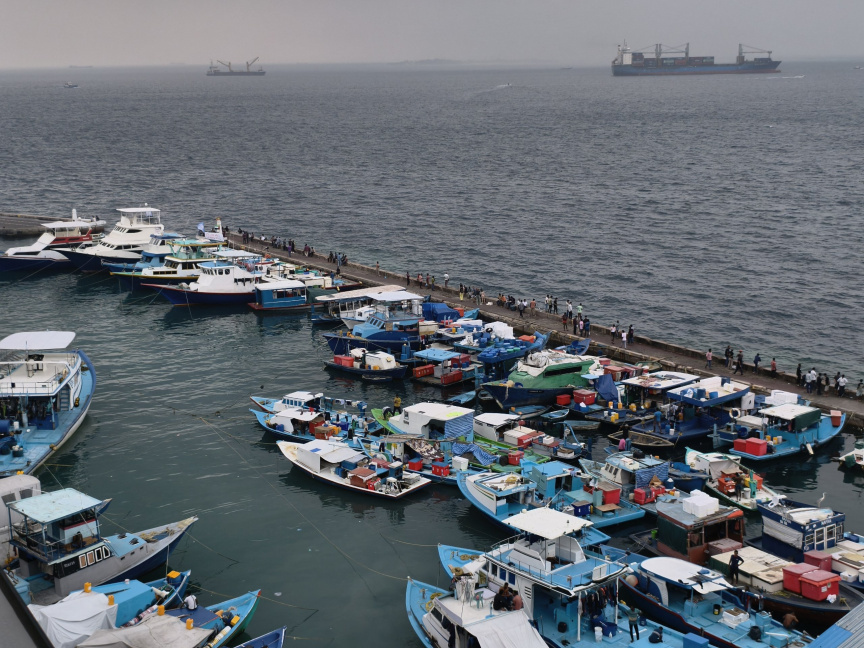
Fishing vessels docked outside Male' market area: Ensis has stopped issuing free ice to fishermen over oil price hike. (Sun Photo/Ahmed Iyad)
Due to a significant surge in global fuel prices driven by the ongoing conflict in the Middle East, Ensis Fisheries Private Limited has discontinued the provision of free ice to fishermen, citing unsustainable production costs.
In a statement issued on Wednesday, the company underscored its continued efforts to address challenges facing the fishing industry amid volatility in both global and domestic fuel markets. However, it noted that the sharp escalation in fuel prices has made the cost of producing and supplying ice a huge financial burden.
Ensis Fisheries revealed that between March 1st and March 16th, fuel prices increased twice, resulting in a cumulative rise of 111 percent. The company explained that fuel represents the largest operational expense in fish processing and export activities, and that the recent hikes have forced it to operate at a considerable loss.
As a result, the company said it has been compelled to suspend the provision of free ice to yellowfin tuna fishermen. It described this measure as necessary to ensure long-term sustainability in light of the substantial increase in operational costs associated with ice production.
Ensis Fisheries expressed its sincere apologies to the fishing community for any inconvenience caused and reaffirmed its commitment to monitoring fuel price trends while exploring feasible options to reinstate the service in the future.
Notably, the State Trading Organization (STO) has implemented significant revisions to fuel delivery prices following the conflict. Although these adjustments vary by region due to transportation costs, fuel prices have risen markedly nationwide.
Petrol and diesel prices have reached record highs. In response, the government has moved to stabilize fuel prices by utilizing projected profits from STO alongside existing subsidies.
Concerns are growing over the potential economic impact on the Maldives should the conflict persist. Former president Mohamed Nasheed has warned of possible fuel shortages and has called for precautionary measures, including scheduled power outages and reduced use of land transport to conserve fuel.
Amid disruptions to global oil markets caused by the conflict, the Maldivian government has formally sought assistance from India to help secure the nation’s fuel supply.