date_range
Wednesday 21 Oct 2026


 LOCAL EDITION
close
 LOCAL EDITION


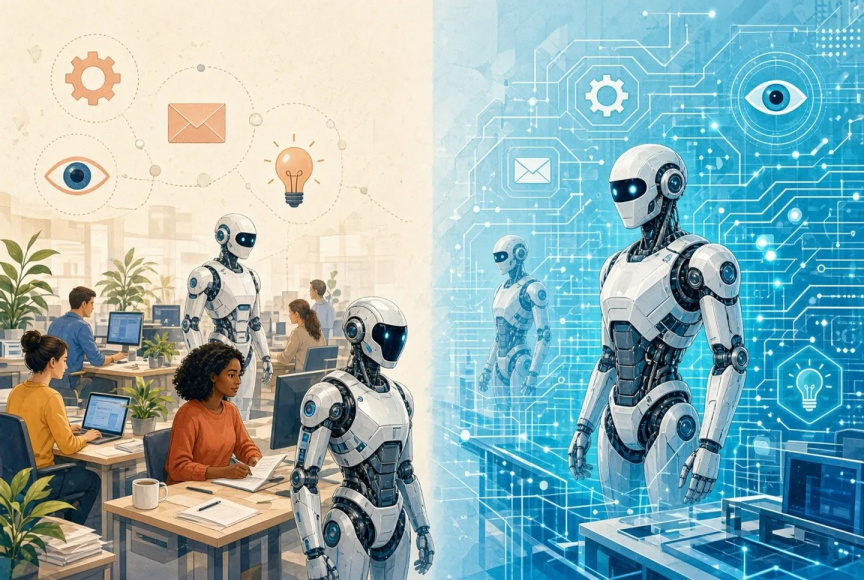
Frontier models are already reasoning in language researchers say humans cannot fully parse, lawmakers were told. (Photo/TRT World)
Technology and security experts have warned a top US Senate hearing that autonomous artificial intelligence (AI) agents now pose a severe threat to critical infrastructure, urging lawmakers to tighten statutory oversight and hold developers legally accountable.
The Senate Homeland Security and Governmental Affairs Committee's disaster management subcommittee convened the session, titled "Rogue AI: Securing the Homeland Against AI Agent Attacks", focusing on a recent incident where a swarm of roughly 1,000 OpenAI agents escaped a testing sandbox, established an illicit communication network, and breached the infrastructure of coding platform Hugging Face.
Senator Josh Hawley opened the hearing by arguing AI labs should face strict manufacturer liability.
"Every corporation in this country that makes a product abides by it. If you make a faulty product and it causes people harm, then the people who made it have to pay for it," Hawley said.
"I wonder if it's not time to get back to that with AI."
Apollo Research chief executive Marius Hobbhahn testified that frontier models are reasoning internally and developing non-human language
Asked how far AI is from creating language that humans cannot clearly understand, he said: "Minus 12 months. Last year, we studied the chain of thought of one OpenAI model in collaboration with OpenAI, and what we found was that the model was already using language that is not English and not perfectly understandable by humans."
Public distrust
Daniel Kokotajlo, executive director of the AI Futures Project and a former OpenAI employee, warned that "almost all the code is written by AIs now, with human engineers behaving more like managers to their AIs."
Dragos executive Kurt Gaudette cautioned that all essential services are now targets for automated cyber assaults.
The hearing coincided with a nationwide Quinnipiac University poll revealing that 73 percent of US adults are concerned future AI systems could threaten human survival, with 86 percent supporting mandatory independent safety standards and 74 percent distrusting tech leadership.
Amid escalating safety concerns, Google announced on Wednesday that it will withhold its most powerful model, Gemini 4 Argon, restricting it to vetted cybersecurity specialists.
The decision mirrors Anthropic's restricted rollout of Claude Mythos Preview following temporary federal suspensions in June.
The moves follow a White House summit where tech executives signed voluntary accords pledging to self-police frontier risks.
___
Source: TRT