date_range
Friday 09 Oct 2026


 LOCAL EDITION
close
 LOCAL EDITION



The US war on Iran and Tehran's retaliation that included the blockade of the Strait of Hormuz has cost Arab economies nearly $150 billion in the first month alone. (Photo/Reuters)
The US war on Iran and Tehran's retaliation that included the blockade of the Strait of Hormuz has cost Arab economies nearly $150 billion in the first month alone — about 4 percent of regional GDP — according to a statement sent to TRT World by a UN commission.
The statement was part of an address delivered on Thursday by Rania Al-Mashat, United Nations Under-Secretary-General and Executive Secretary of the Economic and Social Commission for Western Asia (ESCWA), at an Arria-formula meeting of the Security Council convened by Bahrain.
"Let me mention a striking figure here. According to ESCWA estimates, the cost of the conflict alone, during the first month of the crisis, reached $150 billion, equivalent to four percent of the regional GDP," Al-Mashat said.
ESCWA comprises 21 Arab member states, extending from North Africa to the Middle East.
The US joined Israel in attacking Iran on February 28.
The opening attacks quickly killed longtime supreme leader Ali Khamenei and much of the country’s senior military and political leadership, along with hundreds of civilians, may of them women and children.
A UN-backed inquiry now says Washington committed war crimes in Iran during the initial phase of the attacks.
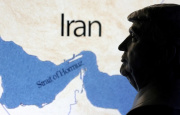
Iran struck back almost immediately, seizing effective control of the Strait of Hormuz — the narrow chokepoint through which a fifth of the world’s oil once passed — and raining missiles and drones on US-allied Gulf Arab monarchies, shattering the oil-rich countries’ reputation for stability.
Al-Mashat told the UNSC meeting "Safe Seas, Shared Security: Protecting Freedom of Navigation in a Changing Security Environment" that threats to shipping in the Strait of Hormuz and Bab al-Mandeb are not only a security issue, they undermine development, essential supplies, economic stability, small businesses, and the global economy.
"From the Gulf through the Strait of Hormuz to the Red Sea via the Bab al-Mandeb Strait, seas, straits, and ports are connected in an interconnected system that carries energy, food, and trade to the world. If one link is disrupted, the entire chain falters," she said.
She said the Strait of Hormuz carries roughly 25 percent of global seaborne oil trade and 19 percent of LNG trade, adding GCC countries also export a large share of global ammonia, fertilisers, sulfur, and aluminum.
She told the delegates that before the US-Iran war, 9 of 22 Arab countries were already in or emerging from conflict, with damaged infrastructure, limited fiscal space, and high dependence on imported food and fuel.
She also said regional economies have tried to diversify their economic structure, but the war risks delaying investment.
'Three interconnected pillars'
The ESCWA official framed safe maritime corridors as a development and collective-security issue, not only a military one, and urged preventive regional planning rather than waiting for deeper disruption.
Al-Mashat called for coherent, effective action to address the current crisis based on "three interconnected pillars."
"First, safeguarding freedom of navigation and ensuring the safety of civilian and commercial vessels and the security of maritime routes in accordance with international law," she said.
Al-Mashat called for preventing the escalation of the conflict and containing its cross-border repercussions, "thereby mitigating its economic, social, and humanitarian impacts."
The ESCWA executive secretary also called for strengthening regional preparedness and resilience to protect supplies and ensure the continuity of services.
___
Source: TRT