date_range
Friday 09 Oct 2026


 LOCAL EDITION
close
 LOCAL EDITION


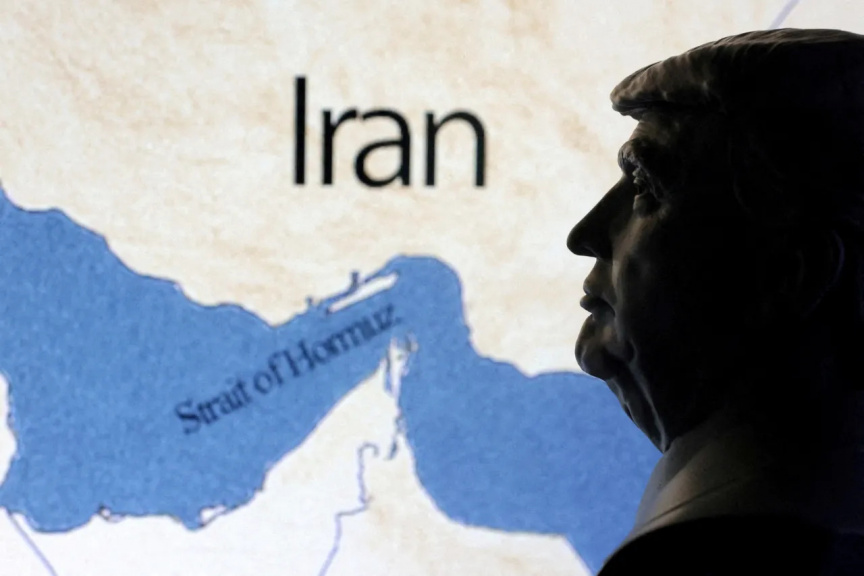
A map showing the Strait of Hormuz and Iran is seen behind a 3D printed miniature of US President Donald Trump in this illustration. (Photo/Reuters)
The Middle East remained on edge on Monday as Iran expanded its strikes on Gulf energy infrastructure while United States President Donald Trump signalled a temporary pause in planned offensive operations.
The combination of military escalation and diplomatic hesitation has left global markets volatile and regional governments scrambling to assess the next phase of the crisis.
Trump, who has faced mounting pressure over the scale of U.S. involvement, indicated that Washington would “review the next steps” before launching further action. The move follows weeks of intense exchanges between US forces and Iranian units across the region.
Energy analysts say the pause has offered brief, limited relief to fuel markets, though prices remain elevated after repeated strikes on key Gulf facilities. The U.S. has also allowed previously sanctioned Iranian oil already loaded on tankers to move into the market, a step aimed at stabilising supply.

Meanwhile, Iran continued its campaign of targeted attacks on energy hubs in Qatar, Saudi Arabia, the UAE and Kuwait. Damage to Qatar’s Ras Laffan LNG complex, one of the world’s most critical gas export sites, is expected to have long‑term implications for global supply. Fires and shutdowns across other Gulf facilities have added to concerns of a broader energy shock.
In Israel, authorities are confronting the fallout from a series of air‑defence failures that allowed Iranian missiles to strike southern towns including Arad and Dimona. The incidents, which caused injuries and infrastructure damage, have intensified scrutiny of Israel’s layered defence systems at a time when the country is also facing heavy rocket and drone fire from Hezbollah.
The Strait of Hormuz, a vital artery for global oil shipments, remains effectively paralysed, with only a handful of vessels attempting passage under heightened risk. Iran has threatened to mine the waterway if the U.S. proceeds with a ground invasion, raising fears of a prolonged disruption.
Regional governments are now bracing for a protracted period of instability as diplomatic efforts struggle to gain traction. Energy markets, already rattled by supply shocks, are expected to remain volatile in the days ahead.