date_range
Friday 09 Oct 2026


 LOCAL EDITION
close
 LOCAL EDITION


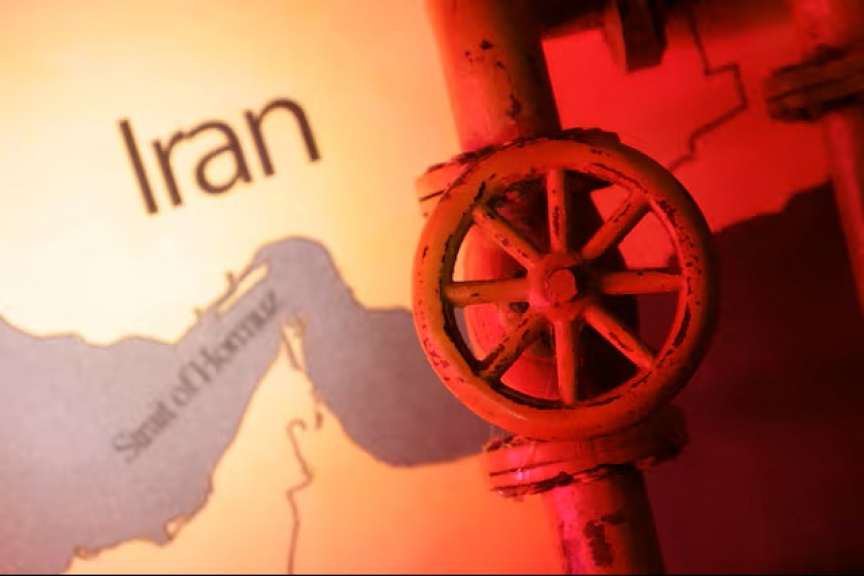
A map showing the Strait of Hormuz and Iran is seen behind a 3D printed oil pipeline in this illustration taken June 22, 2025. (Photo/Reuters)
Several of the world’s largest oil and gas companies, tanker owners and global trading houses have suspended crude oil, fuel and liquefied natural gas (LNG) shipments through the Strait of Hormuz, following US and Israeli strikes on Iran and Tehran’s escalating military response.
Trading sources told Reuters that vessels have been instructed to “stay put for several days” as operators assess the rapidly deteriorating security situation. Satellite tracking shows tankers accumulating near Fujairah in the United Arab Emirates, with many ships slowing, stopping or turning back.
The disruption intensified after Iran’s Revolutionary Guards issued radio warnings to multiple vessels, declaring that “no ship is allowed to pass the Strait of Hormuz.” Officials from the EU naval mission Aspides confirmed the warnings, though the UK Navy noted that Iran’s order is not legally binding. Even so, the US Transportation Department has advised commercial vessels to avoid the Gulf, Gulf of Oman, North Arabian Sea and the Strait of Hormuz, warning that the US Navy cannot guarantee safe passage.
The suspension marks the most serious disruption to Hormuz in years. The strait handles roughly 20 percent of global oil flows from producers including Saudi Arabia, the UAE, Iraq, Kuwait and Iran, as well as a major share of Qatar’s LNG exports. At least 11–14 LNG tankers have slowed, halted or reversed course, raising concerns about Qatar’s ability to maintain supply to Asia and Europe.
Energy analysts warn that the conflict is pushing the global oil market into its biggest crisis in decades, with prices already rising sharply and volatility expected to worsen if the disruption continues.
Any prolonged disruption in the Strait of Hormuz is likely to push global oil prices higher, which would directly affect the Maldives as a fully import‑dependent nation. Higher crude and fuel prices would raise electricity generation costs, increase transport expenses and put pressure on the government’s fuel subsidy bill. Economists caution that sustained price spikes could feed into broader inflation, raising living costs for households and increasing operating expenses for businesses, including the tourism sector, which relies heavily on fuel for power and desalination.