date_range
Monday 19 Oct 2026


 LOCAL EDITION
close
 LOCAL EDITION


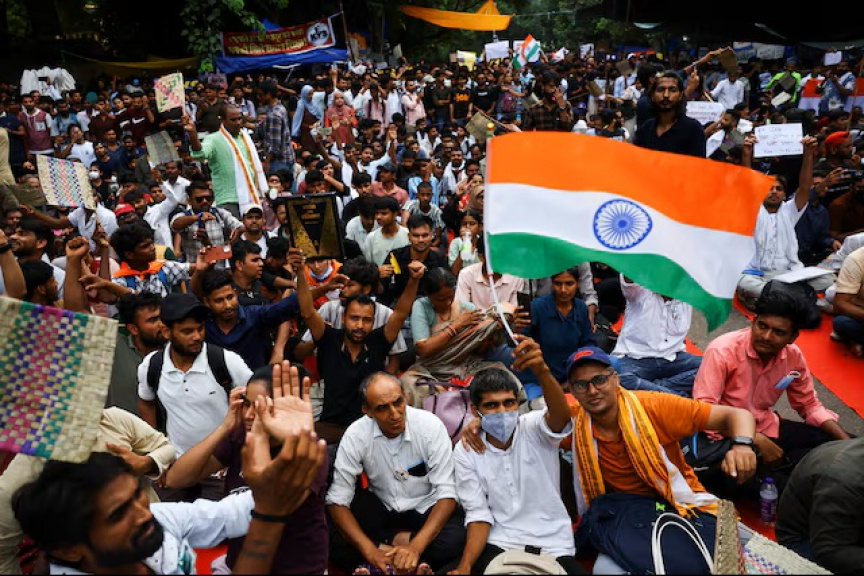
CJP supporters gather at Jantar Mantar in New Delhi amid protests calling for Education Minister Dharmendra Pradhan’s resignation over alleged NEET exam paper leaks, July 23, 2026. (Photo/Reuters)
India is witnessing a wave of nationwide unrest that experts describe as the largest mobilisation since the country’s partition. What began as anger over a major exam paper leak has expanded into a historic, youth-driven movement calling for accountability, inclusion and unity across communities.
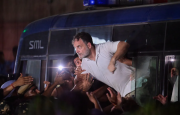
The immediate trigger was the leak of a national-level exam paper used for government recruitment and university admissions. Millions of students preparing for these exams took to the streets, demanding answers and reforms. Within days, demonstrations spread across major cities and states, drawing in broader frustrations that have been building for years.
Analysts say the scale of the protests reflects a generational shift. India’s younger population, which forms a significant portion of the country’s demographic, has become increasingly vocal about religious coexistence and social harmony. Many young Indians argue that divisions between communities are politically motivated and do not reflect the country’s long history of multi-faith living. Social researchers note that this renewed push for unity has become a defining feature of the current mobilisation.
The unrest also follows several years of rising economic pressures. Youth unemployment remains a major concern, while living costs have increased across both urban and rural areas. Economists say these pressures have contributed to widespread frustration, especially among students and first-time jobseekers. Rural communities have also voiced concerns over development gaps and widening inequality.
Political developments in recent years have added to the tension. High-profile arrests of opposition figures and activists have drawn criticism from rights groups, while controversial legislation such as the Citizenship Amendment Act and the farm laws sparked earlier waves of protests. Analysts say these events created long-term resentment that resurfaced with the exam leak.
A timeline of the unrest shows how these pressures accumulated. The CAA protests in 2019 and 2020 marked the first major nationwide mobilisation of the decade. The farmers’ protests that followed in 2020 and 2021 became one of the largest coordinated demonstrations in modern Indian history. By 2022 and 2023, concerns over unemployment and inflation were widespread. In 2023 and 2024, political tensions intensified with several high-profile arrests. State-level clashes and economic slowdown in 2025 added further strain. The exam paper leak in 2026 became the spark that brought all these issues to the surface at once.
The current unrest has seen major protest hotspots in Delhi, Mumbai, Kolkata, Bengaluru and several northern states. Bollywood celebrities have publicly expressed support for students or called for calm, amplifying the movement’s visibility. Social media has played a central role, with viral videos, hashtags and statements from public figures accelerating mobilisation across regions.

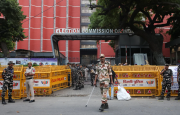
Authorities have confirmed several deaths and injuries linked to clashes in different states. Police and paramilitary forces have been deployed in multiple areas to maintain order, and curfews have been imposed in some districts. Officials have urged the public to remain calm and avoid violence, while promising investigations into the exam leak and related concerns.
Some commentators say the unrest has revived public discussions about unity and coexistence across India’s diverse communities. They note that the movement’s emphasis on inclusion reflects a broader desire among young people to preserve India’s long tradition of multi-faith harmony.
India remains one of Maldives’ closest partners, and developments in the region are closely watched. The scale of the current mobilisation, its youth-driven nature and its historical significance have drawn attention across the world.
Experts say the situation continues to evolve, with calls for accountability, reforms and dialogue growing louder. As India navigates this moment, observers describe the unrest as a defining chapter in the country’s modern history, one shaped by a generation determined to push for unity and change.