date_range
Monday 26 Oct 2026


 LOCAL EDITION
close
 LOCAL EDITION


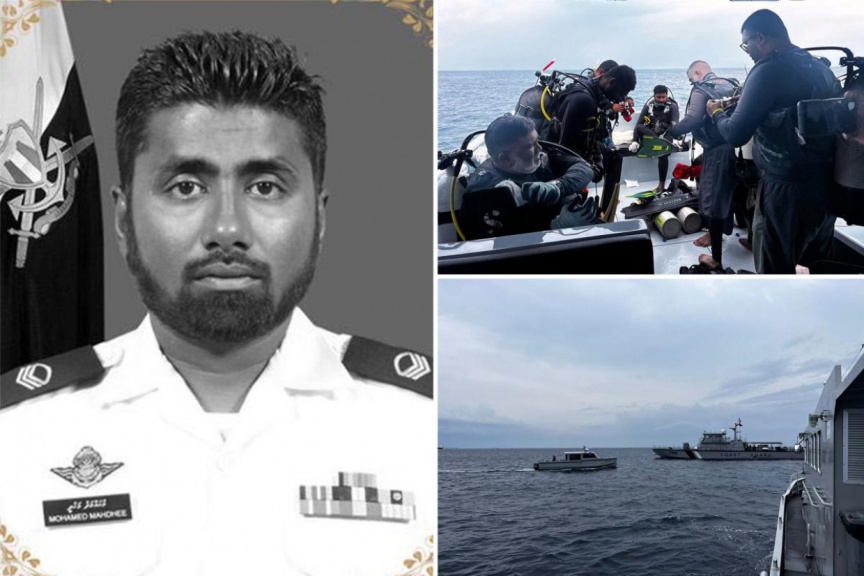
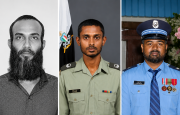
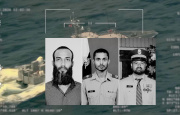
Sergeant First Class Mohamed Mahudhy, who died in an MNDF search operation to locate four missing Italian tourists. (Photo/New York Post)
Cave diving is very different from ordinary diving. Diving into caves at such depths is extremely dangerous — highly technical work that not just any diver is permitted to do. It is done exclusively by specialists and experts in the field.
Consider this: a narrow cave, 60 metres — roughly 196 feet below the surface of the sea.
Dives like these must be conducted using specialised equipment, following strict protocols. You cannot do a dive of that magnitude on regular air cylinders. Without the proper gear, it is not a risk worth taking. This is the standard followed in every country in the world.
The biggest question that now needs to be asked: does the MNDF have the capability for this?
Five Italian tourists went missing last Thursday while cave diving in Vaavu Atoll. They are believed to have died. One body has been recovered. Those who perished include a marine biology professor from the University of Genoa, her daughter, two other researchers, and a diving instructor.
Reports indicate they went diving without a permit. But that is not the concern that has now come to the fore. The concern is the death of skilled MNDF diver Sergeant First Class Mohamed Mahudhy, who dove to recover their bodies. The question that must be asked today is: was this a risk that had to be taken?
There is a significant difference between a search-and-rescue mission for missing persons and a body recovery operation. A search-and-rescue mission is launched urgently to save lives. A body recovery operation is carried out to retrieve the remains of people who have already died — to provide closure to their families.
Every country in the world follows a strict principle in such operations: ensure no further deaths occur. That means minimising risk as much as possible. It means not risking the life of a living person to recover the body of someone already dead. That is a universally agreed principle. The question is: did Mahudhy die because of a risk that didn't need to be taken? This is a matter that must be investigated.
The most dangerous aspect of cave diving is that once you enter a cave, there is no way to simply ascend straight up. You have to exit the same way you came in. The physiological dangers of going below 50 metres are immense — including nitrogen narcosis, oxygen toxicity, and decompression sickness. Nitrogen narcosis impairs judgment and decision-making. Oxygen toxicity can cause seizures. Reports indicate that Staff Sergeant Mahudhy died from decompression sickness.
This is a dangerous condition caused by gas bubbles forming in the blood as a diver ascends. Conducting an operation in a dark, confined cave at such a depth is not something ordinary rescue divers can do. It requires specialised cave diving training and high-grade technical equipment. Does the MNDF have any of that?
Before yesterday's tragic death, the MNDF had already answered these questions.
"We cannot say we are fully prepared for technical diving at the moment. Our divers are currently qualified to dive technically to 50 metres," said Brigadier General Mohamed Saleem, Commander of the Coast Guard, on a PSM programme on Friday.
"Right now we are using normal air. Our divers are doing dives that put them at some level of risk. This is not being done with the technical equipment normally used in operations like this."
Subhanallah! Then why were Maldivian soldiers sent to recover the bodies of people who had already died? Why was a risk of that magnitude taken?
Dives like these are not done on normal air. International cave diving standards state this very clearly. It is a technical dive. Using special gas mixtures is mandatory. So why were MNDF divers sent on normal air? This is a question that demands an answer.
Organisations such as the International Underwater Cave Rescue and Recovery (IUCRR) make it clear in their standards that a recovery diver's life must not be endangered to retrieve the body of someone who has already died. Their manual explicitly states that no body retrieval is worth sacrificing the life of a recovery diver.
MNDF Rescue dive gai maruvi Mahudheege janaazaa rasmee izzathugai baavvai valhulaifi
— sun.mv (@sunbrk) May 16, 2026
Sun Photo: Ahmed Firyalhttps://t.co/FbM25qRjDE
Follow us:
Viber: https://t.co/r1ic7mirrB
Telegram: https://t.co/plOPl2zYfy#sunonline #seemv #news #sunonlineheadlines #latestnews #dhivehinews… pic.twitter.com/5kBVO9gTyX
How was the risk assessment conducted for this operation? Who ordered the soldiers into the cave? Why was that order given? These are things that must be investigated. In any other country, Parliament would be holding an inquiry into this incident today. One of the MNDF's most skilled divers — a father, an important member of a family — Mahdi now rests in the cemetery. How tragic is this?
Cave recovery operations are conducted by small teams of highly specialised experts, far beyond what ordinary rescue units handle. From the Tham Luang cave incident in Thailand to the Plura cave incident in Norway, seeking international specialist assistance in such matters is standard practice. That is nothing to be ashamed of.
The MNDF operation has now been halted. At the request of the Italian government, three Finnish technical diving experts arrived in the Maldives today to take over the body recovery mission.
Was that not how things should have been done from the very beginning?
Without the capability for technical diving, without the necessary equipment, the MNDF sent divers into that cave — even while experts abroad were ready and willing to help.
Vladimir Tachilav, a Russian expert diver who spent 14 years researching the very cave where the tourists died, had emailed the MNDF and the government on the day the tourists died, making clear he was ready and willing to assist with the body recovery mission. Why were MNDF divers sent when an expert familiar with that very cave had offered his help? That too must be investigated.
How could it have been acceptable to send divers who were not prepared and lacked the necessary capability, instead of bringing in foreign technical diving experts — as is being done now?
It was not only the Russian diver. One of the Maldives' most experienced divers, Shafraz Naeem (Shaf), had offered to assist in a previous similar operation and was rejected by the MNDF. He is a skilled technical diver with over 27 years of experience, holding multiple records — and a former member of the military himself. He said the MNDF turned him away because he was no longer in the armed forces.
That was off Villingili. I offered my help to dive and retrieve the body. My offer was rejected by then Coast Guard Commandant saying I'm a "civilian" and it would make MNDF look bad
— ???????? Shaff ???????? (@ShafrazNaeem) May 16, 2026
Information on this matter is being provided directly through the President's Office. So today, many questions were put to the President's Office spokesperson Mohamed Hussain Shareef (Mundu). However, as of the time of publishing this report, no response has been received.
Whether there was negligence must be examined. Whether the MNDF acted in accordance with proper protocols must be checked. Whether those protocols themselves are flawed must be investigated. The matter must be looked into and action taken. If negligence is found, it cannot be swept aside.
While recovering the bodies of four people who had already died, the Maldives lost one of its finest divers — a courageous soldier, another life. This was a risk that did not need to be taken. Nothing but concern surrounds this matter. A full investigation must be conducted. It must be ensured this never happens again.