date_range
Tuesday 20 Oct 2026


 LOCAL EDITION
close
 LOCAL EDITION


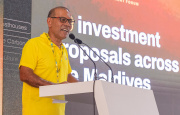
Former president Mohamed Nasheed: Nasheed has warned against reliance on on new loans to repay existing debt is unsustainable. (Sun Photo/Naail Hussain)
Former president Mohamed Nasheed has warned that taking on new debt to repay existing obligations is not a sustainable economic strategy for the Maldives, stressing that such measures cannot be regarded as responsible fiscal management.
Speaking at a campaign rally held last night in L. Gan, Nasheed voiced growing concern over the country’s mounting financial pressures, particularly state expenditure and the rapidly rising national debt.
Although the government recently announced the payment of several debt obligations, it has yet to disclose comprehensive details regarding the origin of the funds or the precise repayment mechanisms employed.
Nasheed noted that debt servicing now accounts for the largest share of the Maldives’ financial system. He cautioned that relying on fresh borrowing to finance existing debt places the country on an unsustainable path that could undermine long-term economic stability.
According to figures released by the Finance Ministry and projections by international financial institutions, the Maldives’ total national debt is expected to surpass MVR 123 billion by the end of this year — the highest level ever recorded in the country’s history. With the debt-to-GDP ratio projected to fluctuate between 125 percent and 133 perent, estimates further indicate that the nation will be required to repay approximately USD 1.1 billion within this year alone.
Against the backdrop of these substantial repayment obligations, concerns have intensified among economists and the public over the perceived lack of transparency in the government’s financial management. Critics argue that the absence of clarity on whether repayments were financed through state reserves or additional borrowing reflects a troubling lack of fiscal transparency.
Drawing on his experience serving as an advisor to the Sri Lankan president during the country’s economic collapse and subsequent debt default, Nasheed said he had witnessed firsthand the devastating consequences such crises can have on a nation. He added that this experience has given him a strong understanding of both the recovery measures required in times of economic turmoil and the preventative strategies necessary to avoid such outcomes.
Referring to the World Bank’s “Debt Sustainability Analysis,” Nasheed warned that the Maldives’ debt repayment capacity is facing severe strain. He cautioned that despite the country’s classification as a middle-income nation with a per capita income of USD 13,000, the escalating debt burden risks pushing the Maldives back toward developing-country status.
Nasheed concluded by stating that while the Maldives still has opportunities to build on its development and achieve greater prosperity, this can only be accomplished by escaping debt. He stressed that the country must urgently recalibrate its economic direction and adopt disciplined, resilient fiscal policies to safeguard its future.