date_range
Wednesday 19 Aug 2026


 LOCAL EDITION
close
 LOCAL EDITION


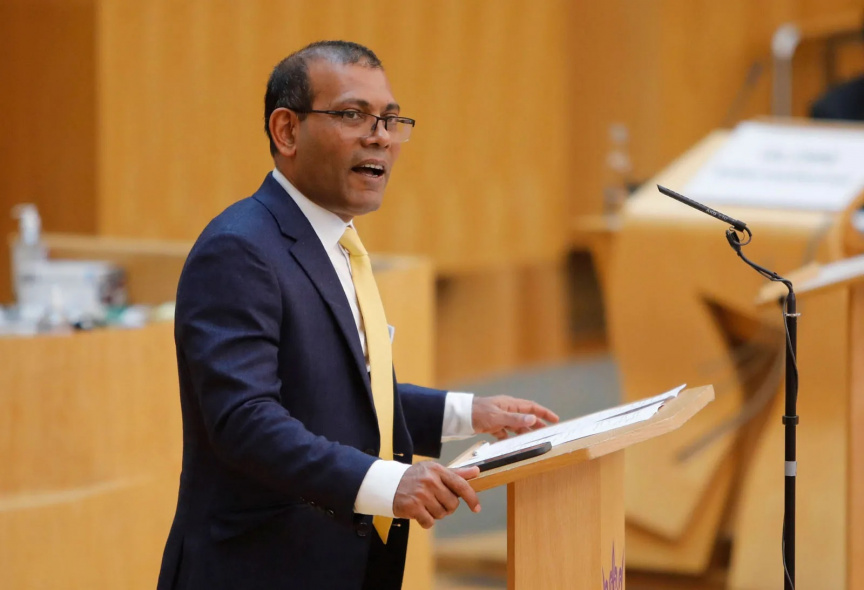
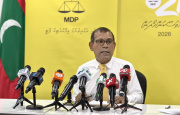
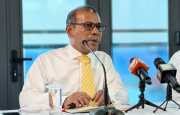
Former president Mohamed Nasheed: Nasheed has praised the debt rollover arrangement with India while calling for debt sustainability plan. (Photo/Andrew Cowan)
Former president Mohamed Nasheed has praised the debt rollover arrangement between the Maldivian government and the Indian government for the settlement of the USD 400 million debt, while calling on the Maldivian government to have a debt sustainability plan.
The Maldivian government, on Thursday, repaid a USD 400 million debt to India that was incurred in October 2024 under a bilateral currency swap facility. The settlement was completed after the repayment deadline had been extended on two occasions. Upon repayment, India activated a 30 billion Indian Rupee (approximately USD 319 million) currency swap facility. This facility forms part of an agreement concluded during President Dr. Mohamed Muizzu’s state visit to India last October.
This marks a debt rollover which refers to the practice of taking a new loan to pay back an old one. While it may help the Maldives avoid immediate repayment pressure, it does not fix the underlying issues that prompted the arrangement in the first place.
Commenting on this development, former President Mohamed Nasheed shared a post on X on Friday in which he expressed appreciation and strong praise for India. He observed that the manner in which the debt was handled reflects a common approach used by countries to effectively rollover debt.
Thank you India. ???????? India announced that USD 400M debt matured on 23 April 2026. On the same day, India cleared a new INR 30 billion facility.
— Mohamed Nasheed (@MohamedNasheed) April 24, 2026
India activated new funding on the exact day the old debt came due. This is often how countries "roll over" swaps - replace old debt with…
However, Nasheed, in his post, called on the Maldivian government to have a proper debt sustainability plan, stressing government spending remains high and wasteful while revenue, particularly in Maldives’ main economic sector, tourism, has declined by 30 percent.
Nasheed, who has consistently raised concerns about the country’s debt burdens, has previously called on the government to engage with the opposition in addressing fiscal challenges. He has also proposed substantial constitutional reforms and structural changes to the system of governance, arguing that a fundamental transformation is required.
Notably, the government has maintained a consistent record of meeting its debt obligations on time. With the recent repayment of more than USD 900 million in debt—including a USD 500 million sukuk earlier this month—the administration has continued to fulfill its financial commitments.
Despite these repayments, significant concerns remain regarding the overall debt burden. International financial institutions and economic experts continue to urge the government to adopt stricter measures to reduce expenditure and eliminate wasteful spending. However, there is ongoing apprehension that current efforts to curb spending have yet to yield proper results.