date_range
Monday 05 Oct 2026


 LOCAL EDITION
close
 LOCAL EDITION


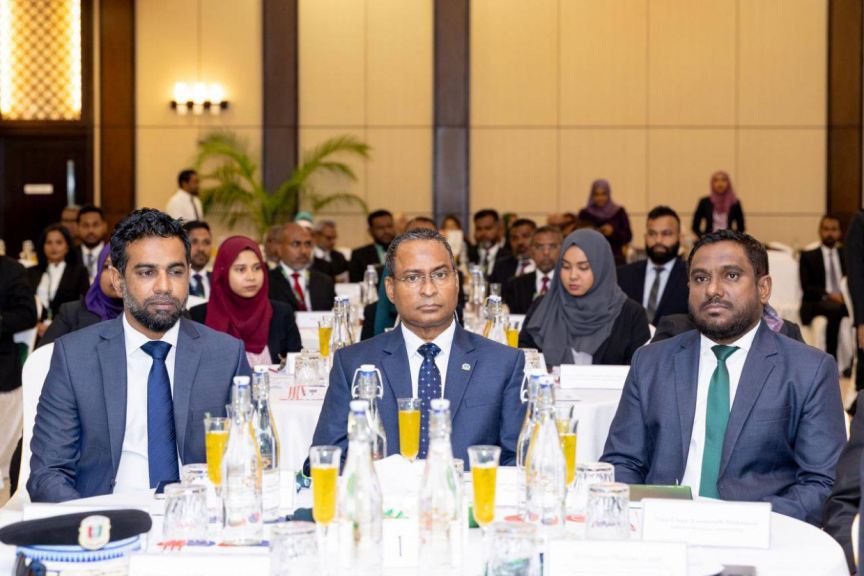
Chief Justice Abdul Ghanee Mohamed, Chief Judicial Administrator Amjadh Musthafa and JSC's president Husnee Mubarak.
The Department of Judicial Administration (DJA), the administrative arm of the judiciary, has been accused of providing false information during a hearing before the Supreme Court presided over by the Chief Justice.
The allegation emerged during a hearing in a case concerning a former judicial employee who was dismissed for allegedly posting derogatory remarks about former president Mohamed Nasheed on Facebook.
The case, which has previously been heard by the Employment Tribunal and the High Court of, is currently appealed at the Supreme Court. The bench hearing the matter is led by Chief Justice Abdul Ghani Mohamed, alongside Justice Dr. Mohamed Ibrahim and Justice Ali Rasheed.
During a hearing in the appeal held last week, the central figure in the case—former senior judicial official and current practicing lawyer Mohamed Nizam—alleged that the DJA had been untruthful during the proceedings.
"The second point I wish to highlight is that during the previous hearing, as well as today's session, the appellant (Department of Judicial Administration) has been untruthful, as questioned by the Honorable Chief Justice," Nizam stated during the hearing, referring to discussions concerning a consolidated copy of the Judicial Service Staff Regulations.
During the proceedings, the Chief Justice also questioned the DJA regarding the existence of a consolidated version of the regulations.
The legal dispute originated when the DJA initiated disciplinary action against Nizam while he was serving as Deputy Director General of the High Court, following allegations of misconduct.
The decision by the DJA followed an investigation triggered by complaints submitted by a private citizen to the Parliament's Judiciary Committee. The complaints related to posts made from Nizam’s Facebook account.
Nizam, who previously served in the Maldives National Defence Force (MNDF) and is currently employed at the Maldives Monetary Authority (MMA), had reportedly published several political statements on his Facebook account.
According to a DJA report submitted to Parliament following the investigation, Nizam asserted that his Facebook account had been hacked. However, the DJA’s findings indicated that he had not reported any such hacking to any relevant authority. The report further noted that personal photographs, including those of his children, continued to be shared from the account. As a result, the DJA concluded that the claim that the account had been compromised lacked credibility—an issue that was also raised during the Supreme Court hearing.
Following his dismissal from the High Court, Nizam challenged the decision. Although the Employment Tribunal initially ruled on the matter, the High Court later ordered a retrial upon appeal. The current proceedings before the Supreme Court concern an appeal of the High Court’s ruling.