date_range
Wednesday 14 Oct 2026


 LOCAL EDITION
close
 LOCAL EDITION


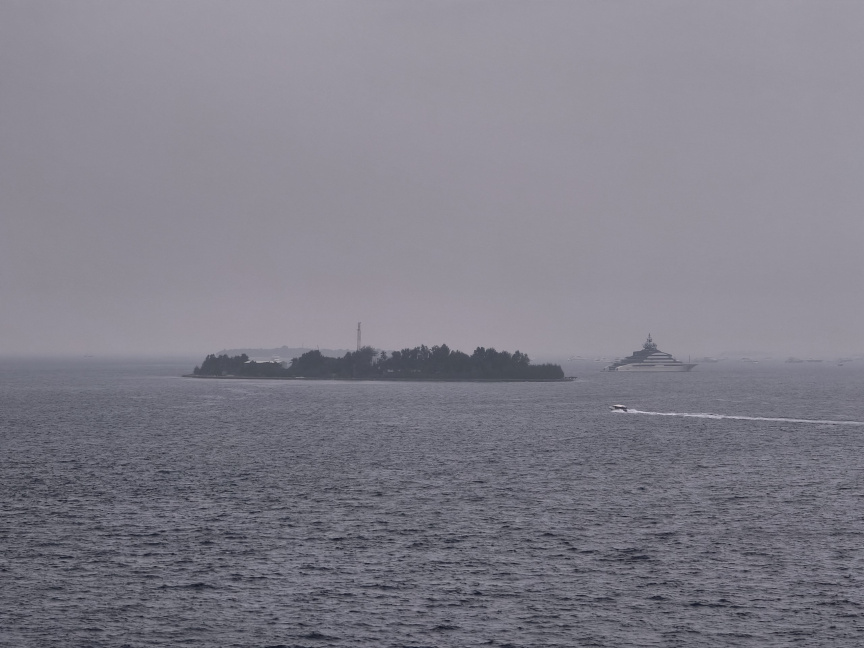
Haze blankets over Male' area. (Sun Photo/Ahmed Iyad)
The air quality remains unhealthy in a large part of the Maldives as the haze persists, prompting the Health Protection Agency (HPA) to advice precautions.
Readings on Thursday for a large part of the country showed Air Quality Index levels above 100 - classified as "Unhealthy for Sensitive Groups" under international standards, and exceeding 150 in two locations – Male’ City and Kulhudhuffushi City.
The AQI level in the northern city of Kulhudhuffushi was 159, and the level in the central city of Male’ was 154 – putting it in the “Unhealthy” category and entailing "increased likelihood of adverse effects and aggravation to the heart and lungs among the general public."
The air quality is in the “Moderate” in the south, with the air quality in both Addu and Fuvahmulah categorized as acceptable, “but there is a moderate health concern for a very small number of people who are unusually sensitive to air pollution”.
The poor air quality has prompted the HPA to urge members of the public, especially sensitive groups such as children, the elderly, pregnant individuals, and people with heart or lung conditions or allergies, to take precautions.
The health recommendations issued by the HPA includes stopping or reducing outdoor exercise, using a N95 mask or a similar mask when outdoors, closing windows to avoid dirty outdoor air, and running an air purifier.
Unlike mist or fog, haze is caused by fine particles in the air, which pollute the air and reduce visibility.
The Maldives usually faces haze during December and January, when the Hulhangu Monsoon transitions into Iruvai Monsoon.
Environmental analysts have warned the issue has become more severe in recent years, mainly due to hazardous gases expelled from factories in neighboring countries.