date_range
Thursday 08 Oct 2026


 LOCAL EDITION
close
 LOCAL EDITION


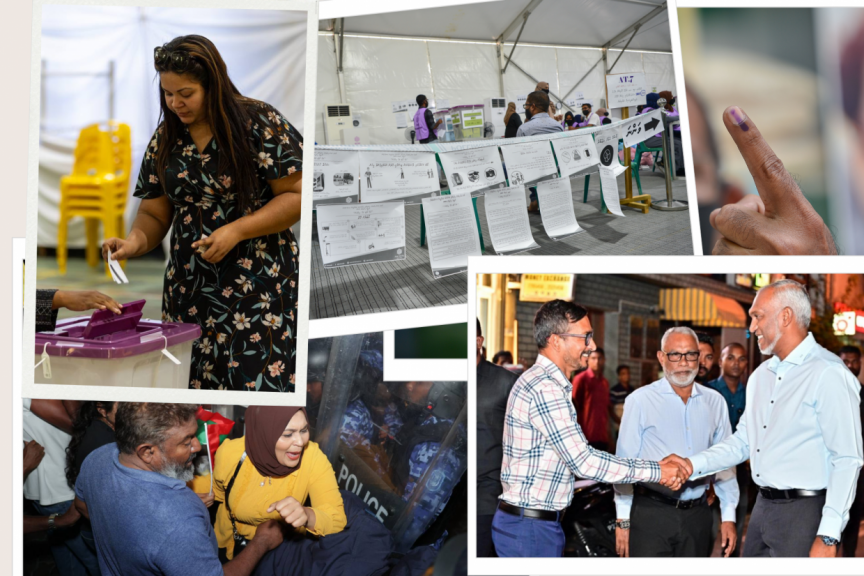
Political parties often behave like divorced couples, seeing only the faults of the other. Even when a proposal has merit, it is rejected simply because it comes from the opposite camp. In the Maldives, this tendency is particularly evident, as seen in the current debate over combining the country’s two main elections.
Last week, the Parliament passed a constitutional amendment backed by the incumbent administration, led by President Dr. Mohamed Muizzu, to hold presidential and parliamentary elections simultaneously. The bill was approved verbatim by a parliament where the ruling party holds supermajority. However, the amendment will take effect only if approved by the public in a referendum, which the government plans to hold alongside the upcoming local council elections in April.
The president argues that combining the elections would reduce state expenditure. According to him, holding the two elections together could save at least MVR 120 million, funds that could instead support struggling families.
Among opposition figures, former president Mohamed Nasheed has publicly expressed support for the amendment. Nevertheless, the Maldivian Democratic Party (MDP) opposed it within Parliament. MDP's leader Abdulla Shahid, former MDP chairperson Fayyaz Ismail, and former president Abdulla Yameen Abdul Gayoom have also voiced their opposition to the amendment.
Before the referendum, the question for voters is clear: would combining the elections benefit the country, or be detrimental?
A country in constant election mode
Within each five-year period, Maldivians vote in three major elections: presidential, parliamentary, and local council. By-elections are also held to fill vacancies. For a country with a small population, the frequency of elections is unusually high.
The financial burden is significant, but the social cost is often overlooked. Each election brings intense campaigning, loudspeakers, political tension, and divisions within communities. For some, politics is energising; for others, the constant cycle is exhausting.
Supporters of combining elections argue that it would allow governments to focus on long-term development instead of constantly preparing for the next campaign. They assert that political stability enables policy continuity.
Many countries hold national elections simultaneously. Indonesia, Brazil, and the United States, for example, conduct presidential and legislative elections in this manner. Advocates argue that this reduces costs and administrative strain.
A former senior official at the Elections Commission noted that frequent elections disrupt schools and public services, and that combining elections would ease these pressures. Even a conservative estimate suggests the state could save at least MVR 50 million.
Businessman Mohamed Alabbar of the UAE has previously argued that while many democracies are frequently absorbed in election cycles, the United Arab Emirates prioritises development. He attributes the country’s rapid progress in infrastructure, aviation, healthcare, and education to sustained focus rather than political turnover.
The concerns raised by oppositon
Opposition leaders argue that combining elections carries serious risks.
One major concern is that holding presidential and parliamentary elections together could allow one dominant party to secure both the executive and legislative branches at once, reducing checks and balances.
In theory, separate elections allow voters to assess a government’s early performance before deciding the composition of parliament. In practice, however, Maldives’ political history shows that most presidents since the adoption of the current constitution have secured parliamentary majorities regardless of the election schedule.
Another concern is voter attention. When elections are simultaneous, presidential campaigns often overshadow parliamentary races, making it difficult for smaller parties to compete with larger, better-funded parties.
Logistical questions also arise. Under current law, a presidential candidate must secure more than 50 percent of the vote to win outright; otherwise, a second round is required between the top two candidates. Some legal experts have questioned whether it would be practical to complete both elections smoothly if a presidential runoff becomes necessary.
There have been discussions about possibly changing the system so that the candidate with the highest number of votes in the first round would win. However, no official confirmation has been given.
Opposition MDP members have accused the government of attempting to alter the constitutional balance through the referendum. Kendhoo MP Mauroof Zakir argued that the amendment could affect the duration of parliamentary and presidential terms and described it as a move that weakens democratic safeguards.
The government rejects these claims, insisting that cost reduction and administrative efficiency are the only motivations.
A broader governance question
Skepticism persists among some citizens. Critics question whether cost-cutting is a genuine priority, noting continued high expenditure in other areas, including political appointments.
At the same time, many agree that Maldives’ development has not progressed at the pace it could have. Governance reforms are often discussed but rarely implemented comprehensively.
Combining elections would represent a structural change. Whether it is a positive reform or a democratic risk depends not only on timing, but also on broader political culture, institutional safeguards, and public trust.
Ultimately, the decision rests with the people.