date_range
Tuesday 17 Nov 2026


 LOCAL EDITION
close
 LOCAL EDITION


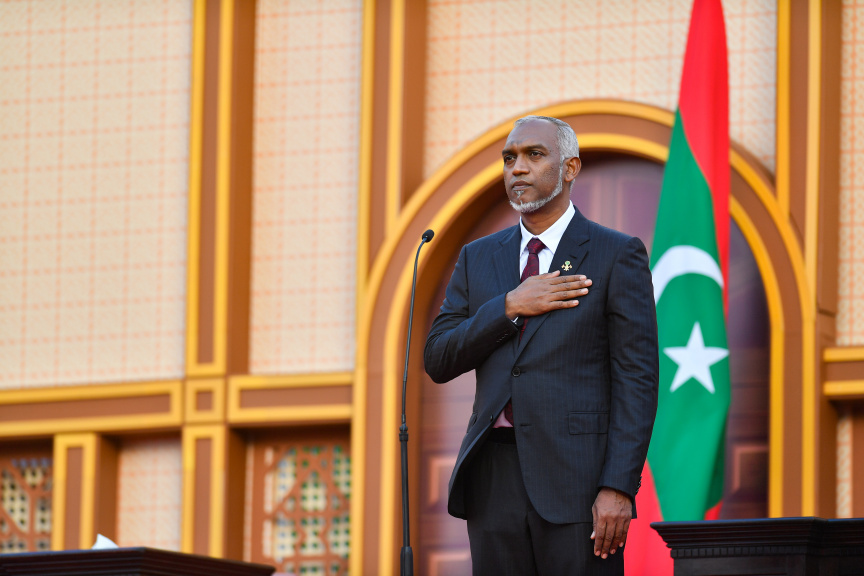
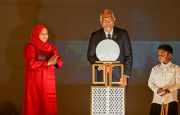
President Dr. Mohamed Muizzu at his presidential inauguration ceremony on November 17, 2023. (Photo/President's Office)
Three years ago, today, President Dr. Mohamed Muizzu assumed leadership of the Maldives. Standing at Republic Square beneath the waving national flag, he made numerous promises to the nation. Today, those promises are three years old. With most of his five-year term now behind him and only two years remaining, this is an appropriate time to reflect on the government's direction and assess what its policies have achieved. The past three years have witnessed significant changes, important economic decisions, and considerable political criticism.
Rushed decisions and sudden "U-turns"
One of the major challenges during these three years has been the government's tendency to bypass important steps when introducing major policies that directly affect the public. A policy cannot succeed unless people understand it and are given sufficient time to adapt to it. Good governance demonstrates that gradual, step-by-step reforms are more sustainable than sudden and sweeping changes. When this principle is overlooked, public resistance often emerges immediately, even against policies intended to benefit the people.
A clear example is the attempted reform of Aasandha, the state health insurance scheme, which places a significant financial burden on the government. The government initially decided that Aasandha would only cover medical expenses after an individual's private insurance coverage had been exhausted or where private insurance did not cover the required treatment. As the public was not adequately prepared for this change, it generated considerable dissatisfaction, forcing the government to make a "U-turn" and withdraw the decision. A year later, another change was introduced, requiring individuals earning more than MVR 60,000 per month to contribute a fixed amount towards Aasandha services. While this may well be a sound policy, repeated changes in direction have raised serious questions among the public.
The government also reversed its position on the duty imposed on cigarettes. While the government initially increased the duty, it subsequently reduced it, stating that the decision was in line with World Health Organization (WHO) guidelines. On the other hand, the "generational ban" on tobacco and the prohibition of vaping received strong public support. However, it has now become evident that there is no sufficiently effective system in place to ensure compliance with these regulations. Despite the laws being in force, vapes continue to enter the country illegally and are sold through concealed channels.
Looking back, many people feel that policies have been decided and announced without adequate consultation or sufficient public awareness. This reflects a tendency towards rushed decision-making. Repeatedly revisiting policies and reversing decisions undermines the government's credibility and risks turning serious public matters into a "joke." When a government continually changes its position, it risks losing public trust and the respect it is expected to command.

Good governance: Promise vs. Reality — Is there real openness?
One of the most significant promises President Dr. Muizzu made three years ago was to establish an open and transparent government. He assured the public that information would be shared freely and that state affairs would be conducted with clarity and transparency.
However, over the past three years, serious concerns have emerged regarding threats to fundamental freedoms, including freedom of speech and the right to participate in peaceful political activities. Nevertheless, public gatherings continue to take place, and opposition parties continue to organize protests. People remain able to take to the streets and express their views through slogans, demonstrations, and public displays.
Despite this, government institutions have not done enough to ensure the timely disclosure of information. Delays in releasing data and the failure to provide accurate information when required have further damaged the government's public image. When a government becomes less transparent, the trust between the people and their leaders begins to deteriorate. There are also continued public complaints that major agreements are signed and significant decisions are made without transparent processes. Overall, the experiences of these three years demonstrate the urgent need to strengthen the country's system of good governance.
Putting reality before slogans: A new direction in foreign relations
The "red lines" established by this government in its foreign policy remain in place. However, efforts to push these boundaries further were accompanied by Mauritius severing diplomatic relations with the Maldives. The tensions arising from emotionally driven missteps during the early stages of the government's term are gradually subsiding, although the public has not entirely forgotten them.
Two of the most significant foreign policy challenges facing this government concern the Chagos Archipelago, which the government maintains belongs to the Maldives, and the maritime territory that the Maldives lost. Despite strong promises, there has been no clear progress on either issue. For many people, these unresolved matters remain among the key indicators of the gap between the government's statements and its actions.
Nevertheless, the country has achieved some notable successes on the international stage. President Dr. Muizzu has undertaken more official foreign visits than many of his predecessors in recent years and has represented the Maldives at high-level international meetings. Through these engagements, Maldivians continue to maintain their standing and respect within the international community. Foreign assistance and technical expertise for various sectors are also increasing, providing encouraging signs for the country's future. Furthermore, the government's strong support for Palestinian rights at international forums has received recognition and appreciation both domestically and internationally.

Foreign policy experts often emphasise that small countries are better positioned to safeguard their interests by building relationships based on practical realities and tangible benefits rather than relying solely on emotional rhetoric. Following the difficult start to the government's term, the country's foreign relations now appear to be moving towards this more stable and pragmatic approach.
Standing out by paying back debts
As President Muizzu's government completes its third year in office, one of its most significant economic achievements has been the timely repayment of substantial loans and debts inherited from previous administrations. These repayments have helped prevent the country from facing bankruptcy. Despite inheriting a considerable debt burden from previous governments, the current administration has repaid USD 1.29 billion in foreign debt, exceeding the amount repaid by previous administrations over an entire five-year term. This includes USD 891 million borrowed during President Ibrahim Mohamed Solih's administration and USD 195 million dating back to President Abdulla Yameen's administration, in addition to loans inherited from other previous governments. Major repayments include the full settlement of a USD 150 million Treasury bill facility from the State Bank of India and the repayment of a USD 400 million currency swap arrangement.
The most significant financial milestone was the full and timely repayment of a USD 500 million Sovereign Sukuk (Islamic bond) last April, amounting to USD 524 million when regular coupon payments are included. To facilitate these repayments, the government introduced strict measures to manage public finances, allocated more than USD 320 million to the Sovereign Development Fund, and increased the country's official reserves to a record USD 1.27 billion. As a result of these measures, the Maldives' foreign debt declined from 51.3 per cent of GDP at the end of 2023 to 44.5 per cent.
In addition, important state assets that had previously been pledged as collateral against loans taken by earlier administrations have been returned to public ownership. These developments have significantly strengthened the Maldives' standing in the eyes of international financial institutions, presenting the country as a more credible and financially independent nation.

The last two years: Can the government win back the people's trust?
Three years of President Dr. Muizzu's five-year term have now passed, leaving only two years remaining. This represents the government's final opportunity to implement its policies, strengthen good governance, and address the country's outstanding foreign policy challenges. From this point onwards, the government must prioritise gradual and carefully considered reforms built on public trust rather than rushing into decisions.
The practice of making hasty decisions only to reverse them through subsequent "U-turns" must come to an end. There must be a clear and transparent framework for fulfilling the promises made to the public. Furthermore, the government must demonstrate tangible progress on its foreign policy commitments to restore the standing and confidence the country may have lost in its international relations.
In a democracy, a government does not have the authority to determine its own success. Regardless of how many projects it completes or how persuasively it presents its achievements, the final assessment belongs to the people. Taking into account both the positive and negative experiences of the past three years, the people of the Maldives will ultimately determine the legacy of this presidency. The next two years will therefore be the government's final opportunity to demonstrate its commitments and regain public trust.