date_range
Tuesday 17 Nov 2026


 LOCAL EDITION
close
 LOCAL EDITION


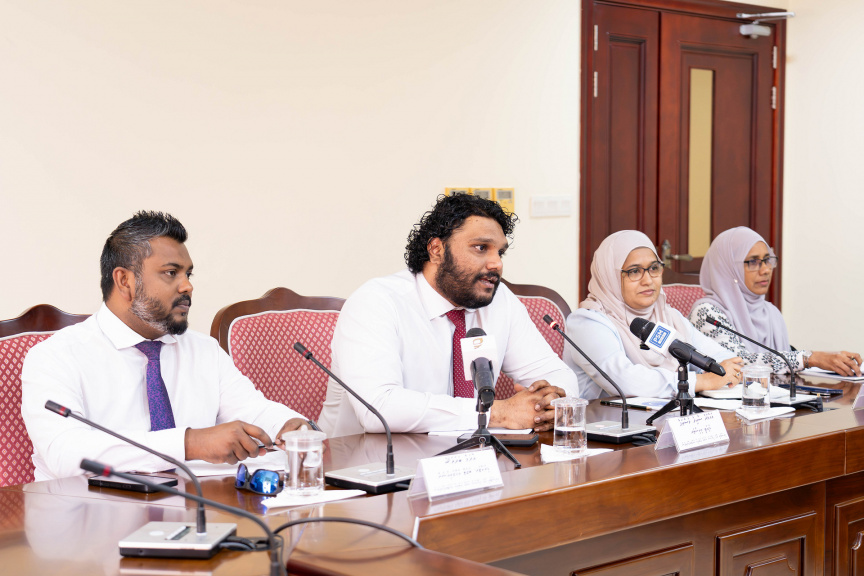
Deputy Minister of Finance Ahmed Saaidh Musthafa (C) speaks at Parliament's Government Oversight Committee on November 16, 2026. (Photo/People's Majlis)
Finance Ministry has stated that unsustainable salary increases contribute to rising costs of goods and services.
Responding to a question from a member of the Parliament's Government Oversight Committee, Deputy Minister of Finance Ahmed Saaidh Musthafa acknowledged public and civil servant concerns regarding the current pay framework.
However, Saaidh emphasised that specific standards and principles must be upheld when determining salaries and benefits for state-level positions. He explained that the Ministry's Budget Office primarily focuses on projected revenue. Even when annual revenue targets are met, higher expenditure reduces the funds available for salaries and other essential requirements.
He further noted that such financial imbalances necessitate increased borrowing, negatively affecting debt sustainability. As an example, Saaidh cited a debt incurred in 2017 that was only fully repaid this year. He pointed out that borrowing in foreign currency increases the local money supply, which in turn drives up demand for US Dollars.
"While everyone desires higher salaries, the method of increasing pay must be sustainable. Otherwise, the cost of living within the country rises at a much faster rate than the salary increments themselves," he explained.
The statement comes after salaries in various sectors were increased under a "pay harmonization" initiative, resulting in a significant rise in state spending on salaries and benefits over the past two years.
Furthermore, statistics from the Bureau of Statistics show that prices of essential items in the capital, Malé, rose by nine percent this October compared to the same period last year.
Other factors contributing to the increase in state expenditure and the cost of essential goods this year include fluctuations in global markets resulting from the ongoing conflict in the Middle East.