
date_range
Sunday 25 Oct 2026


 LOCAL EDITION
close
 LOCAL EDITION


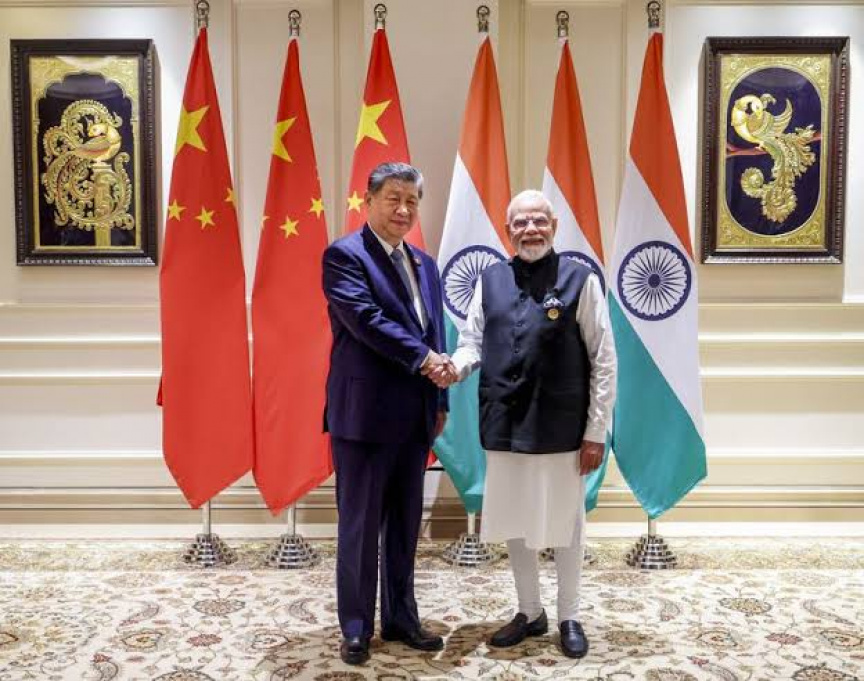
Indian Prime Minister Narendra Modi and Chinese President Xi Jinping meet on the sidelines of the BRICS summit in New Delhi, India.
When Indian Prime Minister Narendra Modi and Chinese President Xi Jinping met on the sidelines of the BRICS summit in New Delhi, it was a moment many had not expected to come so soon. The two leaders had not held talks on Indian soil since 2020, when a serious border clash in the Galwan Valley strained relations between Asia's two largest nations. The meeting signalled that both countries are ready to talk again, and that preventing further tension is a shared priority.
The renewed engagement is a positive step. Highlevel dialogue has resumed, and both governments have shown a willingness to communicate and manage their differences. After the events of 2020, another border crisis would be costly for both sides. Keeping communication channels open is, at its core, a sign of responsible statecraft.
At the same time, expectations should remain measured. The two countries did not issue a joint statement after their meeting. Their separate accounts of the same conversation used different language with China describing India as a "partner," a word India did not use in its own readout. The border dispute, which lies at the heart of the tensions, remains unresolved. China has also reiterated that it does not recognise the Union Territory of Ladakh. Military cooperation between the two countries has not yet been restored. These are not small gaps. They reflect how much work remains to be done before the relationship can be described as truly stable.
It would also be an oversimplification to say that India is engaging China simply because its ties with the United States have become more complicated. India has always maintained its own independent approach to foreign policy. New Delhi was talking to Beijing long before the current strains with Washington emerged. Managing relations with China is an Indian priority in its own right, not a reaction to events elsewhere.
For smaller countries in the region including the Maldives, Nepal, Sri Lanka and Bangladesh the direction of India-China relations matters greatly. These nations have long navigated a careful path between two powerful neighbours. When India and China are in tension, smaller countries often feel pressure to align with one side or the other. When the two giants are in dialogue and managing their differences peacefully, it creates more space for smaller nations to pursue balanced relationships with both — and to focus on their own development without being drawn into larger rivalries.
For now, India and China are choosing dialogue over confrontation. That is welcome. But dialogue alone does not resolve the issues that divide them. The road ahead remains a long one and the most important steps are still to come.


