date_range
Thursday 22 Oct 2026


 LOCAL EDITION
close
 LOCAL EDITION


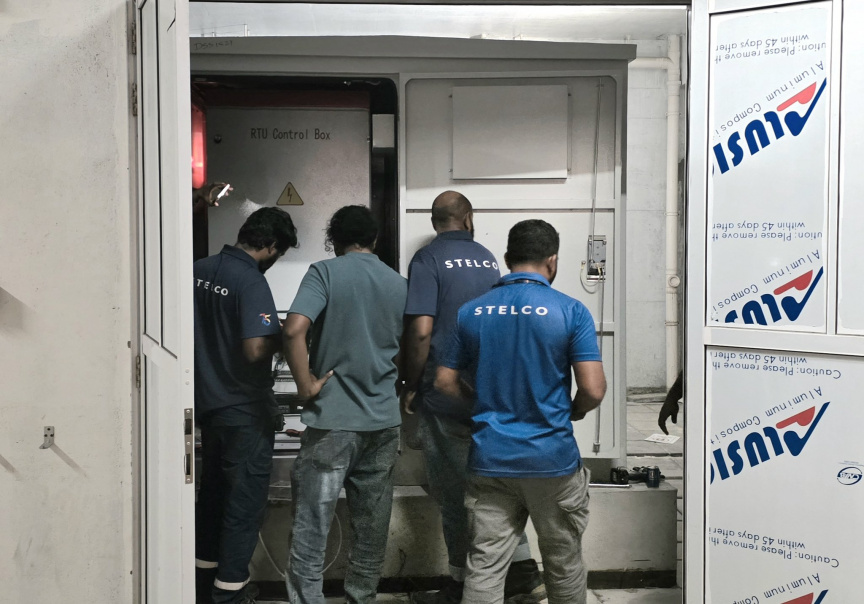
STELCO staff at work. (Photo/STELCO)
The High Court has dismissed a petition filed by State Electric Company Limited (STELCO) challenging a procedural decision by the Information Commissioner’s Office (ICOM) regarding an access-to-information request.
STELCO had argued that the identity of the requester was not verified and that the complaint could not proceed.
The case began after a private individual requested details of the number, positions, salaries and allowances of employees hired and dismissed by STELCO between November 17, 2023 and July 3, 2024 through the Maholhi portal. The request was submitted under the name “Mohamed Sharuhaan”. After STELCO failed to provide the information within the extended timeframe, the requester filed a complaint with ICOM.
During ICOM’s proceedings, STELCO claimed that “Mohamed Sharuhaan” was not an existing natural person and that an unverified requester could not file a valid RTI complaint. ICOM rejected the objection, stating that there was no impediment to continuing the case. The requester later clarified his full name as “Mohamed Sharuhaan Waheed”.

STELCO appealed the procedural ruling to the High Court. A panel comprising Justice Huzaifa Mohamed, Justice Mohamed Shaneez Abdullah and Justice Abdulmaniu Hussain heard the matter. The Court held that under the Right to Information Act and its Rules, identity verification must be addressed at the initial stage, and once an authority has agreed to process a request, it cannot later raise objections that undermine the requester’s identity.
The Court further ruled that the clarification of the requester’s full name at ICOM was sufficient and that there was no legal barrier preventing ICOM from proceeding. It also noted that Section 64 of the RTI Act allows appeals only from final decisions, and that challenging interlocutory or procedural rulings would unnecessarily prolong cases.
The three-judge bench unanimously concluded that ICOM’s procedural decision was lawful and that none of STELCO’s claims warranted overturning the ruling.