date_range
Tuesday 20 Oct 2026


 LOCAL EDITION
close
 LOCAL EDITION


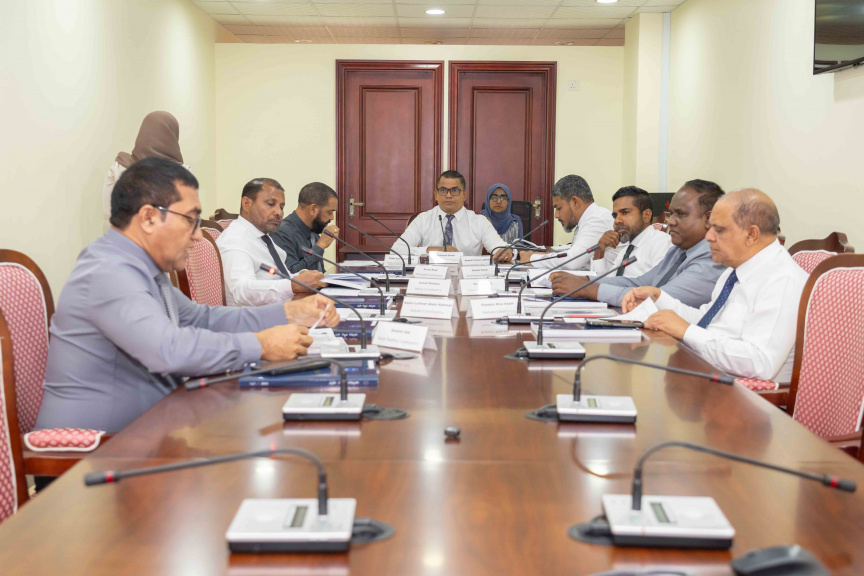
From the 17th Sitting of the Parliament's General Purpose Committee, October 20, 2026. (Photo/People's Majlis)
The General Purpose Committee on Tuesday approved a motion submitted by Thulhaadhoo MP Abdul Hannan Aboobakr, an independently elected member aligned with the ruling PNC, to require that any resolution submitted to the People’s Majlis be put to a vote before debate begins.
The amendment effectively shifts the order of parliamentary procedure, allowing the majority to determine whether a resolution may be discussed at all.
Under the Rules of the Twentieth Parliament, resolutions differ from bills in that they carry a preamble and, once passed, do not require ratification in the same manner as legislation. Hannan argued that resolutions should not be tied to the subject of an ongoing debate and that voting must precede any discussion. If passed, the resolution would then be forwarded to the relevant committee for review. If rejected, it would be rendered invalid without ever reaching the floor.
The amendment was formally moved by PNC MP Ibrahim Didi (IB) at Tuesday’s committee sitting and supported by PNC MP Abdul Sattar Mohamed (Sato). With the ruling party holding a supermajority, such procedural changes can be enacted through committee votes, as internal parliamentary rules are determined by the majority unless they conflict with constitutional provisions.

Expressing his opposition, MDP MP Ameen Faisal said the amendment would make resolutions procedurally similar to emergency motions, where only matters approved by the majority can be debated. He warned that the change would significantly restrict the ability of minority members to raise issues in the chamber, stating that “after the passage of this rule, no urgent matter or resolution will be debated in Parliament unless it is passed.”
Ameen then left the meeting in protest, arguing that the amendment undermined the purpose of a multi-party Parliament by allowing the majority to block discussions before they begin.
After his departure, the remaining members unanimously endorsed the amendment when it was put to a vote. The change will now be submitted to the full Parliament for approval, where the ruling party’s numerical advantage is expected to ensure its passage.
If adopted, the new rule will give the majority the procedural power to prevent resolutions from being debated, reshaping how minority voices participate in parliamentary discourse.