date_range
Thursday 22 Oct 2026


 LOCAL EDITION
close
 LOCAL EDITION


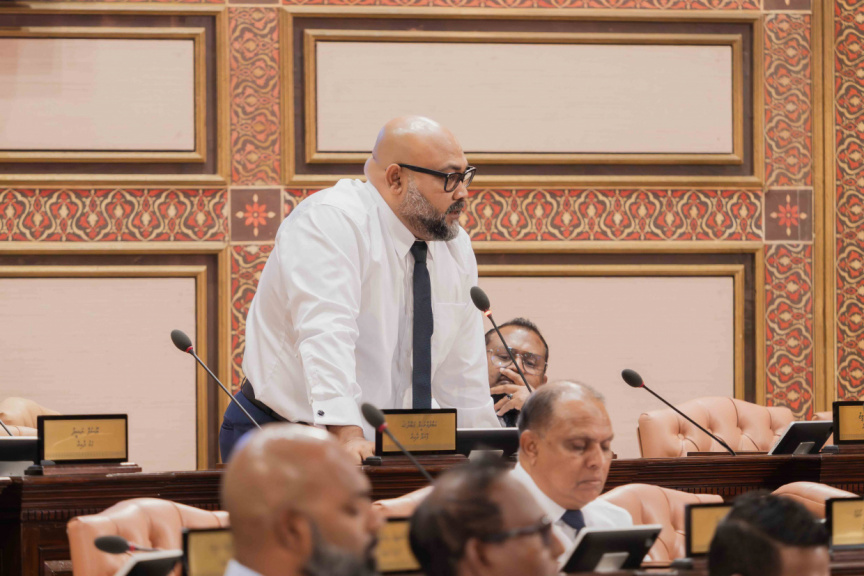
Maavah MP Ahmed Shakir. (Photo/People's Majlis)
Maavah MP Ahmed Shakir has formally submitted a letter to the Parliament seeking an investigation by the Committee on State-Owned Enterprises (SOE Committee) into the establishment, ownership, financing, and management of Maldives Port Development Private Limited, a joint venture established by three state-owned enterprises.
According to the letter, information currently available through the business registry on the official website of the Economic Ministry shows that the company was established through a partnership between Maldives Ports Limited (MPL), State Trading Organization PLC (STO), and Housing Development Corporation Limited (HDC).
MP Shakir stated that the establishment of such a company raises important questions concerning public finances, corporate governance, parliamentary oversight, and transparency. He noted that although the Companies Act may provide a legal basis for the creation of such entities, the circumstances surrounding the company’s establishment warrant scrutiny by Parliament.
In his letter, MP Shakir asked the SOE Committee to examine 11 specific matters, including:
The MP further argued that, as Maldives Port Development Pvt Ltd is owned by three state-owned enterprises, the use of their capital to establish a new private entity could be viewed as changing the nature of state-owned assets.
MP Shakir stressed that ensuring accountability in the management and use of state resources is a fundamental responsibility entrusted to Parliament under the Constitution. He also pointed out that the SOE Committee has previously investigated matters concerning the management, finances, and procurement practices of state-owned companies.
Furthermore, noting that issues related to state expenditure fall within the mandate of the Public Accounts Committee, the MP requested that relevant financial matters be referred to the committee for examination. He also called for the acquisition of incorporation documents, articles of association, shareholder agreements, board resolutions, regulatory approvals, corporate plans, feasibility studies, and financing information as part of the investigation.
Concluding his request, MP Shakir called on Parliament to exercise its authority and refer any violations of law, financial regulations, or corporate governance principles uncovered during the investigation to the Auditor General or the Anti-Corruption Commission, where appropriate.