date_range
Thursday 15 Oct 2026


 LOCAL EDITION
close
 LOCAL EDITION


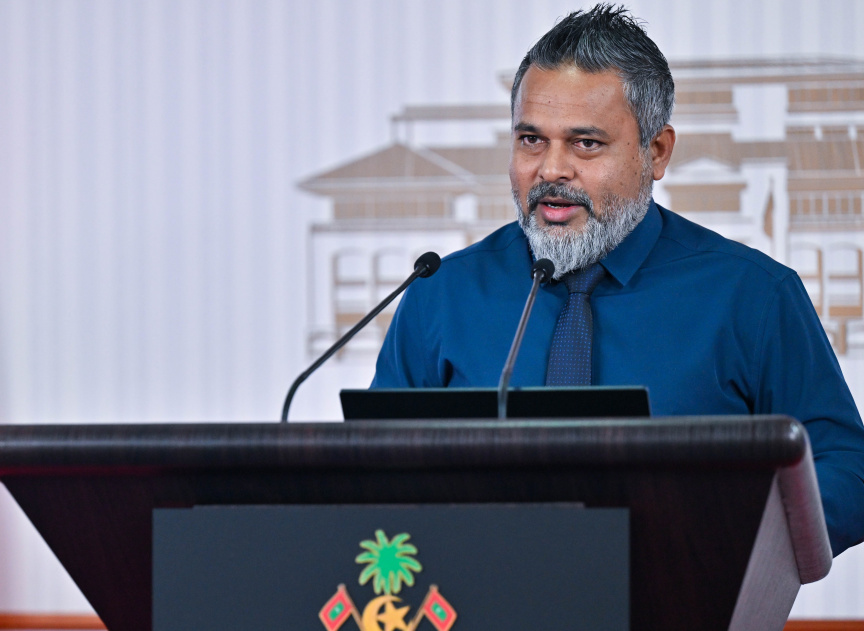
Fisheries Minister Ahmed Shiyam: Shiyam has urged against sensationalizing USD. (Photo/President's Office)
Fisheries Minister Ahmed Shiyam has stated that the US dollar should not be "sensationalized," emphasizing the need to strengthen the Maldivian rufiyaa.
Speaking on MMTV’s ‘Congress Foari’ program, Shiyam attributed the current dollar shortage to measures implemented by the previous MDP administration, which he said contributed to the depreciation of the Maldivian rufiyaa. He stressed that, as an import-dependent country, the Maldives needs to undertake comprehensive reforms to its financial system to reduce excessive demand for the US dollar and strengthen the national currency.
"We should not treat the dollar as something superior. Why should we seek alternative paths when there are ways to strengthen our own currency? If we do not respect our currency, who else will?" Shiyam questioned.
He further said that individuals earning in US dollars had contributed to the growth of the black market, highlighting the need for legislative and systemic reforms to address these vulnerabilities. Shiyam also emphasized the importance of placing greater value on the national currency, as is the practice in other countries, and structuring the financial system in a way that strengthens the Maldivian rufiyaa.
Minister Shiyam expressed confidence that President Dr. Mohamed Muizzu is addressing the dollar shortage through the appropriate channels. He assured the public that while the reforms may cause inconvenience to certain groups, they would ultimately benefit the wider population.
Criticizing the opposition, Shiyam said it had lacked the political will to reform the financial system while in power. He also noted that the Maldives’ tax system remains among the most lenient compared with those of other countries.
Last week, President Dr. Mohamed Muizzu ratified amendments to the Foreign Exchange Act prohibiting the publication of black-market exchange rates that exceed the official rates set by the Maldives Monetary Authority (MMA). The amendments also require resorts to exchange 40 percent of their US dollar revenue through local banks.

Defending the amendments, the President clarified that although resorts are required to exchange 40 percent of their foreign currency revenue with the MMA, they will continue to be permitted to pay their employees’ salaries in US dollars.
The President revealed that while the tourism industry generated USD 5.6 billion in revenue last year, only USD 3.8 billion entered the domestic banking system, of which just 21 percent was exchanged. He said the reforms would increase the availability of foreign currency, significantly easing the process for importers and businesses seeking to conduct Telegraphic Transfers (TTs), particularly for essential commodities.
Addressing concerns raised by some resort owners, the President said the policy change was introduced following extensive research and analysis of statistical data conducted by the MMA, the Finance Ministry, and the Economic Ministry.