date_range
Sunday 25 Oct 2026


 LOCAL EDITION
close
 LOCAL EDITION


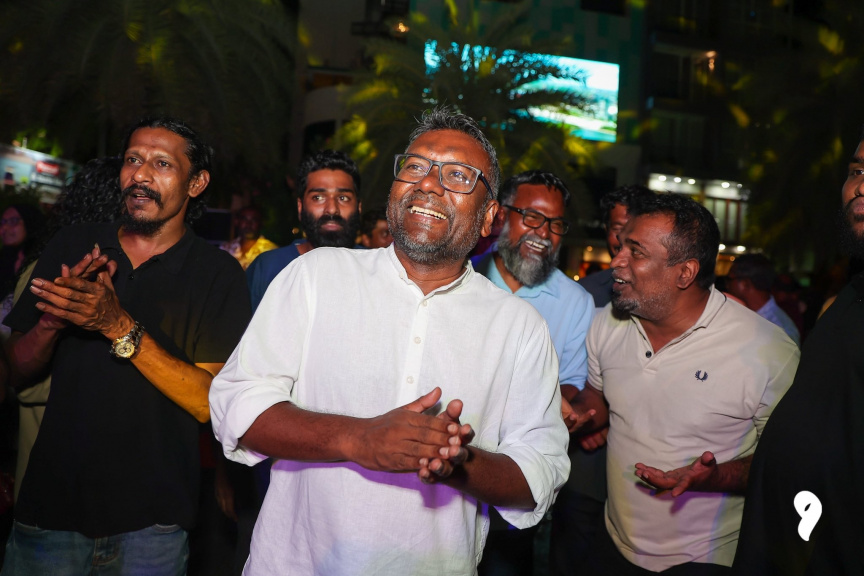
Former Economic Minister, former MDP chairperson Fayyaz Ismail: Fayyaz has blamed wasteful govt spending for pushing USD rate above MVR 23. (X Photo/Viraasee)
Former Economic Minister and former MDP chairperson, Fayyaz Ismail, has argued that the increase in the dollar exchange rate from MVR 17.50 at the onset of President Dr. Mohamed Muizzu’s administration to more than MVR 23 at present is not the result of inadequate policies, but rather the result of the government’s excessive spending and failure to curb expenditure.
In a post on X, Fayyaz highlighted that the government is generating unprecedented levels of dollar revenue through measures including increases in TGST, Green Tax, and airport fees, as well as the requirement to exchange USD 500 per tourist and the introduction of a 30 percent tax on e-commerce platforms.
Fayyaz stressed that such revenue-generating measures should be accompanied by efforts to reduce government spending. Instead, he said, the administration has driven the economy into a crisis even more severe than the economic constraints caused by the global COVID-19 pandemic. He attributed the sharp and uncontrolled rise in the dollar exchange rate directly to excessive government expenditure and a lack of fiscal discipline.
Fayyaz further argued that responsibility for the escalating dollar rate rests with government expenditures, including the Rasmalé land reclamation project, the purchase of military drones and weapons, billions spent on salaries, and systemic corruption, rather than with businesses and individuals earning foreign currency.
He accused the government of targeting resort employees, whom he described as the backbone of the Maldivian economy, in an effort to finance wasteful expenditure through the hard-earned income of thousands of citizens. He further alleged that, while the private sector is being weakened, the government has failed to attract foreign investment and is using the Bank of Maldives (BML) and the Maldives Monetary Authority (MMA) as extensions of the President's Office to channel foreign currency toward political objectives and unproductive projects. Fayyaz also claimed that MVR 2.4 billion was injected into the economy last month through extra-legal currency printing.
Fayyaz warned that compelling tourism businesses to exchange foreign currency without accounting for their operational expenses could result in business closures and discourage future investment. He stressed that, given the tourism sector and its workforce are central to the national economy, undermining these businesses would cause significant harm to the country.
Meanwhile, MMA Governor Ahmed Munawar recently announced plans to amend foreign exchange regulations to require resorts to exchange 40 percent of their dollar earnings through local banks, doubling the existing requirement of 20 percent. Following the announcement, the Maldives Association of Tourism Industry (MATI) issued a statement arguing that the proposed mandate would place an unsustainable burden on tourism businesses.