date_range
Sunday 25 Oct 2026


 LOCAL EDITION
close
 LOCAL EDITION


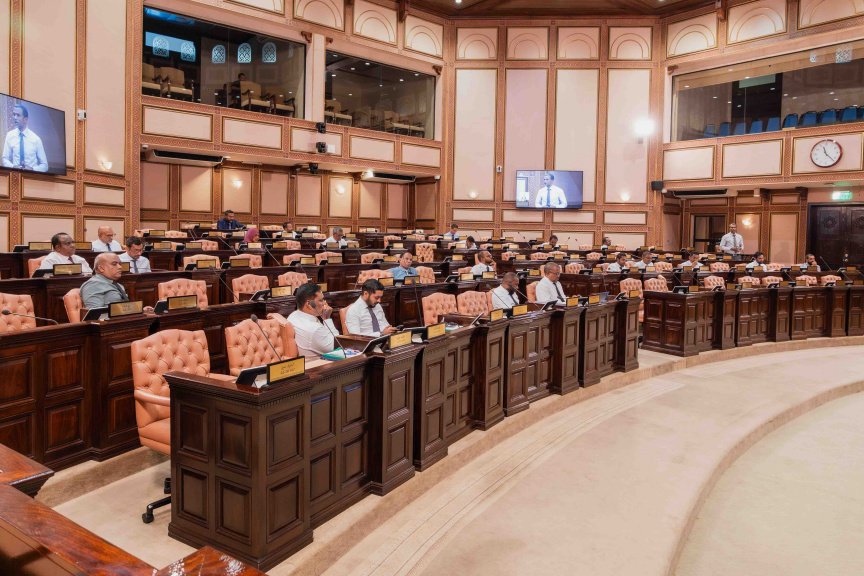
From the 20th Parliament's first special sitting of 2026, January 5, 2026. (Photo/People's Majlis)
The Parliament sitting scheduled for Monday has been cancelled.
Speaker Abdul Raheem Abdulla had announced during Sunday’s sitting that Parliament would convene again on Monday.
However, it has now been decided not to hold the sitting today. According to parliamentary rules, the second term ends on August 15. The second session has already been adjourned twice until August 27.
When contacted by Sun to find out the reason for the cancellation, some MPs said they were unaware of why Monday’s sitting was called off.
They also questioned why sittings should be cancelled without prior notice.
The cancellation comes as ruling PNC members work to pass an amendment that would remove certain council powers under the Decentralization Act.

Social media activist Midhuam Saud has submitted a petition to Parliament calling for the bill to be withdrawn, arguing it goes against the spirit of the Decentralization Act.
The petition has reached threshold 2 under parliamentary rules. Two other petitions have been submitted calling for the passage of the land acquisition amendment. Parliament has since voted to allow counter-petitions, and two petitions have now been submitted supporting the land-acquisition bill.
Ungoofaaru MP Ibrahim Shifaz has called on Parliament to proceed with the bill without considering either petition.
Henveiru North MP Ahmed Aifan moved for the bill to be completed by 2:00 pm Monday at the Decentralization Committee meeting held on Sunday.
When parliamentary sittings are cancelled, there is often public criticism that MPs receive high salaries and extensive state-funded benefits but do not work in proportion to them. Concerns have been particularly strong this term due to irregular sittings and limited legislative activity.