date_range
Monday 19 Oct 2026


 LOCAL EDITION
close
 LOCAL EDITION


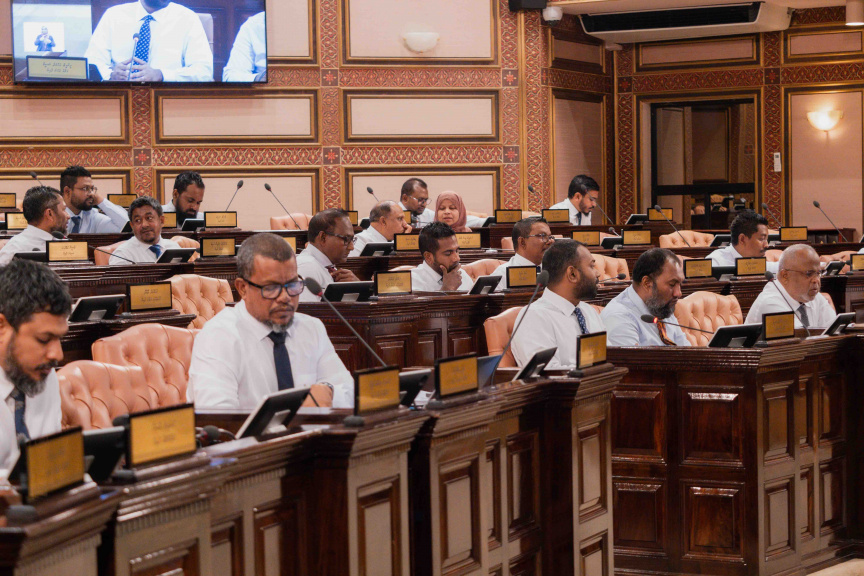
Lawmakers captured during a parliamentary sitting: The Parliament has passed the amendment to SEZ Act despite concerns over rushed proceedings. (Photo/People's Majlis)
A petition calling for the withdrawal of the bill that gives the government the power to take over land under the jurisdiction of councils has now reached the number of signatures required to be sent to a parliamentary committee.
Social media activist Midhuam Saud submitted the e-petition to Parliament on Saturday. Within a week, it received more than 2,100 signatures, surpassing the threshold needed for committee review. There are still 37 days left for the public to sign the petition.
Under parliamentary e-petition regulations, a petition must be forwarded to the relevant committee once it reaches 2,100 signatures, equivalent to 0.5 percent of the voting population.
Midhuam’s petition argues that granting the government the authority to take land under councils would ultimately deprive elected councillors of their powers and transfer those powers to the Cabinet. It also states that the amendment would allow action against councillors who do not comply with ministerial decisions, and restrict the public’s right to have a say in land-related matters.

Proponents of the amendment say its purpose is to ensure council cooperation within a clear legal framework to accelerate government development projects. The bill also aims to strengthen procedures for acquiring land required for state projects.
However, concern has been raised because the amendment allows the Cabinet to exclude land from a council’s jurisdiction and take it over for government use even before the physical development plan of an island or city is approved.
The Parliamentary Committee on Decentralization decided on Tuesday to complete its work on the bill by Sunday.
The Decentralization of Administrative Areas Act was amended last year to restrict several powers of councils, including staff recruitment and the leasing of land and lagoon areas under their jurisdiction, except under regulations set by the Finance Ministry and the Local Government Authority (LGA). At the same time, government officials have repeatedly said some councils are refusing to allocate land needed to implement development projects.