date_range
Friday 23 Oct 2026


 LOCAL EDITION
close
 LOCAL EDITION


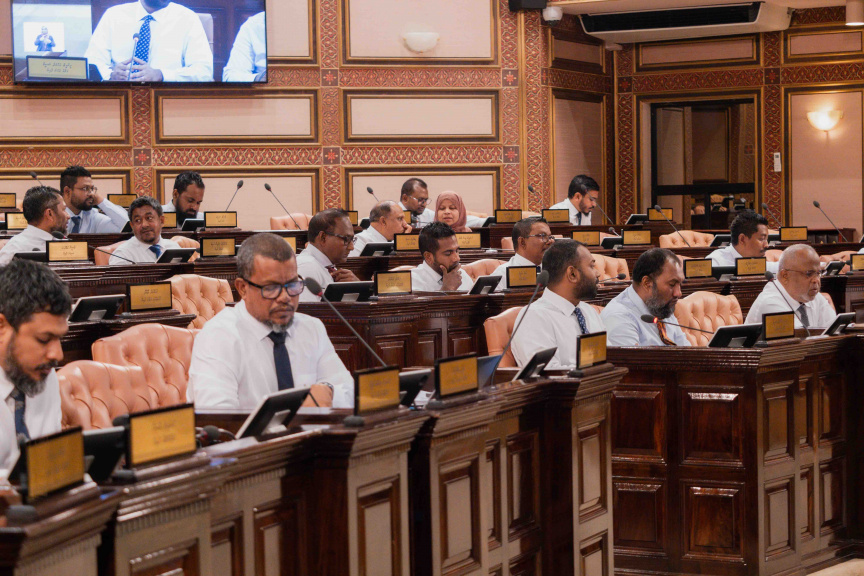
Lawmakers captured during a parliamentary sitting: The Parliament has passed organ transplant bill with provisions prohibiting prisoners from donating organs. (Photo/People's Majlis)
The Parliament, on Tuesday, passed the Organ Transplant Bill after incorporating key amendments that prohibit prisoners from donating organs.
The bill was passed unanimously, with the votes of all 58 lawmakers in attendance.
The legislation was initially passed by Parliament in May and submitted for presidential ratification. However, President Dr Mohamed Muizzu returned the bill to the Parliament for further consideration, citing concerns that required additional review.
One of the key concerns raised by the President was the provision allowing prisoners and those in state custody to donate organs.
In his letter to Parliament, President Muizzu stated that individuals in state custody have limited personal autonomy and freedom, and allowing them to donate organs—even with claims of "full consent"—could create challenges in legal enforcement and in ensuring that such decisions were made without coercion.
Following deliberations by the Committee on Social Affairs, the bill was amended to explicitly state that organ donors must not be prisoners or individuals under state custody.
Another significant amendment relates to penalties for illegal organ harvesting and transplantation. While the original version of the bill included provisions for Qisas (retaliation) and Diyya (blood money), these clauses were removed during the committee review process.
Under the revised legislation, individuals found guilty of such offences will face fines ranging from MVR 150,000 to MVR 250,000, along with imprisonment of between 12 and 18 months.
The bill also stipulates that the Act will come into force 180 days after ratification. Furthermore, an Organ Transplant Council must be established within 60 days of the law taking effect.
The approval of the legislation is expected to strengthen the legal framework governing human organ transplantation in the Maldives, enabling such procedures to be conducted in accordance with international standards and ethical guidelines.