date_range
Thursday 20 Aug 2026


 LOCAL EDITION
close
 LOCAL EDITION


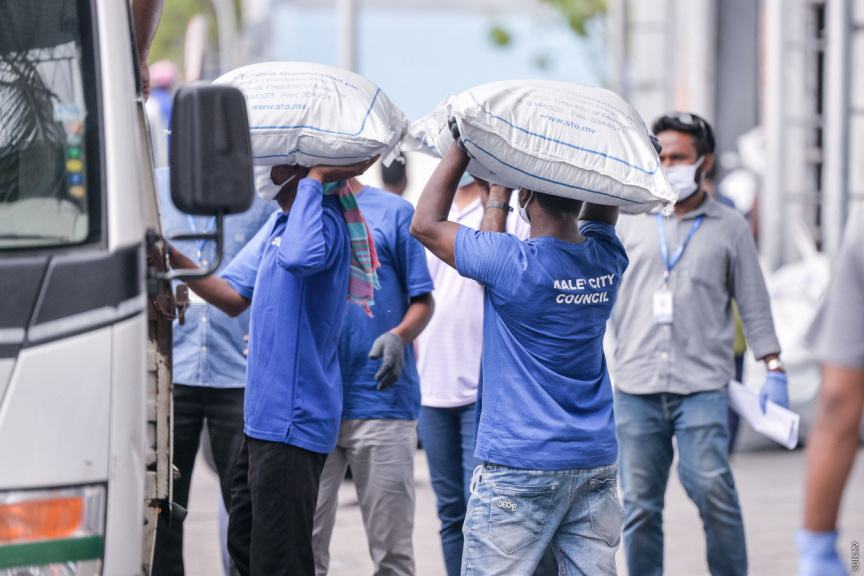
Workers load sacks of flour: 99 percent of subsidy budget exhausted midway into the year. (Sun Photo/Fayaz Moosa)
Statistics released by Finance Ministry show that 99 percent of the government's subsidy budget has already been spent, despite six months remaining in the year.
According to the Ministry's latest Weekly Fiscal Development Report, MVR 2.868 billion had been spent on subsidies by the end of the 26th week of the year, as of July 2. As a result, only MVR 21.7 million remains from the total annual subsidy allocation of MVR 2.89 billion.
The figures indicate that 99 percent of the allocated subsidy budget has been utilized before the halfway point of the year.
The higher-than-budgeted expenditure has been attributed to increased spending on fuel and electricity subsidies, driven by global market volatility linked to regional conflicts. However, as the report does not provide a sector-by-sector breakdown of subsidy expenditure, the extent of the shortfall within each category remains unclear.
The issue has become a recurring fiscal challenge in recent years, with successive administrations reallocating funds from other areas of the budget to finance subsidy spending. Although both the previous and current administrations pledged to introduce targeted subsidy policies aimed at reducing waste and directing assistance to those most in need, those reforms have yet to be fully implemented.
The current administration had initially projected savings of more than MVR 7 billion through reforms to the subsidy system and the Aasandha healthcare scheme. However, President Dr. Mohamed Muizzu announced earlier this year that the planned reforms would be postponed.
The Asian Development Bank (ADB) has recently urged countries across Asia, including the Maldives, to reduce the fiscal burden of broad-based subsidy schemes and instead direct assistance toward the most vulnerable segments of society.
What did the ADB say?
ADB analysts stated that reducing subsidies on non-renewable fuels is an important step toward strengthening economic resilience and improving preparedness for sudden increases in global oil prices. They added that such reforms would also encourage more efficient energy consumption.
The institution recommended that subsidies be targeted at identified low-income households to ensure long-term fiscal sustainability. It suggested that support could be provided through direct cash transfers or subsidies for public transportation.
The report also recommended promoting energy efficiency and, instead of reducing electricity tariffs for all consumers, offering fixed discounts on electricity bills for eligible households.
According to the ADB, such support measures should be temporary, with additional assistance gradually phased out as global commodity prices stabilize.